Seville architecture photography 2026 Guide
Master Seville architecture photography 2026 with our expert guide to capturing the stunning Plaza de España without the crowds.
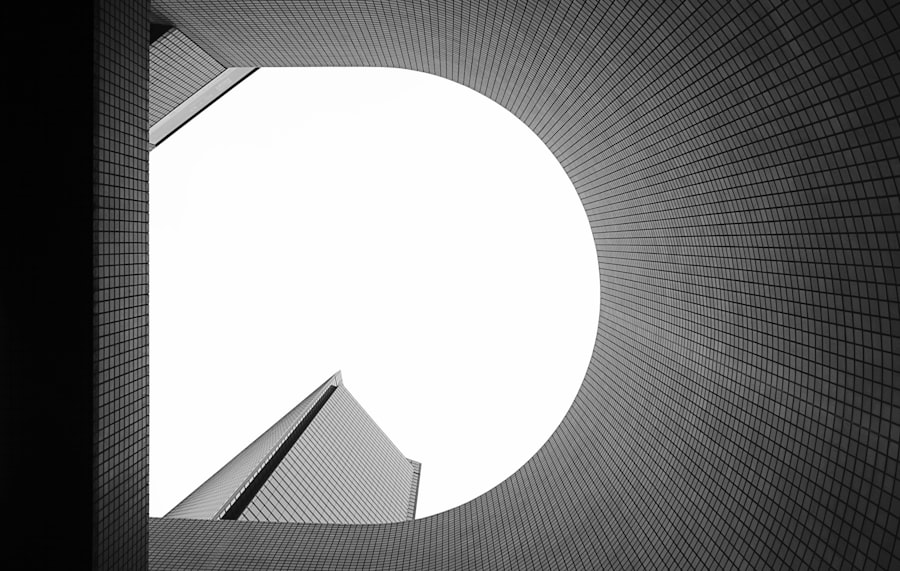
If you want to master Seville architecture photography 2026, you need to know how the intense Andalusian light interacts with centuries of Moorish and Gothic design. As your photography coach, I am here to guide you through the winding alleys of the Santa Cruz quarter and the grand open spaces of the Plaza de Espana. Seville is a dream for photographers, but its harsh sun and deep shadows can easily ruin your shots if you do not know how to control your camera. In this guide, I will show you how to capture the soul of this historic Spanish city through your lens.
The Magic of Seville Architecture and Light
Seville is a visual feast, but it presents unique challenges. The city is famous for its brilliant white buildings, intricate ceramic tiles, and deep shadow-filled archways. To capture these details, you must understand how your camera sees light. Unlike our eyes, which adjust automatically, a camera sensor has a limited dynamic range. This means you will often have to choose between blowing out the bright highlights or losing the dark shadows in complete blackness.
The secret is learning how to balance these extremes. First, let's look at how the time of day affects your images. In 2026, with busier travel seasons than ever, shooting during the golden hour (just after sunrise or just before sunset) is not just about the beautiful warm light; it is also about avoiding the massive crowds. During these hours, the low angle of the sun casts long shadows that reveal the rich textures of the historic brickwork and stone carving.
Essential Gear and Recommended Settings
Before we head out into the streets, let's talk about the gear you will need and how to configure your camera. You do not need the most expensive camera on the market, but you do need to understand how to use your settings to get the best possible image quality.
Must-Have Gear for Seville Architecture Photography 2026
- A Wide-Angle Lens: A focal length of 16mm to 24mm on a full-frame camera is essential for capturing massive interiors like the Seville Cathedral or the sweeping curves of the Plaza de Espana. You can learn more about choosing lenses on the DPReview website.
- A Sturdy Travel Tripod: Essential for sharp blue hour shots when the street lights turn on, though keep in mind some indoor monument sites may restrict tripod use.
- A Circular Polarizer: This filter helps cut down on glare from tiled walls and bright water features, while making the blue sky pop against the yellow sandstone.
- A Prime Lens with a Wide Aperture: A 35mm or 50mm f/1.8 lens is perfect for isolating architectural details and creating a beautiful blurred background.
Recommended Camera Settings for Sharp Cityscapes
- Image Format: RAW vs JPEG: Always shoot in RAW. A JPEG file is compressed by your camera, discarding valuable data. A RAW file saves all the data captured by your sensor, giving you the power to rescue dark shadows and bright skies during editing. You can check out Adobe tutorials to see how RAW files give you ultimate control in Lightroom.
- ISO: Keep this as low as possible (usually ISO 100) to avoid digital noise, which looks like ugly grain in your shadows. Only raise your ISO when shooting handheld in low light.
- Aperture (F-stop): For sweeping architecture shots where you want everything sharp from front to back, shoot between f/8 and f/11. For detail shots, open up to f/2.8 or f/1.8 to create a soft, blurry background.
- Exposure Compensation: When shooting bright white buildings under the midday sun, your camera might try to underexpose the image. Use the Exposure Compensation dial (the +/- button) to manually brighten your shot.
The Golden Rule of Seville Architecture Photography 2026: Always expose for the highlights. It is much easier to recover shadow details from a RAW file during editing than it is to fix a blown-out, pure white sky.
Step-by-Step Guide to Shooting Seville Landmarks
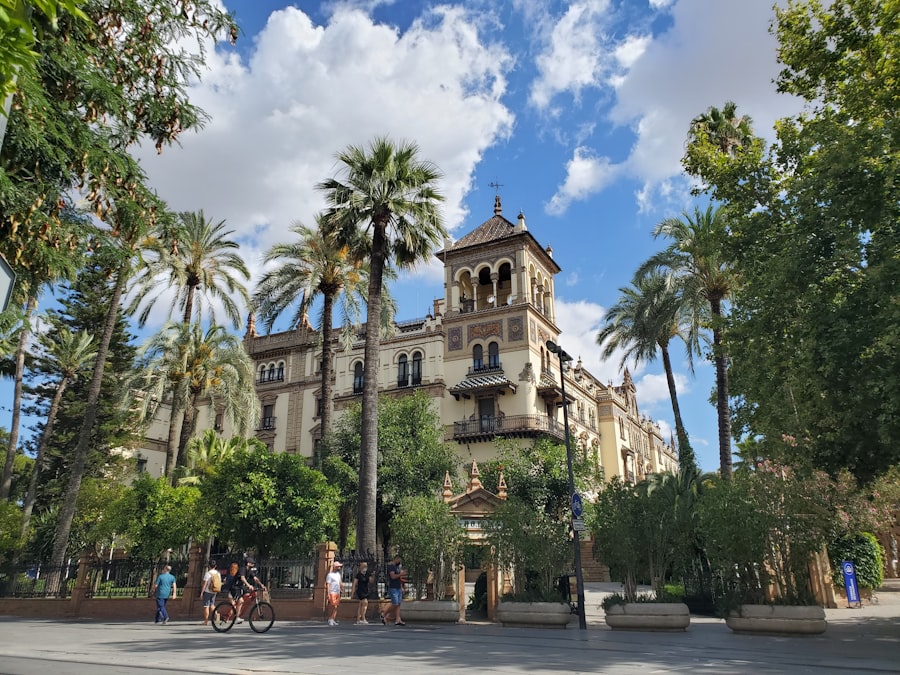
Now try this step-by-step approach when you visit the three most iconic spots in the city. Using these techniques will ensure your Seville architecture photography 2026 portfolio stands out from the crowd.
Step 1: Capturing the Curves of Plaza de Espana
First, let's look at the majestic Plaza de Espana. The best time to photograph this masterpiece is at sunrise. Position yourself along the central canal. Use the Rule of Thirds—an imaginary grid that divides your frame into nine equal parts—by placing the main tower along the left or right vertical line, rather than dead center. To get a perfectly sharp reflection of the bridges in the water, keep your ISO low, set your aperture to f/9, and mount your camera on a tripod. If there are early morning rowboats, use a faster shutter speed to freeze their movement.
Step 2: Mastering the Intricate Details of the Real Alcazar
Next, head to the Royal Alcazar. Here, you will be shooting intricate Islamic geometric patterns and beautiful archways. The secret is finding symmetry. Stand exactly in the center of an archway. Turn on your camera's internal electronic level to make sure your sensor is perfectly parallel to the wall. This prevents perspective distortion where vertical lines look like they are falling backward. If you want to highlight a specific carved detail on a column, use a wide aperture like f/2.2. This creates a gorgeous Bokeh—the pleasing, soft blur in the out-of-focus areas of your image—which makes your subject stand out beautifully.
Step 3: Framing the Giralda Tower from the Streets
Finally, wander into the narrow streets of the Barrio Santa Cruz. The challenge here is the extreme contrast between the dark, shaded streets and the sunlit Giralda Tower peaking over the rooftops. Don't forget to use your exposure compensation here. I recommend underexposing slightly to keep the details of the tower sharp, then brightening the dark street walls later in your editing software.
Before and After: Fixing a Classic Exposure Mistake
Let me share a quick story about a mistake I made during my early days of practicing Seville architecture photography 2026. I was standing in the courtyard of the Alcazar, looking at a stunning Moorish archway. I set my camera to automatic mode and pressed the shutter.
The "Before" image was a disaster. Because the bright sky was visible through the archway, my camera's light meter got confused. It tried to balance the bright sky, which resulted in the beautiful stone carvings of the archway becoming a completely black, featureless silhouette. Meanwhile, the sky itself was still a washed-out, pale blue.
To fix this "After" shot, I switched my camera to Manual mode. First, I changed my image format from JPEG to RAW to ensure I captured maximum data. Then, I adjusted my settings to ISO 100 for maximum cleanness, f/8 for sharpness across the frame, and I set my exposure based on the bright sky. The raw image looked dark on my screen, but because I shot in RAW, I was able to open the file in Lightroom, boost the shadows to reveal the gorgeous, golden carvings, and pull down the highlights to show the deep blue sky. The result was a perfectly balanced, professional image.
Pro Tips for Your 2026 Photography Adventure
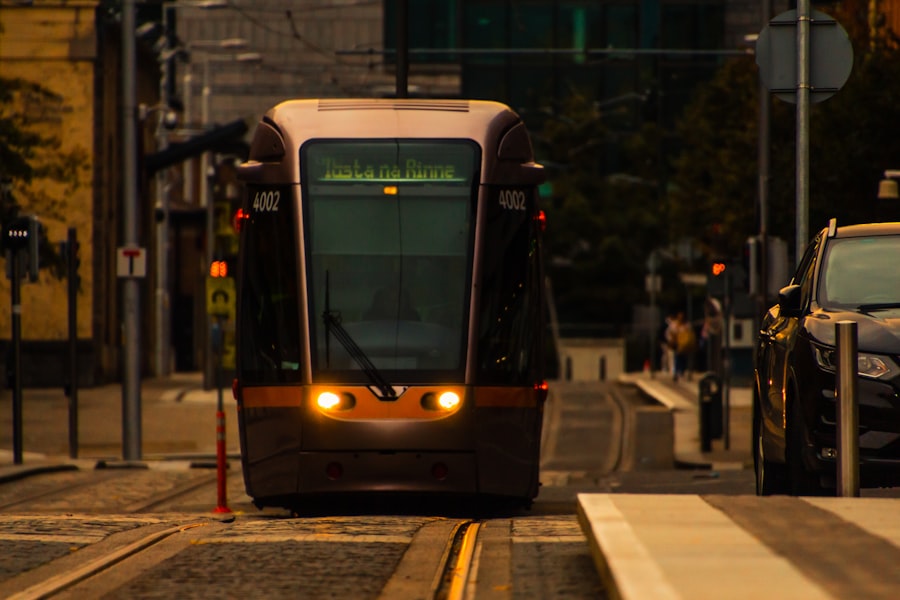
To truly elevate your Seville architecture photography 2026 journey, look beyond the standard postcard shots. Try looking straight up when standing inside the Cathedral to capture the massive Gothic rib vaulting. Look for puddles after a rare rain shower to capture reflections of the historic tram passing by the Archivo de Indias.
Remember, great architecture photography is as much about patience as it is about technical skill. Sometimes, the difference between a good photo and a great photo is simply waiting ten minutes for a person in a colorful jacket to walk through your frame, providing a sense of scale to the massive monuments. Keep practicing, experiment with your settings, and enjoy capturing the timeless beauty of Seville through your lens!
Frequently Asked Questions
What are the best locations in Seville for architecture photography in 2026?
The Plaza de España, the Cathedral and Giralda, the Alcázar, and the Metropol Parasol are top spots for capturing varied architectural styles. Each offers unique perspectives, from Renaissance to modern.
Are there any new architectural sites in Seville expected by 2026?
Yes, the completed Torre Sevilla and the renovated CaixaForum are notable additions, providing modern contrast to historic buildings. These are prime for evening shots with the city skyline.
When is the best time of year to photograph Seville's architecture?
Spring (March-May) and autumn (September-November) offer mild temperatures and golden light, especially early morning or late afternoon. Avoid peak summer heat for comfortable shooting.
Do I need a permit for architectural photography in Seville?
For personal use, no permit is needed, but commercial or drone photography requires prior approval from the local authorities. Always check signs in monuments and palaces for restrictions.
What gear is essential for architecture photography in Seville?
A wide-angle lens is crucial for capturing large facades and interiors, while a tripod helps in low-light conditions. A polarizing filter reduces glare on tiles and stone.
Camille Bernard shares travel photography tips for every kind of traveller, from phone snapshots to full kits. She breaks down light, composition and timing so you come home with photos that actually capture how a place felt.
💬 Comments (0)
No comments yet. Be the first!