Santorini architecture photography 2026 Guide
Master Santorini architecture photography 2026 with our expert tips to capture iconic blue domes and white-washed walls.
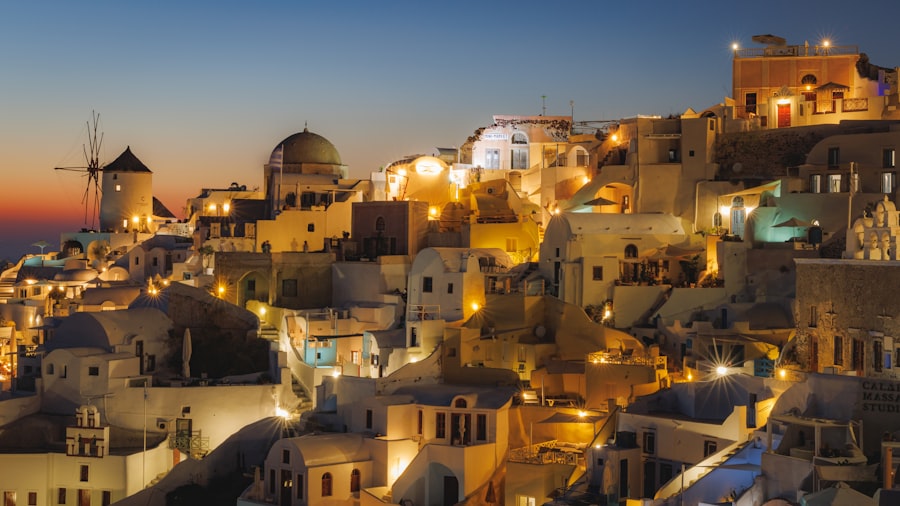
If you want to capture the world's most iconic blue domes and whitewashed cliffs, this Santorini architecture photography 2026 guide will show you exactly how to master your camera settings and framing. As a travel photographer, I know how overwhelming it can be to step off the ferry or plane and face those crowded, blindingly bright caldera paths. In 2026, with travel trends shifting toward more mindful, slower photography, you need a solid game plan to make your images stand out from the millions of identical snapshots on social media. I am here to coach you through the process so you can bring home portfolio-worthy images that truly capture the soul of the Aegean.
The Magic of Santorini Architecture
Santorini is a photographer's dream, but it is also an optical challenge. The traditional Cycladic architecture is defined by smooth, organic curves, stark white plaster, and deep blue accents. Under the intense Greek sun, these elements create extreme contrast. If you let your camera make all the decisions, you will end up with washed-out skies or completely black shadows. To master Santorini architecture photography 2026, we have to train our eyes to see how light interacts with these unique shapes.
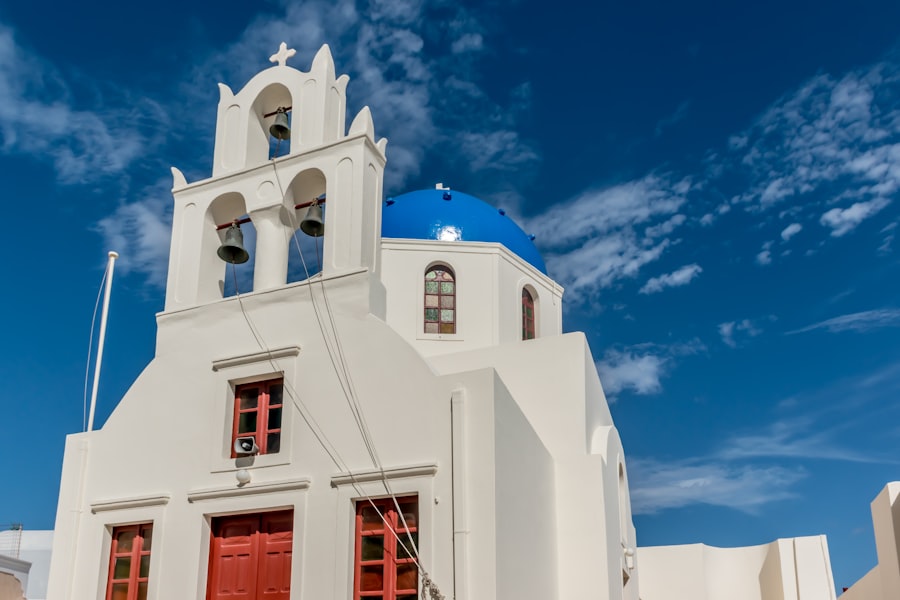
The secret is to look beyond the classic postcard shots. Yes, we will capture the blue domes of Oia, but we will also look at the texture of the volcanic stone walls in Pyrgos, the elegant bell towers of Megalochori, and the dramatic angles of modern luxury villas built directly into the cliffside. By understanding how to control your camera, you can turn a chaotic, crowded street scene into a clean, minimalist work of art.
My Biggest Mistake (And How to Avoid It)
Let me share a quick story from my first trip to the island. I woke up at 5:00 AM, raced to the famous Oia castle viewpoint, and waited for the sun to rise. As the light hit the whitewashed buildings, I started shooting rapidly. When I got back to my hotel room and opened the files on my laptop, my heart sank. Every single photo was ruined. The white walls were so bright they had "blown out" into pure, detail-free digital white. The beautiful blue domes looked dark and muddy.
I made the classic mistake of trusting my camera's automatic metering. To fix this, I had to learn how to use Exposure Compensation. By turning my exposure dial down by one or two stops (-1 or -2 EV), I forced the camera to protect the highlights. The white walls regained their beautiful plaster texture, and the shadows were easily recovered later. This simple adjustment completely transformed my approach to Santorini architecture photography 2026.
The Santorini Golden Rule: Always expose for the highlights. You can easily rescue dark shadows in post-processing, but once a white wall is overexposed to pure white, that image data is gone forever.
Essential Camera Settings and Gear
To get the sharpest possible images, you need to configure your camera correctly before you head out into the cobblestone streets. Here is your go-to checklist for Santorini architecture photography 2026.
Recommended Settings for Bright Cycladic Light
- Shoot in RAW vs JPEG: Always select RAW. While JPEG files are compressed and processed by your camera, RAW files preserve all the data captured by your sensor. This gives you maximum flexibility to balance the bright whites and dark shadows in editing software like Adobe Lightroom.
- Keep your ISO low: Set your ISO to its base level (usually ISO 100). ISO controls your camera sensor's sensitivity to light. A low ISO ensures your images are clean, crisp, and free of digital noise, which is crucial for capturing smooth plaster textures.
- Use Aperture Priority Mode: Set your camera to Aperture Priority (A or Av mode) and choose an aperture between f/8 and f/11. This creates a deep depth of field, ensuring that both the foreground cobblestones and the distant sea are pin-sharp. Save wide apertures like f/1.8 for creating beautiful Bokeh (blurry backgrounds) during close-up detail shots.
- Exposure Compensation: Keep this set between -0.7 and -1.3 during the middle of the day to keep those white walls from clipping.
Must-Have Gear for 2026
- A Circular Polarizer (CPL): This filter screws onto the front of your lens. It cuts through glare on the white walls, reduces reflections on the blue sea, and makes the sky a deep, rich blue.
- A Lightweight Travel Tripod: Essential for sharp blue hour shots when the wind picks up on the caldera rim. Check out modern carbon fiber options on DPReview for the best balance of weight and stability.
- A Mid-Range Zoom Lens: A 24-70mm lens on a full-frame sensor (like the latest bodies from Sony, Canon, or Nikon) gives you the flexibility to shoot wide architectural vistas and zoom in on distant church steeples without constantly changing lenses in the dusty Aegean wind.
Step-by-Step Guide to Framing Santorini Architecture
Now try this step-by-step approach to compose your architectural images like a seasoned professional.
Step 1: Arrive Before the Golden Hour
First, let's look at timing. If you try to shoot in Oia at sunset, you will be fighting thousands of other tourists for a view. Instead, set your alarm for sunrise. The light is soft, pastel-toned, and the streets are completely empty. This is the prime time for peaceful Santorini architecture photography 2026.
Step 2: Apply the Rule of Thirds (And When to Break It)
The Rule of Thirds involves dividing your frame into a 3x3 grid. Place your main subject, like a blue dome or a solitary bell tower, along one of the vertical grid lines or at their intersections. However, because Santorini's architecture is highly geometric, do not be afraid to break this rule. Try placing a perfectly symmetrical church dome dead center in your frame for a powerful, minimalist composition.
Step 3: Find Leading Lines and Natural Frames
The winding staircases and curved pathways of Santorini are perfect leading lines. Position yourself so a stone path guides the viewer's eye from the bottom of the frame up toward a distant view of the sea. Look for overhanging bougainvillea flowers, archways, or open doorways to frame your main subject and add depth to your image.
Before & After: Elevating a Standard Shot
Let us look at how these techniques come together in a real-world scenario. Your Santorini architecture photography 2026 journey will instantly improve once you understand how to transition from a snapshot to a composed photograph.
Before: You stand on the main path in Oia at 2:00 PM. You point your camera down at a blue-domed church. Your camera is set to Auto, shooting in JPEG. The resulting image has a washed-out blue sky, the white roof of the church has turned into a giant, blinding white blob with no texture, and the shadows underneath the arches are pitch black.
After: You return to the same spot at 6:30 AM. You mount your camera on a tripod, switch to RAW mode, and set your ISO to 100 and aperture to f/9. You attach a polarizing filter to darken the sky and remove glare from the domes. You frame the shot so a bright pink bougainvillea branch frames the top of the image, and a curving stone staircase leads the eye from the bottom left corner to the church. You adjust your Exposure Compensation to -1.0. The final image is perfectly balanced, with soft golden light skimming across the textured plaster, rich blue domes, and a deep, clean sky.
Final Tips for Your Santorini Adventure
Don't forget to respect the local community. Many of the beautiful roofs and walls you see are actually private homes or active churches. Always look for signs, stay on the designated public paths, and never climb onto domes or private property for a photo. Beautiful, ethical Santorini architecture photography 2026 is all about patience, observation, and respect for the island's unique heritage. Now pack your gear, set your camera to RAW, and go capture some magic!
Frequently Asked Questions
What is the best time of day for Santorini architecture photography?
The golden hours just after sunrise and before sunset provide the most flattering light for capturing the iconic whitewashed buildings.
Which locations are must-visit for architecture photography in Santorini?
Oia and Fira are essential, with their classic Cycladic architecture, blue domes, and narrow cobblestone streets.
What equipment do I need for the best results in 2026?
A DSLR or mirrorless camera with a wide-angle lens like 16-35mm, plus a polarizing filter to reduce glare.
Are there new architectural trends in Santorini to photograph in 2026?
Contemporary eco-friendly designs and renovated cave houses blend modern sustainability with traditional aesthetics.
Do I need a permit for architectural photography in Santorini?
No permit is needed for general photography, but tripods may be restricted in crowded areas like Oia castle.

Camille Bernard shares travel photography tips for every kind of traveller, from phone snapshots to full kits. She breaks down light, composition and timing so you come home with photos that actually capture how a place felt.
💬 Comments (0)
No comments yet. Be the first!