Edinburgh Street Photography 2026 Guide
Master Edinburgh street photography 2026 with our expert guide to capturing moody historic alleys and dramatic Scottish light.
If you want to capture the soul of Scotland's historic capital, this Edinburgh street photography 2026 guide will show you how to turn moody wynds and cobblestone alleys into dramatic visual masterpieces. As a travel photographer, I can tell you that this city is a playground of light, shadow, and history. Whether you are holding a high-end mirrorless camera or a smartphone, your photos will look absolutely breathtaking once you master a few professional techniques. Let me coach you through the process of navigating these ancient streets with your camera in 2026.
The Magic and Challenges of Edinburgh Street Photography 2026
Edinburgh is famous for its dramatic topography and mercurial weather. One minute you have bright sunlight hitting the yellow sandstone of the Royal Mile, and the next, a thick sea fog, known locally as the haar, rolls in to blanket the city in mystery. This constant change is exactly why Edinburgh street photography 2026 is so rewarding, but it also means you must be ready to adapt your camera settings at a moment's notice.
The secret is learning to embrace the shadows. Edinburgh is built on multiple levels, with bridges spanning over deep valleys. This creates incredible depth, but it also creates high-contrast scenes that can easily confuse your camera's automatic brain. If you rely solely on auto mode, you will end up with either washed-out skies or completely black shadows where all the beautiful historic details are lost.
To help you navigate these challenges, we need to talk about your camera's exposure. Many photographers fear manual settings, but I promise to make it simple. Think of your camera as a bucket catching light. We want to catch just the right amount to tell a compelling story of the city.
Before & After: A Lesson in Edinburgh's Shadows
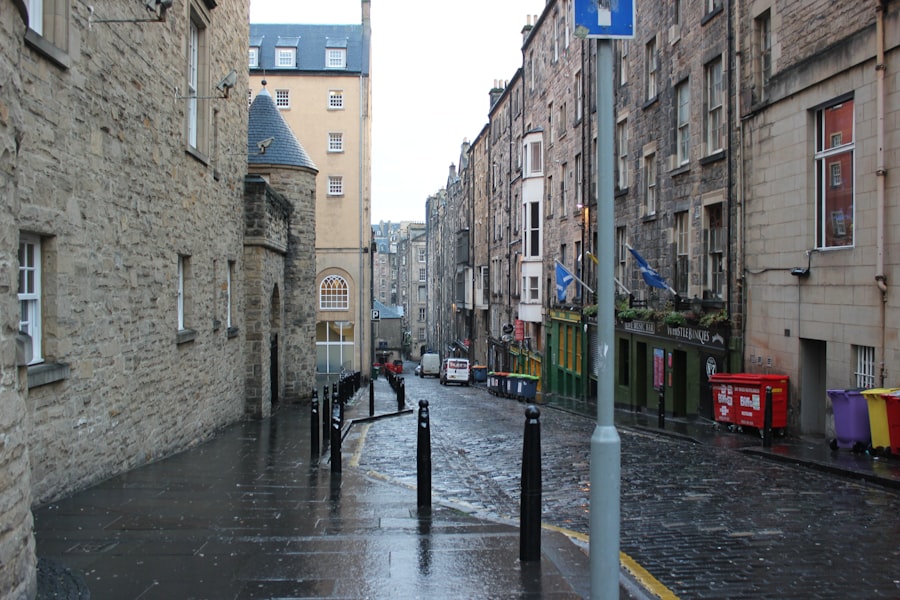
Let me share a quick personal story from a rainy morning on Victoria Street. I saw a man in a red coat walking down the curving cobblestone street, framed perfectly by the colorful shopfronts. I raised my camera and took the shot on full auto mode. The result? A complete disaster. Because the bright sky at the top of the frame was so strong, my camera panicked and darkened the entire image. The man in the red coat was a muddy silhouette, and the beautiful cobblestones looked like flat gray mush.
Now try this to fix that exact issue: I switched my camera to manual mode and adjusted my Exposure Compensation. This is a handy little dial (often marked with a +/- icon) that tells your camera to make the image brighter or darker than what its built-in meter thinks is correct. By dialing my Exposure Compensation to -1.0, I protected the highlights in the sky and kept the deep, rich colors of the shops. In post-processing, because I shot in RAW format rather than JPEG, I was able to gently lift the shadows and bring back the texture of the wet stones. The difference was night and day.
The Golden Rule of Edinburgh Street Photography 2026: Always shoot in RAW format instead of JPEG. While JPEG files are compressed and discard visual data, RAW files preserve every bit of light information captured by your sensor, giving you the power to rescue dark shadows and bright highlights in software like Adobe Lightroom.
Must-Have Gear and Recommended Settings for 2026
First, let's look at what you should pack in your camera bag. You do not need the most expensive gear on the market, but having the right tools will make your Edinburgh street photography 2026 experience much more enjoyable. You want to stay light and mobile as you climb the steep hills and staircases of the Old Town.
Recommended Gear for the Street Photographer
- A Versatile Prime Lens: A 35mm or 50mm equivalent lens is perfect. These lenses are small, inconspicuous, and offer wide apertures like f/1.8 to create beautiful background blur.
- A Weather-Sealed Camera Body: Edinburgh's weather is unpredictable. Cameras like the Sony Alpha series or Canon EOS R system offer excellent weather resistance against the Scottish drizzle.
- Comfortable Walking Shoes: You will easily log 15,000 steps climbing the historic closes and stone steps.
- A Lens Hood: This protects your front glass element from stray raindrops and glare without needing to constantly wipe your lens.
Recommended Camera Settings for Street Action
- Shooting Mode: Aperture Priority (A or Av mode) so you can control depth of field while the camera handles shutter speed.
- ISO: Auto ISO with a minimum shutter speed limit of 1/250s to freeze moving pedestrians. Set your maximum ISO to 6400 to keep digital noise under control.
- Focus Mode: Continuous AF (AF-C or Servo) with face/eye tracking enabled to lock onto subjects walking toward you.
- White Balance: Auto White Balance (AWB) or Cloudy to warm up the cool, blue tones of gray Scottish days.
Step-by-Step Guide to Capturing the Perfect Edinburgh Street Shot
Now that your gear is ready, let us walk through a practical exercise to get you comfortable with Edinburgh street photography 2026. We will focus on composition, lighting, and patience.
Step 1: Find Your Frame and Use the Rule of Thirds
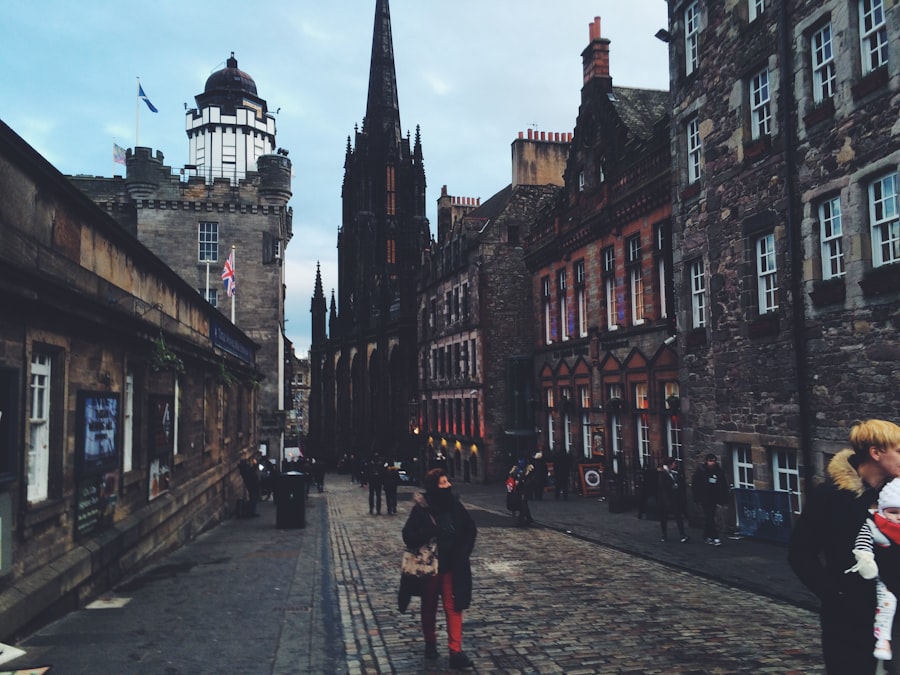
Do not just wander aimlessly snapping photos. Find an interesting architectural element first, like a dark archway leading off the Royal Mile. Use the Rule of Thirds by imagining your frame divided into a 3x3 grid. Place the edge of the archway along one of the vertical grid lines to create a balanced, dynamic composition that guides the viewer's eye into the frame.
Step 2: Set Your Aperture for the Perfect Bokeh
To make your subject pop from the busy background, you want to create a shallow depth of field. Set your aperture to a wide setting like f/2.0 or f/2.8. This will create a beautiful, soft-focus background blur known as Bokeh. The historic buildings will melt into a soft pastel painting, leaving your main subject sharp and clear.
Step 3: Manage Your ISO in Dark Alleys
As you step into the narrow, covered closes, the light levels will drop dramatically. Don't be afraid to raise your ISO to 1600 or 3200. ISO is your camera's sensitivity to light. While higher ISO can introduce a little bit of digital grain, modern sensor technology in 2026 handles this beautifully, and a sharp, grainy photo is always better than a blurry, ruined one. You can read more about sensor performance on sites like DPReview.
Step 4: Wait for the Human Element
The secret to incredible street photography is patience. Once you have your frame, your exposure, and your focus set, keep your camera at chest level and wait. Wait for a person carrying a colorful umbrella, a local in a tweed jacket, or a street performer to walk into your designated spot. When they hit the intersection of your grid lines, press the shutter.
Advanced Creative Techniques for the Royal Mile and Beyond
Once you have mastered the basics, it is time to push your Edinburgh street photography 2026 journey even further. The city is famous for its steep staircases, known as closes, which run perpendicular to the Royal Mile. These narrow passages are perfect laboratories for experimenting with light and shadow.
Look for light pockets. During the late afternoon, the sun angles down between the tall tenement buildings, illuminating tiny patches of the cobblestones while leaving the rest of the alley in deep shadow. Position yourself in the dark zone and point your camera toward the illuminated patch. When a person steps into that beam of light, they will look like they are standing on a theater stage. Your photo will look incredibly dramatic and cinematic.
Don't forget to look up. Edinburgh's architecture is towering and gothic. By using a wide-angle lens and shooting from a low angle, you can make the buildings look like they are leaning in toward each other, creating a sense of scale and drama that represents the true atmosphere of this historic city.
With these techniques in your creative toolkit, you are ready to conquer the streets of Scotland's capital. Keep practicing, embrace the rain, and let your unique perspective shine through your lens in 2026!
Frequently Asked Questions
What camera settings are best for Edinburgh street photography in 2026?
Use aperture priority mode with a small aperture for sharpness, and adjust ISO for variable light conditions common in Edinburgh.
Where are the top street photography locations in Edinburgh for 2026?
Key locations include the Royal Mile, Grassmarket, and Victoria Street, as well as less crowded spots like Dean Village and Stockbridge.
Are there any legal restrictions for street photography in Edinburgh?
In Scotland, you can photograph in public places without permission, but avoid intrusive images or commercial use without consent.
What are the key trends in Edinburgh street photography for 2026?
Trends include focusing on fleeting city interactions, mixed light techniques at dawn/dusk, and capturing unique architecture at new angles.
How can I photograph in Edinburgh's narrow closes and alleys?
Use a wide-angle lens, shoot in early morning for calm lighting, and wait for fog or rain for moody, atmospheric shots.
Matthias Weber digs into the craft of travel photography, from camera settings to editing. He explains the technical side in plain language so you can spend less time fiddling with dials and more time shooting.
💬 Comments (0)
No comments yet. Be the first!