Yakushima nature photography spots Guide
Discover Yakushima nature photography spots in 2026. Master misty forest compositions in Japan's most magical ancient woodlands.
Yakushima nature photography spots Guide
Finding the ultimate Yakushima nature photography spots is like stepping directly into a hand-painted watercolor masterpiece where the lines between reality and fantasy blur. Located off the southern coast of Kyushu, Japan, this UNESCO World Heritage island is a subtropical paradise of ancient moss, towering cedar trees, and rushing rivers. If you are a landscape photographer, an adventure seeker, or a visual artist, Yakushima offers an otherworldly canvas that will challenge your skills and elevate your portfolio. The island is famous for its dense, primeval forests that served as the direct inspiration for legendary animations, and capturing its damp, moody atmosphere requires a deep understanding of light, moisture, and composition.
Photographing Yakushima is not just about pointing your camera at a tree; it is about capturing the ancient soul of a forest that has survived for millennia. The relentless rainfall, which locals say falls 35 days a month, creates a lush, vibrant green palette that you cannot find anywhere else on Earth. To help you navigate this wet, mystical wonderland, we have put together the ultimate guide to the most breathtaking photography locations on the island, complete with camera settings, route details, and composition secrets.
1. Shiratani Unsuikyo Ravine: The Moss-Covered Dreamscape
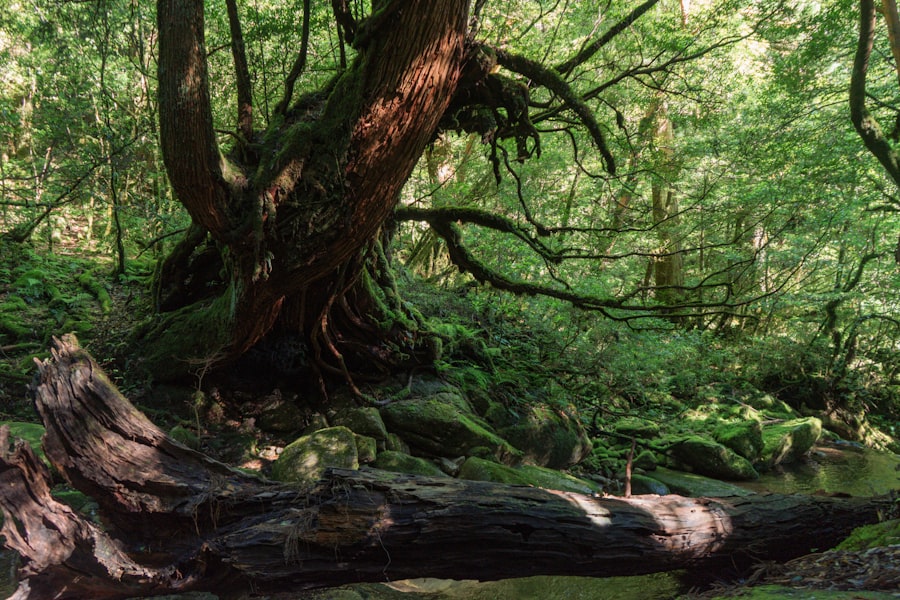
Shiratani Unsuikyo is arguably the most famous valley on the island, and for good reason. This deep, green ravine is filled with ancient cedars, rushing streams, and rocks blanketed in dozens of species of moss. It is the quintessential location to capture the dripping, ethereal mood of Yakushima. The air here is thick with moisture, which acts as a natural diffuser, softening the sunlight as it filters through the dense canopy.
The Mononoke Forest Loop
The crown jewel of Shiratani Unsuikyo is the area known as the Mononoke Hime no Mori (Princess Mononoke Forest). To photograph this spot with the best possible framing, aim to arrive early in the morning when the mist still hangs low between the trunks. Use a wide-angle lens to capture the scale of the massive, moss-draped boulders. Look for leading lines created by fallen, decaying logs that are now host to hundreds of tiny new ferns. Keep your shutter speed relatively fast if the wind is blowing the leaves, or use a sturdy tripod and a slow shutter speed to let the rushing water of the nearby streams turn into silky white ribbons against the deep green moss.
Trekking to Yayoi Sugi
If you want to capture a massive, ancient cedar without a grueling all-day hike, the trail to Yayoi Sugi is your best option. This giant tree is estimated to be over 3,000 years old. When framing this ancient giant, position yourself at a low angle to emphasize its immense height and girth. The wooden boardwalk provides a great leading line that guides the viewer's eye from the bottom of the frame straight up into the sprawling, mossy branches of the cedar.
Pro Photography Tip: Wet moss reflects light, which can create a distracting glare in your images. Always use a Circular Polarizing Filter (CPL) when shooting in Shiratani Unsuikyo. Rotating the filter will cut the glare on the wet leaves and moss, instantly boosting color saturation and revealing the deep, rich greens hidden underneath the shine.
2. Jomon Sugi: Documenting Earth's Ancient Sentinel
For those willing to undertake a grueling 10-to-12-hour round-trip hike, Jomon Sugi is the ultimate prize among all Yakushima nature photography spots. This colossus is estimated to be anywhere between 2,100 and 7,200 years old, making it one of the oldest living trees in the world. The journey itself is a photographic pilgrimage, taking you along the historic Anbo railway line before ascending deep into the mountain forest.
- The Railway Section: The first few hours of the trek follow an active wooden railway line. Use the symmetry of the tracks as a powerful composition tool, leading the viewer through a tunnel of green foliage.
- Wilson's Stump: Along the way, you will encounter a massive hollowed-out cedar stump. Step inside, look up, and angle your camera to capture the famous heart-shaped opening against the sky.
- The Jomon Sugi Observation Deck: To protect the tree's sensitive root system, you must photograph Jomon Sugi from a wooden deck. Use a telephoto lens (70-200mm) to compress the scene and isolate the textures of its ancient, twisted bark.
When planning this trek, consult resources like TripAdvisor to check trail conditions and read recent hiker reviews. Because you will be hiking in the dark for the first couple of hours, a reliable headlamp is essential, and you must wrap your camera gear in waterproof bags to protect it from the sudden, torrential downpours that characterize the high-altitude interior of the island.
3. Senhiro Waterfall: Scale, Power, and Granite
Yakushima is an island born of granite, pushed up from the ocean floor by tectonic activity. There is no better place to capture this dramatic geological history than Senhiro Waterfall. Here, the Tano River plunges about 60 meters down a monumental sheet of solid granite rock. The sheer scale of the rock face is mind-boggling, and capturing that sense of scale is your primary creative challenge at this location.
Framing the Giant Granite Slab
The viewing platform for Senhiro Waterfall is located on the south side of the island. The best lighting occurs in the afternoon when the sun illuminates the massive granite cliff face, bringing out the warm tones of the stone to contrast with the cool, blue-green water. Use a medium telephoto lens to zoom in on the waterfall itself, framing it so that the massive rock slab dominates three-quarters of the shot. This composition emphasizes the insignificance of the water against the colossal stone.
Chasing the Rainbows
On clear, sunny afternoons, the spray from Senhiro Waterfall often creates brilliant rainbows near the pool at the base of the falls. To capture this phenomenon, keep your camera at a slightly higher angle and use a fast shutter speed to freeze the mist particles in mid-air. The vibrant spectrum of the rainbow against the dark, wet granite creates a magical vibe that perfectly represents the island's dynamic natural beauty.
4. Ohoko Waterfall: Feeling the Spray
If Senhiro Waterfall is about grand scale and distance, Ohoko Waterfall is about raw power and proximity. Selected as one of Japan's top 100 waterfalls, this spectacular cascade drops 88 meters over a rugged cliff. The best part for photographers is that you can walk right up to the rocky plunge pool at the base of the falls, allowing you to capture dramatic, wide-angle shots that convey the sheer force of the cascading water.
Pro Photography Tip: When shooting close to Ohoko Waterfall, water spray will constantly cover your lens. Keep a high-quality microfiber cloth in your pocket and wipe the lens element immediately before pressing the shutter. Set your camera to burst mode to increase your chances of getting a sharp, droplet-free shot.
To capture the smooth, silky movement of the water, set your camera to manual mode, drop your ISO to 100, and use a Neutral Density (ND) filter. A shutter speed of 0.5 to 2 seconds is usually the sweet spot for creating a dreamy, ethereal water flow while retaining some texture in the currents. Pay close attention to the dark volcanic rocks in the foreground to create a strong anchor point for your composition.
5. Seiryu-no-Mori: The Hidden Stream of Yakushima
While the famous trails can occasionally get busy with hikers, Seiryu-no-Mori (The Forest of the Clear Stream) offers a quiet, meditative escape for photographers looking to capture the intimate details of the island's river systems. Located near the entrance of the Yakusugi Land forest park, this area is characterized by crystal-clear water flowing over smooth, emerald-green stones and under arched canopy trees.
- Reflections and Depths: The water here is so clear that it seems invisible. Use a polarizer to eliminate surface reflections, allowing you to photograph the colorful river stones lying perfectly preserved on the riverbed.
- Symmetrical Waterways: Walk along the riverbank to find spots where the trees on either side arch toward each other, creating a natural frame that draws the viewer's eye down the center of the stream.
- Macro Details: Do not forget to look down. The riverbanks are carpeted with delicate ferns, tiny mushrooms, and miniature moss forests that make perfect subjects for close-up macro photography.
The vibe at Seiryu-no-Mori is incredibly peaceful. To capture this mood, shoot during the golden hour just before sunset, when the low-angle light filters through the trees, creating warm, glowing patches of light on the water's surface. For travel planning and trail maps of Yakusugi Land, check out the detailed guides on Lonely Planet.
6. Nagata Inaka-hama: Coastal Contrast and Twilight
After spending days under the dark, dense canopy of the forest, the open skies of Nagata Inaka-hama beach offer a refreshing change of pace. This beautiful stretch of golden sand is located on the northwest coast of Yakushima. It is not only one of the most stunning Yakushima nature photography spots, but it is also a vital nesting ground for endangered loggerhead sea turtles.
Sunset and Granite Formations
Unlike the forest, where you want overcast skies, Nagata Inaka-hama is best photographed during a clear, dramatic sunset. The beach is punctuated by weathered granite boulders that rise out of the sand and surf. Position these rocks in the foreground of your frame to add texture and three-dimensional depth to your coastal landscapes. As the sun sinks below the horizon, the sky transforms into a gradient of orange, pink, and deep purple, reflecting beautifully on the wet sand left behind by the receding tide.
Long Exposure Seascapes
The contrast between the rugged, dark granite rocks and the soft, moving ocean water is a classic landscape photography setup. Mount your camera on a sturdy tripod, screw on a heavy ND filter (like a 10-stop filter), and set an exposure time of 20 to 30 seconds. This technique will flatten the crashing waves into a misty, cloud-like fog, giving your coastal images a serene, minimalist quality. Make sure to level your horizon perfectly using your camera's internal electronic level to ensure a professional finish to your final shot.
Frequently Asked Questions
What are the best spots in Yakushima for nature photography?
Top spots include Shiratani Unsuikyo Ravine, Jomon Sugi Trail, Yakusugi Land, and the coastal areas around Hirauchi Kaichu Onsen for mossy forests and ancient cedar trees.
When is the best time of year to photograph Yakushima's forests?
The rainy season (June-July) offers lush greens and misty atmospheres, while autumn (October-November) provides vibrant foliage and clearer skies.
Do I need special gear for photographing in Yakushima's humid environment?
Yes, bring weather-sealed camera gear, a sturdy tripod, and lens cloths to manage constant moisture and rain.
Are there any photography restrictions in Yakushima's national parks?
No restrictions on personal photography, but stay on designated trails and avoid using flash near wildlife or ancient trees to protect the ecosystem.
What wildlife can I photograph in Yakushima?
You can capture Yakushima macaques, deer, and rare birds like the Yakushima robin, especially around forest edges and early morning hours.

Sophie Lefebvre writes about the most photogenic places to visit, pairing stunning locations with the practical details of getting there. She helps travellers find the views worth planning a whole trip around.
💬 Comments (0)
No comments yet. Be the first!