6 Polignano a Mare photo spots for Creators
Discover the top Polignano a Mare photo spots in 2026. Master sunset shots from dramatic cliffs with this visual guide.
6 Polignano a Mare photo spots for Creators
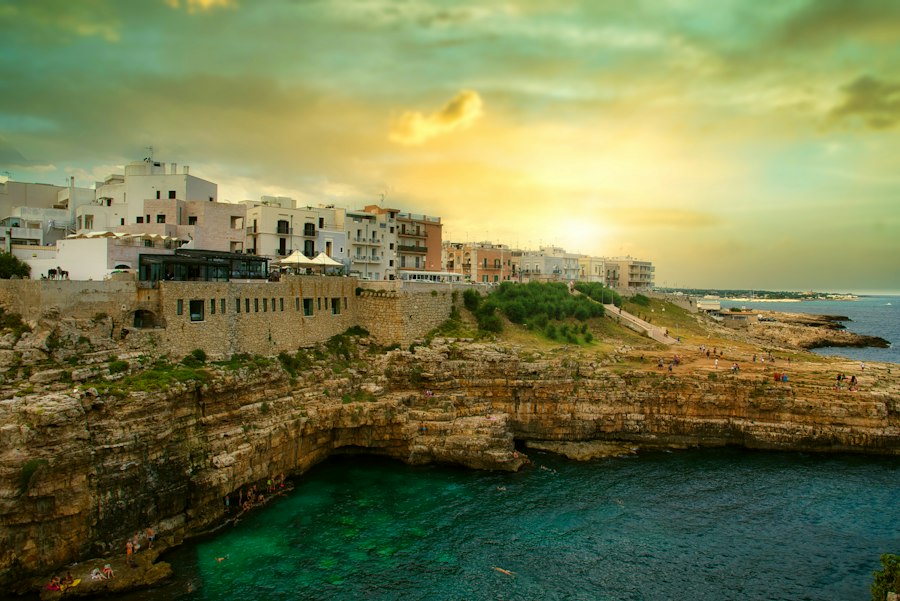
If you are searching for the absolute best Polignano a Mare photo spots to elevate your photography portfolio, you have come to the right place. Perched dramatically on the limestone cliffs of the Adriatic Sea in Puglia, Southern Italy, this ancient town is a dream destination for visual creators. Every narrow alleyway, sun-bleached balcony, and rugged cliffside lookout offers a unique story waiting to be captured through your lens. This comprehensive guide will walk you through the most photogenic locations, complete with camera setups, lighting guides, and walking directions to help you capture the true spirit of this coastal jewel.
Whether you are a seasoned travel photographer aiming for that perfect drone-like perspective or a lifestyle creator looking for romantic, sun-drenched backdrops, this guide has you covered. Let us dive into the ultimate visual journey of this historic seaside town.
1. Lama Monachile (Cala Porto)
This is the iconic postcard view of Puglia. Lama Monachile, also known as Cala Porto, is a breathtaking pebble beach nestled tightly between two towering cliffs of white limestone. Historically, this narrow cove served as an ancient Roman trade route along the Via Traiana. Today, it is one of the most famous coastal sights in Europe, drawing travelers and professional cliff divers from all over the world.
The Best Framing and Composition
To capture the grandeur of this spot, you need to play with scale. Frame your shot from the high bridge overlooking the beach, using the dramatic cliffs on either side to lead the viewer's eye straight down to the turquoise water. If you descend to the pebbled shore, shoot from a low angle looking up at the whitewashed houses balancing precariously on the cliff edge. This perspective emphasizes the dramatic heights and adds a sense of awe to your imagery.
Lighting and Camera Settings
The lighting at Lama Monachile can be tricky due to the high contrast between the dark shadows of the cliffs and the bright midday sun. The absolute best time to shoot here is during the golden hour, just before sunset, when the limestone walls glow with a warm, orange hue. Set your camera to an aperture of f/8 or f/11 to ensure both the beach in the foreground and the buildings in the background remain sharp. Use a circular polarizer filter to cut the glare on the water and make the emerald tones of the Adriatic truly pop.
Pro Photography Tips: Walk down to the beach at sunrise. At this hour, you will have the entire cove to yourself, allowing you to capture clean, minimalist landscapes without crowds of tourists in your frame. Use a slow shutter speed of 1 to 2 seconds with a neutral density filter to smooth out the incoming waves.
2. Pietra Piatta (The Flat Stone)
For a raw, wild, and incredibly expansive view of the coastline, head down to Pietra Piatta. This massive, flat rock platform sits right at the water's edge, offering an unobstructed view of the historic center clinging to the cliffs. It is the perfect place to capture the sheer power of the sea crashing against the ancient stone foundations of the town.
Getting the Perfect Angle
Position your camera low to the flat rock surface to create a strong foreground element. You can use the cracks in the stone or the puddles of saltwater left by the tide as natural leading lines directing the eye toward the distant cliff houses. This spot is also fantastic for wide-angle lifestyle portraits, where your subject stands near the edge of the rocks, dwarfed by the massive scale of the cliffs and the endless horizon.
The Vibe and Atmosphere
The atmosphere here is pure drama. When the sea is rough, the waves explode against the rocks, sending white spray high into the air. To capture this energy, use a fast shutter speed of at least 1/1000s to freeze the action of the water droplets. If you prefer a serene, ethereal aesthetic, visit during a calm blue hour when the sky and sea blend into a soft, monochromatic palette of deep blues and purples.
- Exact Location: Just a short walk north of Lama Monachile, accessible via a flight of stone steps near the statue of Domenico Modugno.
- Best Gear: A wide-angle lens (16-35mm) to capture both the vast sky and the expansive rock platform.
- Safety Note: Be extremely careful on wet rocks, as they can become incredibly slippery when sprayed by the sea.
3. Terrazza Santo Stefano
Tucked away inside the winding maze of the historic center, Terrazza Santo Stefano is one of the most romantic viewpoints in the region. This public balcony opens up suddenly at the end of a narrow alleyway, offering a dizzying, cliffside perspective of Lama Monachile beach from the opposite side of the bridge.
Composition and Visual Storytelling
This viewpoint is ideal for capturing the contrast between the organic, jagged textures of the natural cliffs and the smooth, whitewashed walls of the town. Frame your shot to include some of the local balconies overflowing with green ivy and bright pink bougainvillea in the foreground. This adds layers, depth, and a classic Mediterranean feel to your photograph, making the viewer feel as though they are looking out from a private Italian villa.
Navigating the Historic Alleyways
To reach this spot, enter the historic center through the ancient Porta Grande arch. Follow the main stone path, keeping an eye out for the small wooden signs pointing toward the panoramic viewpoints. Since the alleys are very narrow, they remain shaded for most of the day, creating soft, diffused light that is perfect for street photography and portraits without harsh shadows.
You can find more travel planning resources and lodging recommendations near these viewpoints on popular travel platforms like TripAdvisor to help plan your photography itinerary.
4. Grotta Palazzese Viewpoint
Grotta Palazzese is world-famous for its luxury restaurant built inside a natural sea cave. While dining there is a unique experience, creators can capture stunning photos of this geological wonder from a nearby public viewing point without booking a table. The sight of the deep cave opening up to the emerald sea is spectacular.
How to Frame the Cave
Walk along the cliffside path on Via Narciso to find the best vantage points looking down at the cave entrance. Use the natural arch of the cavern to frame the turquoise water inside. If you shoot during the late afternoon, the sun will illuminate the interior of the cave, revealing the rich textures of the limestone walls and the glowing water beneath.
Technical Camera Tips
- Exposure: Because the cave interior is dark and the surrounding cliffs are bright, use exposure bracketing (taking 3 to 5 photos at different exposures) and merge them later as an HDR image.
- Aperture: Keep your aperture around f/5.6 to f/8 to maintain sharpness while allowing enough light into the camera sensor.
- Tripod: Use a lightweight travel tripod to keep your camera stable, especially if you are shooting during the twilight hours when light levels drop.
5. Scoglio dell'Eremita (Hermit's Rock)
Located slightly south of the main town center, Scoglio dell'Eremita is a solitary, massive rock islet rising dramatically from the sea. Legend has it that a missionary monk lived on this isolated rock in solitude during the Middle Ages. Today, it stands as a powerful symbol of the rugged Pugliese coastline and is one of the most peaceful photography locations in the area.
Capturing the Golden Hour Sunset
Unlike the crowded spots in the historic center, this location offers a quiet space to connect with nature. The sun sets directly behind the coastline, casting the Hermit's Rock into a beautiful, sharp silhouette against a fiery sky. This is the perfect spot to practice minimalist composition, placing the solitary rock off-center using the rule of thirds to create a sense of vastness and quiet contemplation.
Pro Photography Tips: Bring a telephoto lens (70-200mm) to compress the distance between the mainland and the rock. This compression makes the islet appear larger and more imposing in your frame, highlighting the dramatic textures of the nesting seabirds and weathered stone.
For more detailed maps of the Pugliese coastline and historical context about these coastal watchtowers, check out the official travel guides on Lonely Planet.
6. The Alleyways of the Centro Storico
No photography trip to this coastal town is complete without exploring the labyrinth of the Centro Storico. The narrow streets are paved with polished white stones that reflect the light beautifully, creating a natural bounce card effect that is incredibly flattering for portraits and lifestyle shots.
Finding the Hidden Details
As you wander through the historic center, look for the poetic quotes painted onto the stone steps, walls, and doors by a local artist known as Guido il Flaneur. These written words add a literary, romantic layer to your street photography. Look up to capture the laundry hanging between balconies, the rustic wooden doors, and the local shrines adorned with fresh flowers.
Creative Composition in Tight Spaces
Because the streets are narrow, space is limited. To make the most of these tight quarters, try these creative techniques:
- Look Up: Shoot straight up to capture the contrast between the white stone walls and the deep blue Italian sky framed by the roofs.
- Use a Prime Lens: A 35mm or 50mm prime lens with a wide aperture (f/1.8) will allow you to blur out busy backgrounds, focusing attention entirely on your subject while creating a beautiful, soft bokeh.
- Capture the Locals: Respectfully document the daily life of the residents, such as elderly neighbors chatting on doorways or artisans working in their small shops, to bring authentic human emotion into your visual story.
By exploring these stunning viewpoints, you will capture the absolute best of what this magical region has to offer. Pack your camera gear, wake up early to beat the crowds, and let the natural beauty of these coastal spots inspire your creative journey.
Frequently Asked Questions
What is the best time of day to photograph Lama Monachile beach?
Go early in the morning for soft light and fewer crowds. Late afternoon also offers warm golden tones on the cliffs.
Where can I capture the classic Polignano a Mare cliffside view?
The Ponte di Polignano bridge offers the iconic view of the town perched above the sea. Shoot from the bridge or the terrace beside it for the postcard angle.
Are there photo spots in Polignano a Mare that work well at sunset?
The terrace near the historic center and the Lungomare walkway are great for sunset shots. They give you wide sea views with warm backlighting.
Can I take good photos in Polignano a Mare without a drone?
Yes, the cliff overlooks, bridge, and old town alleys provide strong compositions on foot. A wide-angle lens helps capture the dramatic coastal scale.
What should I wear or bring for a photo walk in Polignano a Mare?
Wear comfortable shoes because many spots involve stairs and uneven stone streets. Bring a lens cloth and a small tripod for low-light shots near the sea.

Sophie Lefebvre writes about the most photogenic places to visit, pairing stunning locations with the practical details of getting there. She helps travellers find the views worth planning a whole trip around.
💬 Comments (0)
No comments yet. Be the first!