San Sebastian Coastal Photography Spots
Plan your 2026 trip to Basque Country with this visual guide to the best San Sebastian coastal photography spots.
San Sebastian Coastal Photography Spots: The Ultimate Visual Guide to Basque Country Shores
If you are searching for the ultimate San Sebastian coastal photography spots, you have arrived at the perfect visual playground where the moody Bay of Biscay meets dramatic Belle Epoque architecture. This northern Spanish gem, known locally as Donostia, offers an incredible mix of rugged cliffs, golden sands, and crashing Atlantic waves. For photographers, capturing this coastline is all about understanding the unique coastal light, the shifting tides, and the rich maritime history that shapes every frame. Whether you are aiming to capture a minimalist long exposure or a dramatic golden hour sunset, this guide will walk you through the absolute best vantage points along this breathtaking shoreline.
To help you plan your photographic journey, we have compiled the definitive list of coastal locations in San Sebastian. We will dive deep into the history, the exact gear setup, and the precise walking directions for each spot. For broader travel planning and local logistics, you can check out resources like Lonely Planet and search for top-rated local experiences on TripAdvisor. Now, grab your camera, pack your neutral density filters, and let's explore the stunning Basque coast.
La Concha Beach: The Iconic Crescent Bay
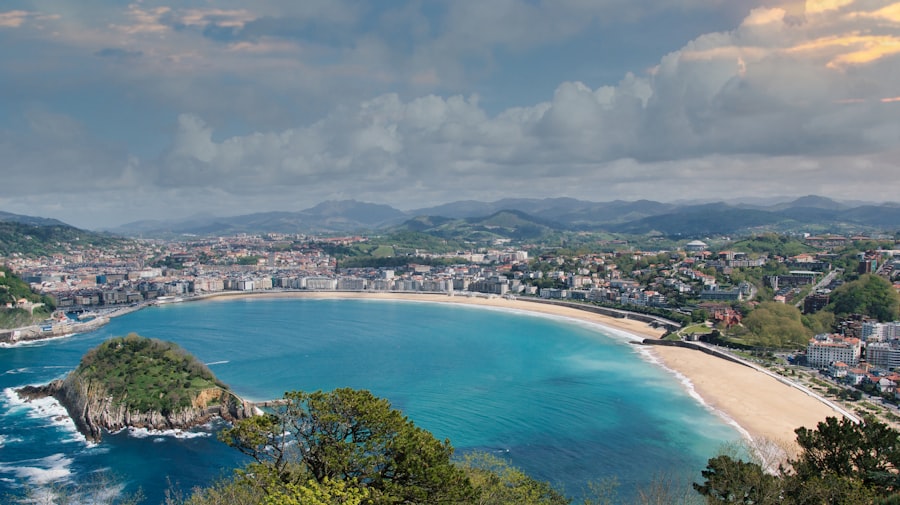
La Concha is globally renowned as one of Europe's most beautiful urban beaches. This perfectly curved bay, framed by Monte Urgull on one side and Monte Igueldo on the other, offers an elegant, symmetrical composition that has attracted artists for over a century. During the late 19th century, Queen Maria Cristina made San Sebastian her summer residence, transforming this former fishing village into a high-society resort. The legacy of this golden era is visible in the ornate white railings, the vintage lamp posts, and the grand spa buildings that line the promenade.
Composition and Framing at La Concha
The key to photographing La Concha is using the famous white wrought-iron railing as a leading line. This railing, designed by Juan Rafael Alday in the early 20th century, provides a beautiful foreground element that guides the viewer's eye across the sweeping curve of the bay toward Santa Clara Island. For a unique framing option, step down onto the sand at low tide to capture the wet, reflective surface reflecting the pastel hues of the sky. The vibe here is classic, elegant, and deeply nostalgic.
Best Camera Settings and Lighting
To capture the soft, dreamlike atmosphere of La Concha, shoot during the blue hour just after sunset. The city lights along the promenade turn on, casting warm golden reflections onto the cool blue water. Use a sturdy tripod and a shutter speed of 2 to 5 seconds to smooth out the gentle shore waves. Keep your ISO at 100 for maximum image clarity and set your aperture to f/11 to ensure both the foreground railing and the distant island remain in sharp focus.
Pro Photography Tip: To avoid tourists in your frame, shoot during the early morning blue hour. The sand is freshly combed by beach tractors, leaving pristine, geometric patterns that add a clean, textured layer to your foreground compositions.
Monte Igueldo: The Dramatic Panoramic Overlook
For the ultimate postcard shot of the entire bay, Monte Igueldo is an absolute must-visit. Situated at the western end of the city, this hill has served as a lookout point since the 16th century, guarding the harbor against pirates and invading fleets. Today, it houses a vintage amusement park from 1912, adding a whimsical, retro vibe to the rugged natural scenery. From this high altitude, the scale of the coastline truly becomes apparent, making it one of the premier San Sebastian coastal photography spots for landscape enthusiasts.
Angles and Lens Selection
From the lookout terraces near the old tower, you have a sweeping panoramic view of the entire city. A wide-angle lens (16-35mm) is essential if you want to capture the dramatic curve of La Concha Beach, Santa Clara Island, and Monte Urgull all in a single frame. Alternatively, switch to a medium telephoto lens (24-70mm) to compress the scene, bringing the distant historic buildings of the Old Town closer to the rugged island in the foreground.
Walking Directions and Access
- Start at the western end of Ondarreta Beach, near the Royal Tennis Club.
- Locate the historic Funicular station, which has been operating since 1912.
- Take the funicular ride up the steep tracks to the summit for a nostalgic journey.
- Alternatively, walk up the winding road (Paseo de Igueldo) for a challenging 30-minute hike with emerging coastal vistas.
The Comb of the Wind: Where Art Meets the Ocean
Located at the very end of Ondarreta Beach, Peine del Viento (The Comb of the Wind) is a masterpiece of public art integrated into the natural landscape. Created by the famous Basque sculptor Eduardo Chillida and architect Luis Pena Ganchegui in 1977, this installation consists of three massive steel sculptures anchored into the pinkish-grey coastal rocks. The sculptures are designed to "comb" the incoming Atlantic winds and waves, creating a dramatic tension between industrial steel and raw, untamed nature.
Capturing the Raw Energy and Shutter Speed
This spot is all about action, contrast, and high drama. The vibe here is powerful, moody, and elemental. To capture the true power of the waves crashing through the steel claws, you need to experiment with different shutter speeds. Use a fast shutter speed (1/1000s or faster) to freeze the explosive sea spray into thousands of distinct water droplets, showcasing the violent power of the ocean.
Long Exposure Techniques
Conversely, during a overcast day, a long exposure can transform the chaotic sea into a ghostly, ethereal mist. Use a 6-stop or 10-stop Neutral Density (ND) filter to extend your exposure time to 30 seconds. This technique softens the water, making the dark, rusted steel sculptures stand out as sharp, silent sentinels amidst a sea of white fog. Pay close attention to your framing, ensuring the horizon line is perfectly straight.
Pro Photography Tip: Watch out for the blowholes built into the stone plaza. When large waves crash against the cliffs below, air and water are forced upward through these ground vents with a loud roar. Keep your camera gear protected with a rain sleeve, as salt spray is highly corrosive.
Monte Urgull: History and Hidden Coastal Paths
Monte Urgull stands as a silent guardian at the eastern end of the bay, separating the historic Old Town from the open sea. This hill is steeped in military history, featuring the ruins of the 12th-century Castillo de la Mota, old stone fortifications, and historic cannons pointing out toward the Bay of Biscay. For photographers, Urgull offers a maze of shaded walking paths, stone archways, and hidden viewpoints that look down onto the rocky shoreline below.
Key Photographic Vantage Points on Urgull
- The English Cemetery: A quiet, moss-covered cemetery on the northern slope dedicated to British soldiers who fell here in the 19th century. The lighting here is beautifully filtered by the dense tree canopy, creating a somber, gothic vibe.
- The Battery of Santiago: A historic stone platform featuring old cannons that look directly down onto the harbor and Santa Clara Island. This is a fantastic spot for framing your shot using the stone embrasures of the fortress walls.
- Paseo Nuevo Lookout: The winding path at the base of the hill where the waves crash spectacularly against the sea walls.
Lighting and Golden Hour
The western slopes of Monte Urgull offer spectacular views of the sunset over the harbor. As the sun dips below the horizon, it casts a warm, golden glow over the colorful fishing boats docked in the port. Use a polarising filter to cut through the glare on the water and enrich the warm tones of the old stone walls.
Zurriola Beach: The Raw, Surfing Vibe
Unlike the calm, protected waters of La Concha, Zurriola Beach is open directly to the fierce Atlantic Ocean. Located in the trendy neighborhood of Gros, this beach is the epicenter of San Sebastian's surf culture. The vibe here is youthful, energetic, and dynamic. The modern, cubic Kursaal Congress Centre sits at the western edge of the beach, providing a striking contemporary contrast to the historic parts of the city.
Composition and Action Photography
Zurriola is one of the premier San Sebastian coastal photography spots for capturing action and movement. Position yourself on the breakwater wall (Paseo de la Zurriola) at the eastern end of the beach. From here, you can use a telephoto lens (200-400mm) to get tight shots of surfers carving through the waves. Look for interesting composition angles by shooting from a low perspective, using the wet sand of the shoreline to reflect the colorful surfboards and the dramatic Basque sky.
Best Shutter Settings for Surf Shots
- Use continuous autofocus (AF-C) to track the fast-moving surfers through the waves.
- Set your shutter speed to at least 1/1600s to ensure the surfer and the flying water droplets are tack-sharp.
- Shoot in burst mode (high-speed continuous) to capture the exact peak of the action as the surfer executes a turn.
Saturraran and Flysch Cliffs: The Geological Wonders
While not located directly in the city center, no guide to the coastal photography of this region is complete without mentioning the dramatic Flysch rock formations located just a short drive west along the coast. These unique, layered rock formations look like giant stone ribs stretching out into the sea. They were formed over millions of years by sediment deposition, creating a surreal, alien landscape that is a dream for landscape photographers.
Composition and Tide Planning
Photographing the Flysch requires careful planning around the tides. At high tide, these incredible rock formations are completely submerged under the water. At low tide, however, the receding sea reveals the intricate, mossy green stone channels. Use a wide-angle lens placed very low to the ground to emphasize the leading lines of the rock ridges as they point directly toward the horizon.
Walking Directions and Getting There
- From San Sebastian, take the AP-8 highway west toward the coastal town of Zumaia (approximately a 30-minute drive).
- Park near the beach of Itzurun, which is surrounded by the most dramatic vertical cliffs.
- Follow the well-marked coastal footpaths along the cliff edge for breathtaking aerial views of the geological layers before descending safely to the rocky beach.
By exploring these incredible San Sebastian coastal photography spots, you will capture the rich diversity of the Basque Country shoreline, from elegant urban bays and historical fortresses to raw surf beaches and ancient geological wonders. Pack your gear, respect the powerful Atlantic tides, and enjoy capturing the beautiful light of this coastal paradise.
Frequently Asked Questions
What is the best time of day to photograph San Sebastian's coastline?
The golden hours—early morning and late afternoon—offer the softest light and most dramatic colors, especially around La Concha Bay. Avoid midday harsh sunlight for the best results.
Where can I capture the iconic view of La Concha Beach?
Head to Monte Igueldo's viewpoint or the Miramar Palace gardens for sweeping panoramic shots. Both locations provide classic, frame-worthy perspectives of the bay and islands.
Are there hidden coves near San Sebastian ideal for seascape photography?
Yes, walk west toward the fishing village of Orio or explore the trails around Mount Urgull to find secluded coves with rugged rock formations. These spots offer calmer, less crowded scenes.
What camera settings work best for photographing ocean waves in this area?
Use a fast shutter speed (1/500s or higher) to freeze crashing waves, or a slow shutter (1-2s) with a tripod for silky water effects. Adjust ISO lower (100-200) during daylight to reduce noise.
Are there any photography tours or local guides for spotting the best coastal locations?
Several local tours offer guided sunrise or sunset photo walks along the Paseo Nuevo and Peine del Viento sculpture. Check with the San Sebastian tourism office for seasonal options.

Sophie Lefebvre writes about the most photogenic places to visit, pairing stunning locations with the practical details of getting there. She helps travellers find the views worth planning a whole trip around.
💬 Comments (0)
No comments yet. Be the first!