6 Marseille street photography spots
Explore the top Marseille street photography spots in 2026, from the graffiti of Le Panier to historic coastal harbors.
6 Marseille street photography spots
If you are looking to capture the raw, sun-drenched soul of southern France, mastering the best Marseille street photography spots is an absolute must for your visual portfolio. Marseille is a city of glorious contradictions. It is a place where ancient maritime history crashes headfirst into modern, rebellious urban art. With its blinding Mediterranean light, deep coastal shadows, and diverse neighborhoods, this port city offers an endless playground for visual storytellers. From the salty air of the old harbors to the graffiti-drenched alleyways of the creative quarters, your camera will find something compelling around every single corner.
Whether you are a seasoned professional wielding a medium-format camera or an enthusiastic hobbyist with a mirrorless setup, Marseille demands a keen eye for lighting and composition. The city is famous for its intense Mistral wind, which sweeps the skies clean and leaves behind a sharp, high-contrast light that street photographers dream about. In this comprehensive guide, we will explore six incredible locations that will elevate your portfolio, offering detailed walking directions, historical context, and technical tips to capture the perfect frame.
1. Le Panier: The Historic Heart of Marseille
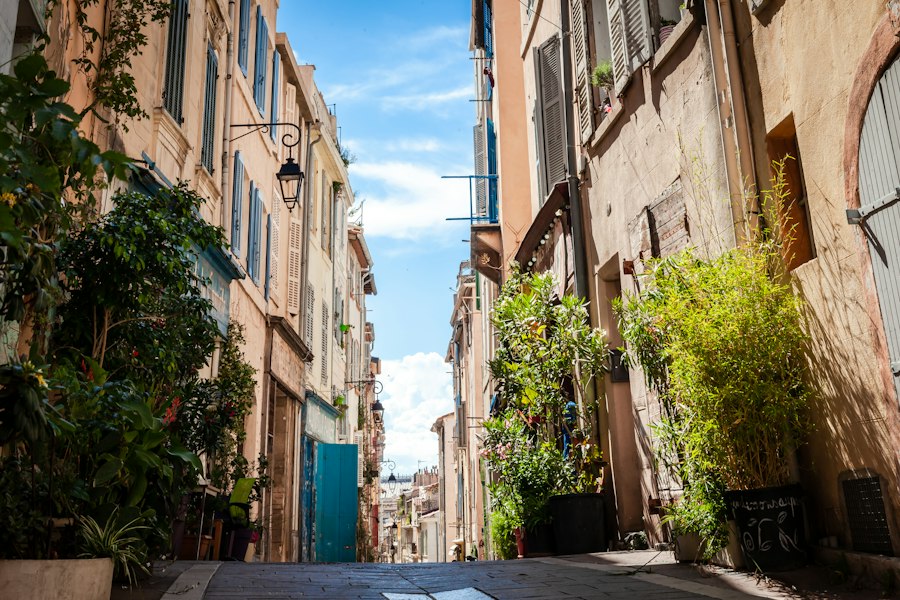
Le Panier is Marseilles oldest district, dating back to 600 BC when the Greeks first settled the area. Today, it stands as a living labyrinth of pastel-colored tenements, steep staircases, and laundry lines strung across narrow alleys. The vibe here is old-world Mediterranean, but with a distinctly bohemian twist. Every corner reveals layers of weathered plaster, potted plants, and spontaneous local interactions that are perfect for candid street photography.
The Best Light and Framing in the Old Town
Because the streets in Le Panier are incredibly narrow, direct sunlight only penetrates the alleyways for a brief window around midday. However, the best time to shoot is during the late afternoon when the sun hits the tops of the buildings, bouncing a warm, golden glow down onto the cobblestones. Use a 35mm prime lens to capture the tight relationships between the architecture and the residents. Look for high-contrast frames where a subject walks from a deep shadow into a sharp shaft of golden light.
Walking Directions and Navigation
To reach Le Panier, start at the Vieux Port and walk north up the Rue de la Republique. Turn left onto Grand Rue, and then take the historic steps up Grand Rue de Lenche. This opens up into a lovely square that serves as the perfect launching pad into the steep, winding maze of Le Panier. Be sure to explore the quiet side streets branching off from Place de Lenche to escape the main tourist crowds.
Pro Photography Tips: Set your camera to Aperture Priority at f/5.6 to ensure both your human subject and the textured background remain relatively sharp. Keep your ISO on auto with a minimum shutter speed of 1/250s to freeze the motion of locals carrying groceries or children running up the stone steps.
2. Noailles: The Vibrant, Bustling Souk of France
For a complete shift in energy, head directly to Noailles. Often referred to as the belly of Marseille, this neighborhood is a chaotic, sensory-rich market district that feels more like Algiers or Tunis than mainland Europe. The air here is thick with the aroma of roasting spices, fresh mint, and grilled meats. It is one of the most energetic Marseille street photography spots, offering unparalleled opportunities for raw, documentary-style portraiture and fast-paced street action.
The visual appeal of Noailles lies in its sheer density and movement. The streets are packed with metal market stalls, colorful fruit displays, and a diverse tapestry of people from all over the Mediterranean basin. This is not a place for slow, tripod-based composition; you need to be quick, respectful, and highly adaptable to your surroundings.
- Key Photographic Subjects: Spice merchants framing their colorful conical displays, active bartering at the fruit stalls, and dramatic steam rising from street food vendors.
- Composition Technique: Use a wide-angle lens (24mm or 28mm) to shoot from the hip, capturing the immense scale of the crowds and the tight urban framing of the market stalls.
- Vibe Check: Energetic, loud, chaotic, and incredibly rewarding for photographers who love gritty, unposed human interaction.
3. Cours Julien: The Capital of Street Art
If your photographic style leans toward bold colors, graphic shapes, and youth culture, Cours Julien is your paradise. Located on a hill overlooking the city, this trendy neighborhood is the epicenter of Marseilles creative scene. Every square inch of wall space, metal shutter, and doorway is covered in high-quality graffiti and street art. The vibe here is laid-back, artistic, and fiercely independent, populated by musicians, artists, and skateboarders.
Capturing Urban Geometry and Color
The geometric patterns of the murals provide fantastic opportunities for creative framing. You can use the colorful graffiti as a vibrant backdrop, waiting for a pedestrian wearing contrasting colors to walk through your frame. The large central square, Place Notre Dame du Mont, features outdoor cafes and fountains where people gather, making it an excellent spot for capturing relaxed, candid moments of urban life.
How to Get There
From the Vieux Port, walk east along Rue de la Darse, which transitions into Rue Aubagne. Follow this street uphill until you reach the grand, graffiti-covered staircase of Cours Julien (Escaliers du Cours Julien). Climbing these stairs is an experience in itself, with every step offering a different angle and a new perspective on the city below.
For more inspiration on capturing urban art scenes across Europe, you can explore the extensive travel guides on Lonely Planet to plan your next creative journey.
4. Le Vallon des Auffes: A Hidden Fishing Village
Tucked away beneath a massive concrete bridge of the Corniche President John F. Kennedy lies Le Vallon des Auffes. This tiny, picturesque fishing harbor feels like a secluded village frozen in time, despite being just a short distance from the bustling city center. Traditional, brightly painted wooden boats (known as pointus) bob gently in the water, surrounded by small fisherman cottages and high-end seafood restaurants.
The Contrast of Angles and Scale
What makes this one of the most unique Marseille street photography spots is the dramatic contrast in scale. By standing near the water, you can shoot upward, using the massive stone arches of the bridge to frame the tiny boats and historic cabins below. This juxtaposition of monumental infrastructure and quaint maritime life creates a powerful visual narrative.
Pro Photography Tips: Visit Le Vallon des Auffes during the golden hour just before sunset. The sun sets directly over the sea, casting a warm, orange glow on the stone bridge and creating long, dramatic shadows across the harbor. Use a polarizing filter to manage the reflections on the water and enrich the deep blues of the sea.
5. La Joliette and the MuCEM: Modern Architecture meets Maritime History
For photographers who prefer clean lines, minimalism, and architectural abstraction, the waterfront district of La Joliette is a dream come true. This area has undergone a massive urban renewal project, culminating in the stunning Museum of European and Mediterranean Civilizations (MuCEM). Designed by architect Rudy Ricciotti, the building is encased in a breathtaking concrete lattice that filters the harsh Mediterranean sunlight into intricate patterns of light and shadow.
Mastering Shadows and Geometric Framing
The pedestrian footbridges and walkways surrounding the MuCEM are perfect for studying the interplay of light. As the sun moves across the sky, the concrete mesh casts evolving, geometric shadows onto the walkways and the visitors below. This is an ideal location for minimalist street photography, where you can wait for a single, isolated subject to walk through a complex pattern of light.
- Best Time to Shoot: Midday to early afternoon, when the high sun projects the sharpest, highest-contrast shadows through the concrete lattice.
- Recommended Lens: A 50mm or 85mm prime lens to isolate subjects against the complex architectural textures.
- Key Composition Tip: Look for leading lines along the footbridges that guide the viewer’s eye toward the historic Fort Saint-Jean in the background.
For detailed reviews of the architectural significance of this area and visitor tips, check out the community recommendations on TripAdvisor.
6. Le Vieux Port: The Ultimate Daily Stage
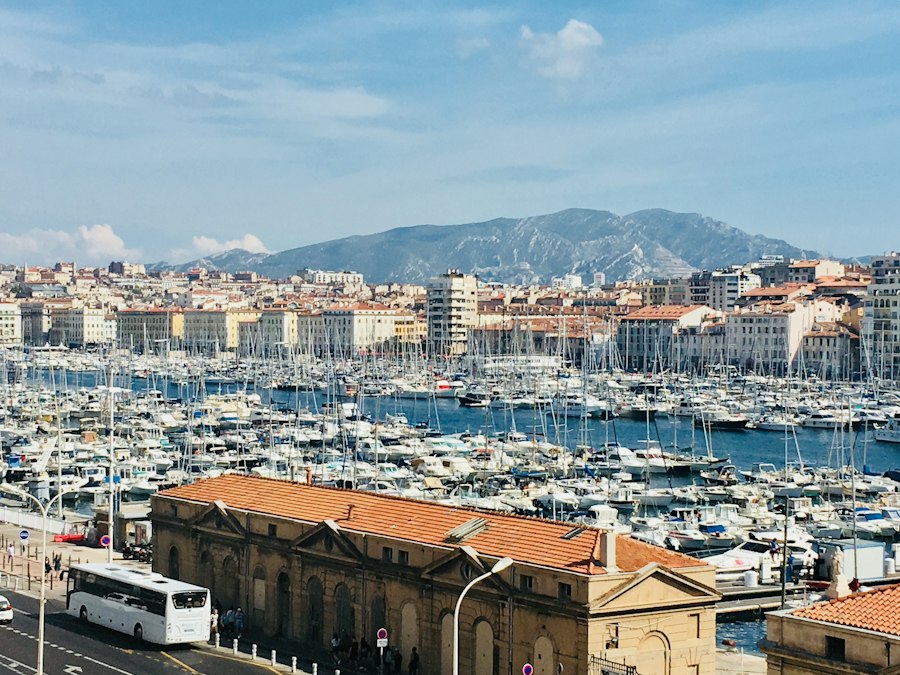
No exploration of Marseille street photography spots would be complete without spending significant time at the Vieux Port (Old Port). This is the historic, cultural, and geographic heart of Marseille. From the early morning fish market to the evening buskers performing under the giant mirrored canopy designed by Norman Foster, the Vieux Port is a non-stop stage of human activity.
Capturing the Reflected City
The giant stainless-steel canopy, known as L Ombriere, is a photographer’s playground. It reflects the pedestrians walking underneath upside down, creating surreal, inverted compositions. You can shoot straight up to capture the reflections, or shoot at an angle to include both the real subjects and their mirrored counterparts in a single, mind-bending frame.
Walking Directions and Practical Advice
The Vieux Port is easily accessible as the central hub of the city’s metro system (Vieux-Port station). Simply step out of the station, and you are immediately in the center of the action. Walk along the northern quay (Quai du Port) in the morning for beautiful backlighting on the boats, and switch to the southern quay (Quai de Rive Neuve) in the afternoon to capture the golden light illuminating the facade of the historic city.
Frequently Asked Questions
What are the best Marseille street photography spots?
Le Panier, the Vieux-Port, and Noailles are among the best areas for colorful, character-filled street shots. Each offers distinct architecture, light, and local life.
Where can I photograph the iconic Marseille street art?
Le Panier and the Cours Julien district are the top spots for vibrant murals and graffiti. Both neighborhoods are walkable and constantly evolving.
What is the best time of day for street photography in Marseille?
Early morning and late afternoon offer the softest light and fewer crowds. The golden hour around the Vieux-Port is especially striking.
Is Marseille safe for street photographers?
Most central areas like Le Panier and the Vieux-Port are safe during the day, but stay aware of your surroundings. Avoid isolated spots at night and keep your gear discreet.
Do I need a permit to shoot street photography in Marseille?
No permit is needed for casual, personal street photography in public spaces. For commercial shoots or tripods in busy areas, it's best to check local rules.

Sophie Lefebvre writes about the most photogenic places to visit, pairing stunning locations with the practical details of getting there. She helps travellers find the views worth planning a whole trip around.
💬 Comments (0)
No comments yet. Be the first!