Jiufen Teahouse Photography Spots
A curated guide to the best Jiufen teahouse photography spots. Capture the magic of Taiwan's glowing lanterns in 2026.
Jiufen Teahouse Photography Spots
Exploring the mist-shrouded, lantern-lit alleys of Taiwan's northeast coast is a dream come true for any visual storyteller, especially when you are hunting for the ultimate Jiufen teahouse photography spots. This historic mountain town, with its dramatic views of the Keelung outer harbor and its cascading wooden architecture, feels like a living movie set. Once a bustling gold mining hub during the Japanese colonial era, this hillside village has transformed into a global pilgrimage site for photographers seeking that nostalgic, glowing aesthetic. When the evening fog rolls in from the Pacific Ocean and the iconic red lanterns flicker to life, the entire landscape transforms into a cinematic masterpiece.
To capture the true essence of this magical destination, you need more than just a camera; you need a game plan. The narrow staircases can become incredibly crowded, and finding the perfect vantage point requires knowing exactly where to stand, what time to arrive, and how to configure your gear. In this comprehensive guide, we will take you through the absolute best spots to capture the glowing tea culture of this mountain town, complete with technical advice, composition secrets, and historical context to elevate your travel portfolio.
The Legendary Amei Teahouse Vantage Points
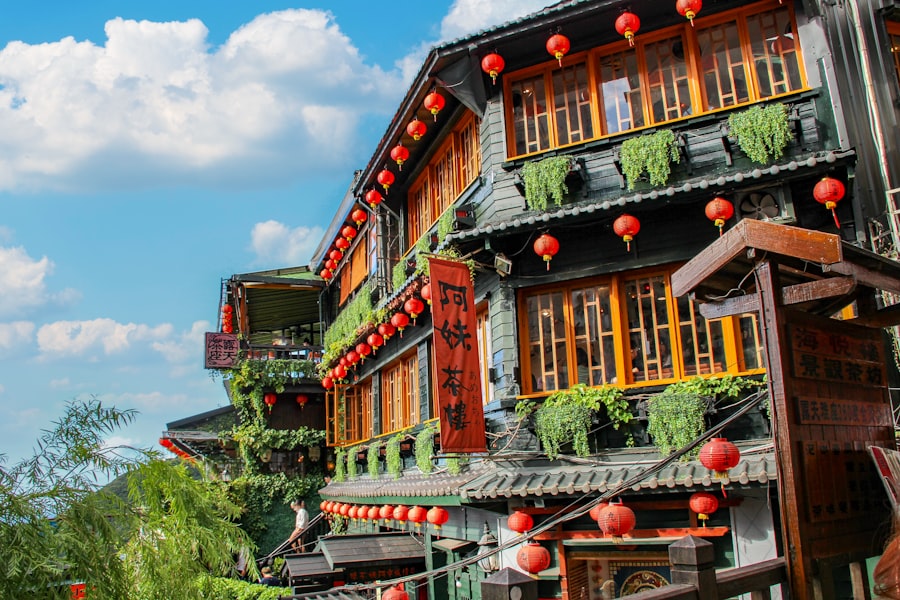
You cannot talk about this mountainside town without focusing on its most famous landmark. The multi-story wooden facade, draped in vibrant green vines and adorned with dozens of glowing scarlet lanterns, is the crown jewel of local tourism. While rumors often link this stunning structure to classic animated films, its true charm lies in its authentic architectural design and its commanding presence over the steep, vertical landscape.
Pro Photography Tips: To handle the extreme contrast between the dark night sky and the intensely bright red lanterns, use your camera's high dynamic range (HDR) bracketing mode. Take three exposure shots (one under-exposed, one neutral, and one over-exposed) and merge them in post-processing. This ensures you do not blow out the delicate details of the lantern calligraphy while keeping the wooden textures visible.
The Steps of Shuqi Road
The most iconic view of the teahouse is captured from the steep stone stairs of Shuqi Road, looking directly up at the glowing wooden balconies. This angle emphasizes the towering, vertical scale of the architecture. To get a clean shot without hundreds of tourists blocking your frame, you must be patient. To find this spot, walk down the main vertical thoroughfare from the Old Street entrance. The steps are uneven and can be slippery when wet, so wear sturdy shoes. Set your camera on a sturdy travel tripod, position yourself on the right side of the steps to allow pedestrian flow, and use a wide-angle lens (around 16mm to 24mm) pointed upward. This dramatic low angle creates a powerful sense of depth and scale, making the building look like it is floating in the clouds.
The Opposite Terrace View
For a direct, eye-level perspective of the glowing facade, head to the terrace of the Skyline Teahouse, located directly across the narrow alleyway. This spot offers a perfectly balanced, symmetrical composition. From here, you can capture the entire multi-tiered structure of your main subject against the backdrop of the distant ocean and rolling hills. To access this viewpoint, you will need to enter the opposite establishment and purchase a hot drink or a traditional tea set. It is highly recommended to book a table on their outdoor balcony well in advance. Set up your camera with a standard 35mm prime lens to avoid edge distortion, and wait for the twilight hour, often called the blue hour, when the deep blue sky perfectly contrasts with the warm, golden glow of the lanterns.
The Historic Jiufen Teahouse Interior and Artistry
While the exterior views get the most attention on social media, the interior of the oldest tea establishment in town offers an incredibly rich, moody atmosphere for indoor lifestyle photography. Established in a beautifully preserved mining headquarters, this location combines art, history, and tea culture under one roof. The rustic wooden beams, antique charcoal stoves, and handmade ceramic teaware provide endless opportunities for close-up shots and moody portraits.
Capturing the interior requires a shift in your photographic mindset. Instead of wide landscapes, focus on the intimate details of the traditional brewing process. The rising steam from the boiling water, the reflective surfaces of the polished wooden tables, and the soft light filtering through the paper screen windows all contribute to a cozy, nostalgic vibe that is highly satisfying to capture.
- The Charcoal Hearth: Focus on the glowing red embers of the traditional charcoal stoves used to boil the water. Use a wide aperture like f/1.8 to create a soft, blurry background.
- The Tea Set: Capture a top-down, minimalist composition of the delicate clay teapots, porcelain cups, and dried tea leaves arranged on a dark stone tray.
- The Koi Pond: Photograph the indoor water feature where colorful fish swim beneath wooden walkways, reflecting the warm light of indoor lanterns.
Shengping Theater Square and Retro Framing
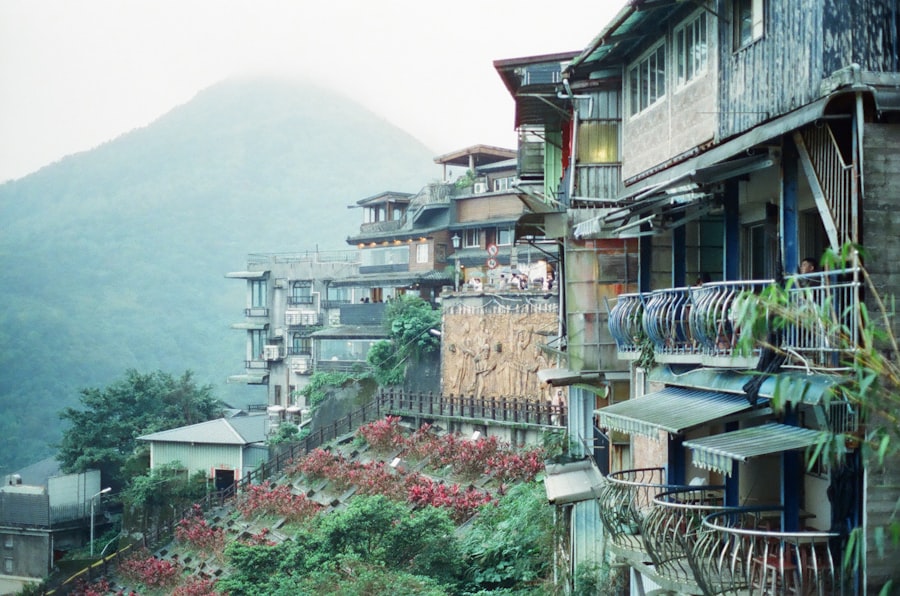
Located at the bottom of the main stone staircase, the plaza outside the historic Shengping Theater offers a fantastic wide-angle perspective of the mountain town's unique architectural layers. Established during the gold rush era, this theater was once the most modern entertainment venue in the region, hosting opera performances and early silent movies. Today, its retro stone facade and vintage movie posters serve as a nostalgic anchor for your street photography.
Standing in the center of the plaza and looking back up the hill gives you a magnificent view of the cascading buildings. The way the structures cling to the steep mountainside creates a natural staircase pattern that leads the viewer's eye through the frame. This spot is particularly beautiful during rainy nights when the wet flagstones reflect the neon signs and red lanterns, doubling the colorful light in your composition.
The Rainy Night Reflection
Do not let a rainy day ruin your shoot; instead, use the wet weather to your advantage. The smooth stones of the theater plaza act like a mirror when wet. Position your camera just a few inches above a puddle to capture a stunning, symmetrical reflection of the glowing lanterns and old storefronts. This technique adds an artistic, dreamlike layer to your travel photos.
The Leading Lines of the Railroad Track
Just outside the theater, you will find remnants of old mining cart tracks that once transported gold ore through the hills. Use these rusty iron rails as natural leading lines in your composition. Position your camera low to the ground, aligning the tracks so they lead the viewer's eye from the bottom corner of the frame directly toward the glowing teahouses in the background.
Panoramic Overlooks from the Mount Keelung Trail
For photographers who want to capture the entire mountain village nestled in its dramatic coastal landscape, escaping the crowded alleys is essential. The Mount Keelung trail, located just a short walk from the main bus stop, offers some of the most breathtaking panoramic vistas of the area. Climbing this peak gives you an unobstructed, bird's-eye view of the glowing town contrasting with the dark, moody waters of the Pacific Ocean.
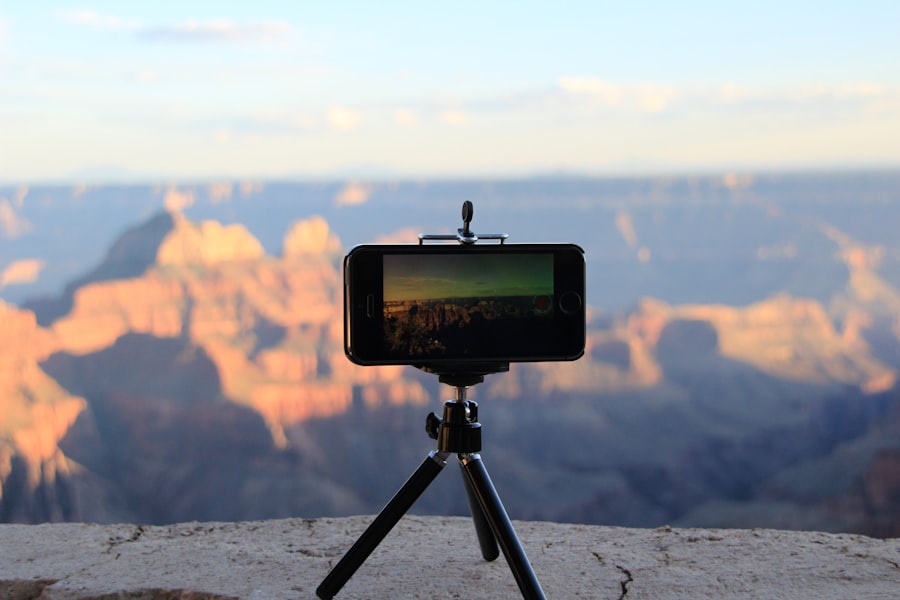
Pro Photography Tips: When shooting panoramic landscapes at dusk, use a sturdy tripod and a telephoto lens (such as a 70-200mm). Zooming in on the dense cluster of glowing buildings allows you to compress the perspective, making the teahouses appear tightly packed together, highlighting the unique vertical density of this mountainside settlement.
The trail consists of well-maintained stone steps, but it can be a steep climb that takes about 30 to 45 minutes to reach the main pavilions. The effort is highly rewarded. From the viewing platforms, you can use a slow shutter speed (around 10 to 30 seconds) to blur the moving clouds and smooth out the ocean waves, creating a serene, ethereal landscape photo that stands out from the typical close-up street shots.
Practical Planning for Your Photography Expedition
To get the absolute most out of your visit to these incredible jiufen teahouse photography spots, careful planning is required. Because this destination is world-famous, timing is everything. Arriving at the wrong time can mean fighting through massive crowds, making it nearly impossible to set up a tripod or get a clean shot without hundreds of heads in your frame.
For more detailed travel information, you can consult resources like the Lonely Planet Guide to Taiwan or read real-time traveler reviews and transport tips on TripAdvisor to help plan your commute from Taipei.
- The Golden Hour: Arrive at least two hours before sunset. This gives you plenty of time to scout your locations, check the lighting conditions, and secure a prime spot before the crowds peak.
- Midweek Advantage: Plan your photography shoot for a Tuesday, Wednesday, or Thursday. Weekends are incredibly busy with local day-trippers, making photography much more challenging.
- Weather Preparedness: This coastal mountain region is notorious for sudden rain and heavy mist. Always pack a high-quality rain cover for your camera bag and a lens hood to keep raindrops off your glass elements.
Essential Camera Settings for Low-Light Lantern Photography
Shooting in this unique environment presents several technical challenges. You are dealing with very dark alleys illuminated by incredibly bright, localized light sources (the lanterns). To ensure your images are sharp, clean, and properly exposed, you must move away from automatic camera modes and take manual control of your settings.
First, keep your ISO as low as possible to prevent digital noise in the dark shadow areas of your frame. If you are using a tripod, set your ISO to 100 or 200 and use a longer shutter speed to let in more light. If you are shooting handheld, you will need to open your aperture wide (f/1.8 to f/2.8) and raise your ISO to around 1600 or 3200 to keep your shutter speed fast enough (at least 1/60th of a second) to prevent blur from hand shake.
Second, set your white balance manually. The warm, red glow of the lanterns can easily trick your camera's automatic white balance into making the entire image look overly orange or yellow. By setting your white balance to "Tungsten" or manually adjusting the Kelvin scale to around 3200K-4000K, you can preserve the beautiful contrast between the cool blue evening air and the fiery warmth of the historic wooden structures.
Frequently Asked Questions
What is the best time of day to photograph Jiufen teahouses?
Golden hour just before sunset offers warm light on the rooftops, while after dark, the glowing lanterns create a magical atmosphere.
Can I take photos inside the teahouses, or is it prohibited?
Most traditional teahouses allow photography, but always ask staff first and avoid using flash to respect other guests.
Which teahouse has the most photogenic interior for a blog shot?
A-Mei Teahouse is famous for its red lanterns and classic decor, making it a top choice for capturing that iconic Jiufen vibe.
Are there any specific outdoor spots near the teahouses that offer unique angles?
The stairs leading down from the main street (e.g., near Shengping Theater) provide great elevated views of teahouse rooftops and lanterns.
What camera settings or gear are recommended for low-light teahouse shots at dusk?
Use a fast lens (f/1.8 or wider) with a high ISO (800-3200) and a small tripod for sharp handheld shots of glowing interiors and streets.

Sophie Lefebvre writes about the most photogenic places to visit, pairing stunning locations with the practical details of getting there. She helps travellers find the views worth planning a whole trip around.
💬 Comments (0)
No comments yet. Be the first!