Hoi An night photography 2026: Pro Tips
Master Hoi An night photography 2026 with our step-by-step low light guide to capturing glowing lantern-lit streets.
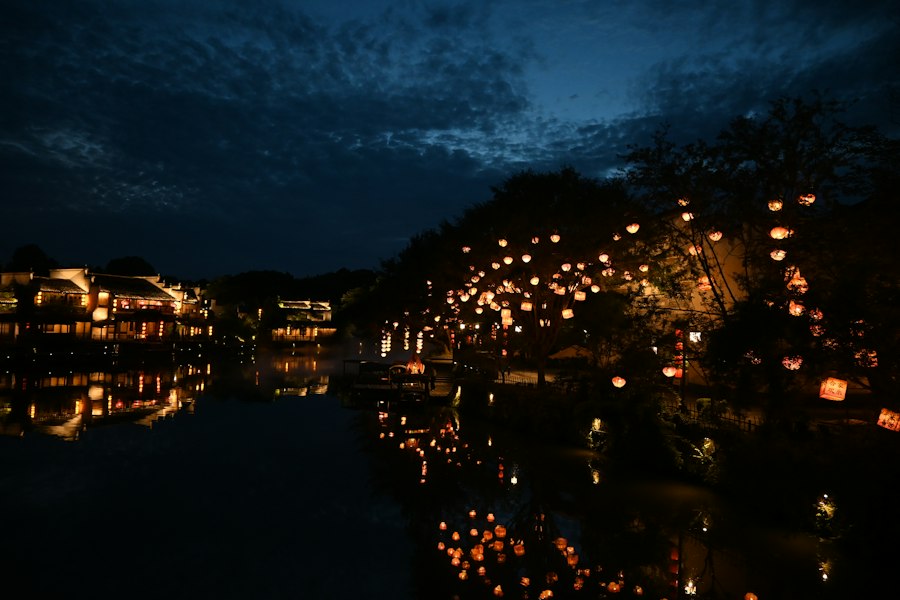
Mastering Hoi An night photography 2026 style means learning how to capture glowing silk lanterns, dark river reflections, and vibrant ancient streetscapes without ending up with blurry or noisy images. I remember my very first trip to this magical Vietnamese town years ago. I was standing on the iconic Japanese Covered Bridge, completely awestruck by the golden lights reflecting on the Thu Bon River. I pointed my camera, pressed the shutter, and ended up with a muddy, grainy mess where all the gorgeous lanterns looked like blown-out orange blobs. My shutter speed was too low, my ISO was way too high, and I was shooting in JPEG. It was a complete disaster! But do not worry, because today I am going to share the exact techniques that turned my photos around so you can skip the beginner mistakes and capture magazine-worthy shots on your next trip.
Essential Equipment for Night Photography in Hoi An
First, let us look at the gear you actually need to shoot effectively after sunset. While modern camera sensors have made low-light shooting easier than ever, having the right tools makes a huge difference when dealing with high-contrast night environments.
When preparing for Hoi An night photography 2026 expeditions, your choice between RAW vs JPEG format is the ultimate foundation. Always choose RAW format! A RAW file acts like a digital negative, preserving all the color and dynamic range data captured by your sensor. This allows you to easily recover shadow details in dark alleys or reduce brightness on overexposed lanterns using editing tools like Adobe Lightroom tutorials without degrading image quality.
Here is my recommended gear list for hitting the yellow streets of the Ancient Town after dark:
- A Full-Frame or APS-C Camera Body: Modern cameras handle low-light noise much better than older sensors or basic smartphones.
- A Fast Prime Lens: A 35mm or 50mm lens with an aperture of f/1.4 or f/1.8 lets in massive amounts of light, creating beautiful background blur.
- A Sturdy Carbon Fiber Tripod: Essential for long exposure shots along the riverbank where you want silky smooth water reflections.
- Lens Hood and Microfiber Cloth: Hoi An can be humid at night, and atmospheric mist can create unwanted flare around bright street lights.
Understanding the Photography Jargon: Exposure and Settings
The secret is finding the perfect balance between your shutter speed, aperture, and ISO. When you shoot Hoi An night photography 2026 scenes, your camera light meter can get easily tricked by the bright glowing lanterns against pitch-black skies.
Let us break down these key concepts into simple terms. Aperture controls your depth of field and light gathering power. A wide open aperture like f/1.8 allows maximum light onto your sensor and creates stunning Bokeh, which is the soft, out-of-focus background blur that turns distant lanterns into magical floating circles of light. ISO determines your sensor light sensitivity. While raising your ISO from 100 to 3200 makes your image brighter, it also introduces digital noise or graininess. Modern camera specifications, like those found on official camera specs pages for the DPReview camera database, highlight how high-performance sensors handle ISO 3200 with minimal noise artifacts.
Golden Rule Cheat Sheet: If your photo is too dark, do not automatically bump up your ISO. First, open your aperture to its lowest f-number (like f/1.8 or f/2.8). If you are using a tripod, lower your shutter speed to 1 or 2 seconds instead!
To keep things straightforward while you walk around the night market, dial in these baseline values on your manual camera modes:
- Drive Mode: Single Shooting (or 2-second delay timer when on a tripod).
- Focus Mode: Single Point AF (aim directly at a solid, high-contrast edge of a lantern).
- Aperture: f/1.8 to f/2.8 for handheld portraits; f/8 for sharp landscape shots on a tripod.
- Shutter Speed: 1/125s for walking crowds; 2 to 5 seconds for smooth river reflections on a tripod.
- ISO: 800 to 3200 for handheld; ISO 100 when locked down on a tripod.
Step-by-Step Guide to Composition and Shooting Techniques
Now try this step-by-step framework during your evening walk through the ancient alleyways. Following these practical stages ensures you walk away with stunning, balanced images every single time.
Step 1: Arrive During Blue Hour
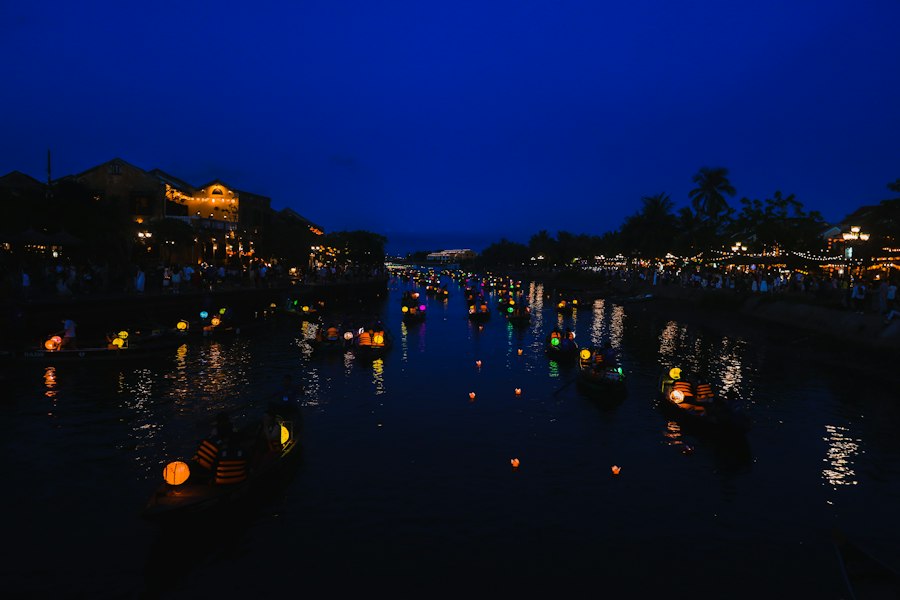
First, let us look at timing. Do not wait until the sky is pitch black! Arrive at the An Hoi Bridge about twenty minutes before sunset. During Blue Hour, the sky turns a deep, royal blue color that creates a striking complementary contrast against the warm, orange, and red tones of the illuminated lanterns.
Step 2: Apply the Rule of Thirds
Next, arrange your composition using the Rule of Thirds. Enable the 3x3 grid overlay in your camera viewfinder. Instead of putting a colorful lantern boat right in the center of your frame, place it along one of the vertical grid lines or at an intersection point. This creates dynamic energy and guides the viewer eyes naturally across your image.
Step 3: Dial in Exposure Compensation
Lanterns create extreme bright spots in dark environments. Turn your Exposure Compensation dial down to -1.0 or -1.5 EV. This intentionally underexposes the dark background slightly so you preserve the rich, saturated colors inside the paper lanterns without clipping the bright highlights.
Step 4: Capture River Reflections with Long Exposure
Set up your tripod along the Thu Bon riverbank. Set your ISO to 100, aperture to f/8, and shutter speed to 4 seconds. As sampan boats glide past with glowing lanterns, your camera will transform the moving water into a painterly, glass-like reflection while creating long light trails across the river surface.
Before & After: Real World Fixes for Hoi An Night Shots
Let us analyze a classic scenario you will encounter while taking Hoi An night photography 2026 shots. Imagine standing in front of a busy lantern shop along Nguyen Thai Hoc street.
Before: You shoot in Auto Mode in JPEG format at night. The camera sees all the dark shadows, freaks out, and automatically raises the ISO to 12800 while popping up the direct flash. The result is a flat, harsh portrait where the subject skin looks washed out, the glowing background lanterns are completely overexposed white circles, and the shadows are filled with heavy purple digital noise.
After: You switch to Manual Mode, shooting in RAW. You turn off the flash, select an aperture of f/2.0, set your ISO to 1600, and choose a shutter speed of 1/160s to freeze human movement. You position your subject so the warm glow from a nearby silk shop illuminates one side of their face like a soft studio light box. The background lanterns blur into beautiful soft Bokeh circles. The rich yellows and reds of the ancient yellow walls retain their historic warmth. The final photo looks romantic, professional, and cinematic!
Pro Creative Tips for Hoi An Night Photography 2026
Don't forget to look for unique framing opportunities. Hoi An is famous for its narrow, lantern-lit alleyways. Position yourself at one end of a narrow street and use a telephoto lens (like an 85mm or 135mm) to compress the background. Compression makes the hundreds of hanging lanterns appear packed closely together, creating a dense, magical wall of color behind your subjects.
Another fantastic technique for your Hoi An night photography 2026 journey is candid street portraiture. Look for local vendors light-filled stalls or sampan boat captains rowing lit lanterns down the river. Respectfully ask or signal for permission before taking close portraits, and always share a smile or purchase a small handmade lantern in return for their time. Using a wide aperture keeps the focus razor-sharp on their expression while softening the bustling night market behind them.
When you edit your RAW files later, use moderate noise reduction settings and preserve the original warm color temperature of the yellow lanterns. With these proven techniques in your photography toolkit, your pictures of Hoi An will stand out with brilliant clarity, vibrant color, and captivating story-telling art for years to come!

Matthias Weber digs into the craft of travel photography, from camera settings to editing. He explains the technical side in plain language so you can spend less time fiddling with dials and more time shooting.
💬 Comments (0)
No comments yet. Be the first!