8 Senja Landscape Photography Spots
Explore the wild Arctic in 2026. Here is your ultimate guide to the best Senja landscape photography spots.
8 Senja Landscape Photography Spots
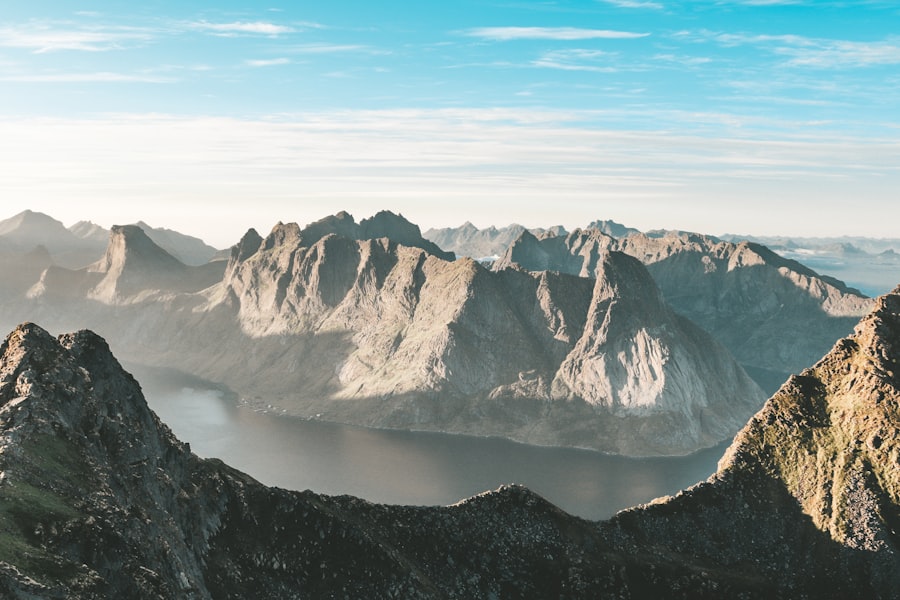
If you are searching for the ultimate Arctic paradise, the dramatic island of Senja in Northern Norway will leave you absolutely breathless. While many travelers flock to the neighboring Lofoten Islands, those in the know head to this rugged gem to capture some of the most dramatic, untouched scenery on Earth. To help you plan your dream creative expedition, we have compiled this definitive guide to the absolute best Senja landscape photography spots that you must add to your bucket list.
From towering granite peaks that plunge vertically into the deep blue Atlantic to quiet, turquoise-water bays that resemble the Caribbean, Senja is a masterclass in natural contrast. In this guide, we will dive deep into the exact coordinates, ideal lighting conditions, composition techniques, and camera settings for eight spectacular locations. Grab your wide-angle lenses, pack your sturdy carbon fiber tripod, and let us explore the raw beauty of Norway's second-largest island.
1. The Majestic Peaks of Segla and Hesten
No trip to Senja is complete without capturing the iconic silhouette of Segla. This sail-shaped mountain is the undisputed symbol of the island, rising 639 meters straight out of the Oyfjorden. The vibe here is one of pure, humbling scale. While hiking up Segla itself offers panoramic views, the best photography location is actually the trail up the neighboring peak, Hesten. From here, you can frame Segla in all its vertical glory.
Best Angle and Composition at Hesten
To get the most dramatic shot, hike up to the ridge of Hesten. Look for a composition that places the sheer, sweeping cliffside of Segla on the right side of your frame, using the dramatic drop-off to create a sense of scale. You can place a hiker on the edge of the ridge in the lower third of your frame to emphasize the gargantuan size of the mountain. Use a wide-angle lens (16-24mm) to capture both the peak and the deep fjord below.
Lighting and Camera Settings
The absolute best lighting for this spot is during the golden hour of the midnight sun in summer, or early afternoon in autumn when the sun casts long, dramatic shadows across the rock face. For the perfect shot, try these settings:
- Aperture: f/8 to f/11 for front-to-back sharpness.
- ISO: 100 to minimize digital noise.
- Shutter Speed: Let the camera calculate this based on your aperture, but use a tripod to avoid camera shake if the wind picks up.
Pro Photography Tip: The wind on the Hesten ridge can be incredibly fierce. Always hang your camera bag from the center column of your tripod to weigh it down and prevent micro-vibrations from ruining your long exposures.
2. The Dramatic Dragon Teeth of Tungeneset
Located along the National Tourist Route, Tungeneset offers an entirely different style of photography. Here, a wooden walkway leads you down to a flat, rocky shoreline where a series of sharp, jagged rock formations known as the "Dragon Teeth" rise out of the ocean. The vibe here is dark, moody, and powerful, especially when the Norwegian Sea crashes against the slick rocks.
Framing the Okshornan Peaks
The sharp rocks in the foreground point directly toward the Okshornan mountain range in the background. This creates natural leading lines that guide the viewer’s eye through your image. Look for rock pools on the flat shelves; these pools act as natural mirrors, reflecting the colorful Arctic sky and the distant peaks.
To get the best shot, get your camera low to the ground. This exaggerates the size of the rock pools and the jagged textures of the stone. For more travel planning tips for this region, you can consult resources like TripAdvisor to find nearby accommodations in Senjahopen.
3. The Golden Bend of Husoy
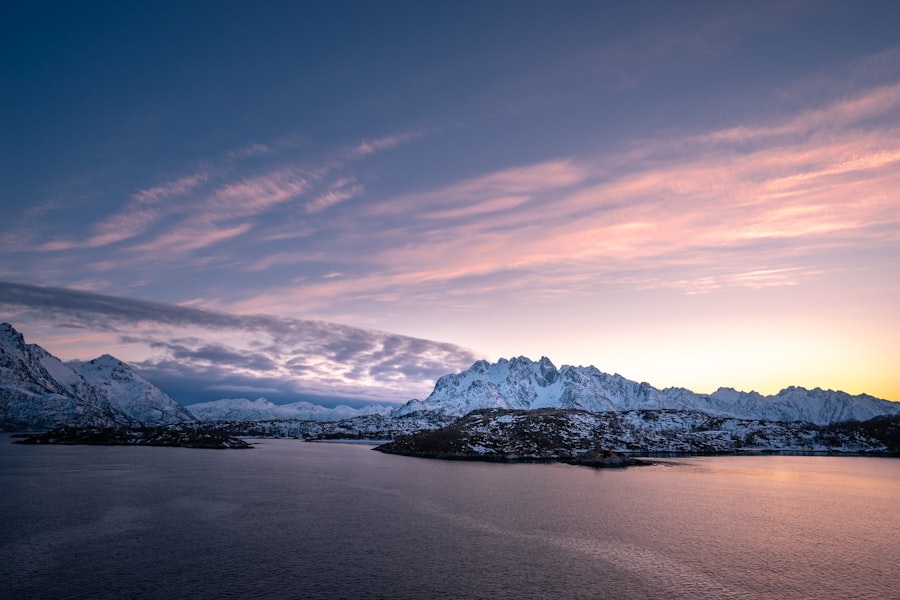
Husoy is a tiny, picturesque fishing village located on a small island in the Oyfjorden. It is connected to the mainland by a narrow causeway. What makes Husoy one of the most unique Senja landscape photography spots is how the colorful wooden houses cluster tightly together, surrounded by steep, snow-capped mountains on all sides. It feels like a community living at the edge of the world.
Capturing the Perfect Panorama
To photograph Husoy, do not go into the village itself first. Instead, stop at the designated viewpoint along Road 862 before you descend the mountain. This elevated perspective allows you to capture the entire island surrounded by the deep blue fjord.
- Use a mid-range telephoto lens (50-70mm) to compress the space between the colorful houses and the massive mountains in the background.
- Wait for the blue hour, when the streetlights of the village turn on, casting a warm, golden glow that contrasts beautifully with the cool blue tones of the water.
- Use a circular polarizer to cut down on the glare from the water surface and saturate the colors of the houses.
4. The Turquoise Waters of Ersfjordstranda
Ersfjordstranda is a stunning white-sand beach nestled at the inner end of the Ersfjorden. Surrounded by high, jagged peaks, this spot looks like a tropical paradise crossed with an Arctic wonderland. It is also famous for its ultra-modern, gold-plated public toilet facility, which is an architectural marvel in its own right.
Composition and Textures
This location is all about capturing the contrast of textures. You have the soft, fine white sand, the smooth motion of the turquoise waves, and the rough, dark granite of the surrounding mountains. Walk along the shoreline to find where the tide leaves wet patterns in the sand, using these curves as foreground elements.
Pro Photography Tip: Bring a set of Neutral Density (ND) filters. A 6-stop or 10-stop ND filter will allow you to slow down your shutter speed to 2 or 3 seconds, turning the crashing waves into a smooth, dreamy mist that contrasts beautifully with the sharp mountain peaks.
5. The Panoramic View from Bergsbotn
For an easy-to-access spot that offers immense visual reward, head to the Bergsbotn viewing platform. This 44-meter-long wooden platform juts out over a steep drop, offering a spectacular 180-degree view of the Bergsfjorden and the surrounding peaks. The feeling of standing suspended over the fjord is exhilarating.
Angles and Framing
While the platform itself is a great subject to photograph, the real prize is the sweeping landscape below. Use an ultra-wide lens to capture the winding road snaking down to the fjord, the scattered islands in the water, and the dramatic mountain walls. To get a sense of scale and adventure, have a companion walk to the very end of the platform and shoot from a high angle behind them, framing them against the vastness of the fjord.
According to regional guides like Lonely Planet, the autumn months offer spectacular yellow and orange foliage along the slopes of Bergsbotn, making it an ideal time for color-contrast photography.
6. The Quiet Charm of Gryllefjord and Hamn
On the western side of Senja lies Hamn i Senja, a historic harbor that has been converted into a beautiful holiday resort. The area is surrounded by a cluster of small, rocky islands and vibrant turquoise channels. The vibe here is incredibly peaceful, especially during the quiet winter months when the snow blankets the rocky shores.
Finding the Best Composition
Explore the small bridges and pathways around the resort to find unique compositions. The contrast between the bright red and yellow seaside cabins (rorbuer) and the deep blue Arctic water is a classic Norwegian scene. When shooting at Hamn, keep these ideas in mind:
- Look for reflections of the colorful cabins in the calm, sheltered harbor waters during early morning.
- Use a polarising filter to reveal the sandy sea floor beneath the shallow turquoise waters.
- Shoot during the winter season to capture the magical soft light of the polar night, when the sun stays just below the horizon.
7. The Wild Beauty of Bovaer Beach
Just a short drive from Hamn, you will find Bovaer, a tiny settlement with a spectacular sweep of white sand facing the open ocean. This is one of the best Senja landscape photography spots for capturing the midnight sun in summer or chasing the Northern Lights in winter, as it offers an unobstructed view facing north.
Chasing the Aurora Borealis
If you are visiting between September and April, Bovaer is a prime location for night photography. The lack of light pollution here means the night sky is incredibly dark, allowing the green ribbons of the Aurora Borealis to pop with incredible intensity. Frame your shot with the sandy beach and incoming waves in the lower third, using a wide aperture (f/2.8 or wider) and a high ISO (1600-3200) to capture the fast-moving lights.
8. The Dramatic Cliffs of Oyfjord
To round out your Senja photography adventure, head north toward the lesser-known viewpoints overlooking Oyfjorden. This area features dramatic cliffs that drop directly into the dark ocean waters. It is a wild, untamed landscape that truly captures the isolated spirit of Northern Norway.
Creating Depth in Dark Landscapes
The challenge with photographing deep fjords is avoiding flat, dark images. To prevent this, shoot during the shoulder hours when the low sun hits the tops of the cliffs, creating a beautiful golden rim light while keeping the valley in deep shadow. This contrast of light and dark adds immense depth and moodiness to your composition, perfectly summing up the dramatic allure of Senja.
Frequently Asked Questions
What is the best time of year to photograph Senja's landscapes?
The best times are late spring to early autumn for vibrant green landscapes and the midnight sun, or winter for snow-covered scenery and northern lights.
Which is the most accessible landscape photography spot on Senja?
Bergsbotn viewpoint is easily accessible by car and offers a dramatic panoramic view, making it a popular starting point.
Do I need a permit to photograph on Senja?
Generally, no permit is needed for personal photography in public areas, but respect private property and follow the Norwegian right to roam rules.
What camera gear is recommended for Senja landscape photography?
A wide-angle lens is essential for capturing vast fjords and mountains, along with a sturdy tripod for long exposures and northern lights.
Are there any facilities near the photography spots?
Some spots like Mefjordbotn have small visitor amenities, but many are remote, so plan to bring water, snacks, and proper clothing.

Oliver Janssen scouts the best photography spots in every destination, from sunrise viewpoints to overlooked angles on famous landmarks. He shares exactly where to stand and when to be there for the shot.
💬 Comments (0)
No comments yet. Be the first!