Athens Historic Photo Spots Guide
Capture iconic ruins in 2026 with our complete guide to the most visual Athens historic photo spots.
Athens Historic Photo Spots Guide
If you are searching for the ultimate Athens historic photo spots, you have come to the right place to plan your next visual adventure. Athens is a city where ancient history and vibrant modern life collide, offering photographers an endless playground of textures, ruins, and dramatic lighting. From the golden marble of the Acropolis to the crumbling neoclassical mansions of Plaka, every corner of the Greek capital tells a story that is just waiting to be captured through your lens. Whether you are a professional with a full gear bag or an enthusiast shooting with a smartphone, this guide will help you find the absolute best locations, camera angles, and compositions to make your travel photos stand out.
To help you navigate this ancient metropolis, we have curated a list of the most photogenic historic locations. We will cover the best times of day to shoot, secret framing techniques, and exact walking directions so you can avoid the crowds and capture the true soul of Athens. Before you head out, it is always a good idea to check travel advisories and local guides on Lonely Planet to stay updated on opening hours and site accessibility.
1. The Majestic Acropolis and the Parthenon
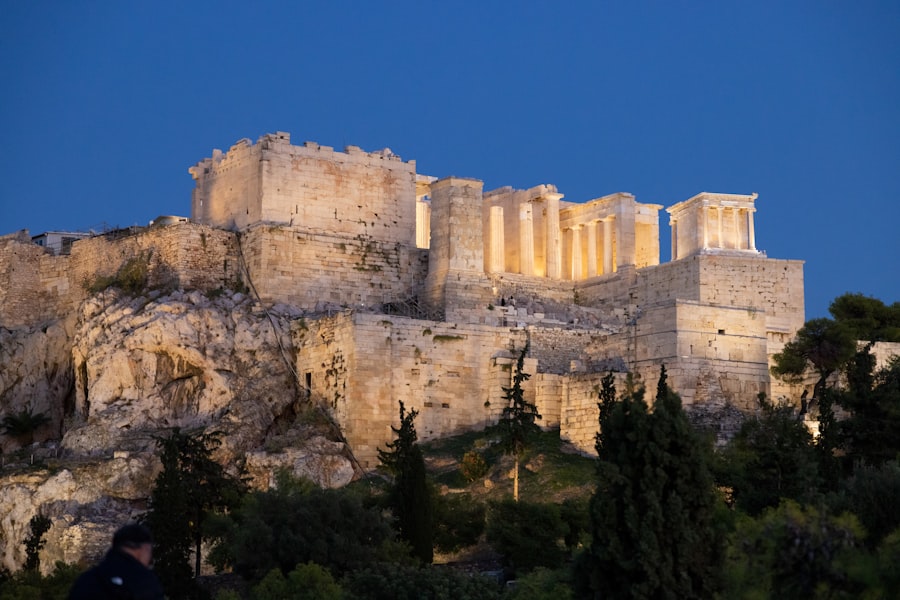
No list of Athens historic photo spots would be complete without the crown jewel of the city. The Acropolis stands proudly on a rocky outcrop, visible from almost everywhere in Athens. Capturing its grandeur requires patience, planning, and an understanding of how the harsh Mediterranean sun interacts with the ancient Pentelic marble.
Best Angles and Composition at the Parthenon
To get a unique shot of the Parthenon, avoid the standard eye-level tourist photos. Instead, look for low angles that emphasize the towering height of the Doric columns. Try using a wide-angle lens (16mm to 24mm) and position yourself near the eastern side of the temple. Use the scattered ancient marble fragments on the ground in your foreground to create a sense of depth and scale. This framing technique guides the viewer's eye from the textured stones at the bottom of the frame up to the majestic columns stretching into the deep blue Athenian sky.
Mastering the Golden Hour Lighting
The marble of the Parthenon acts like a giant reflector. During the midday sun, the light is incredibly harsh, creating deep, unflattering shadows. The magic happens during the golden hour, just before sunset. As the sun dips lower, the white marble transforms into a glowing palette of warm honey, gold, and soft pink. Position yourself to capture the sun bursting through the gaps between the columns, creating a dramatic starburst effect by narrowing your aperture to f/16.
Pro Photography Tip: Arrive at the ticket gate at least 30 minutes before opening time (usually 8:00 AM). Run straight up to the Parthenon to get clean, crowd-free shots before the tour buses arrive. Keep your ISO low (100) and use a polarising filter to cut down on the glare from the marble ruins.
2. Areopagus Hill (Mars Hill)
Located just a short walk down from the main exit of the Acropolis, Areopagus Hill offers one of the most famous panoramic views in the city. This giant slippery rock has deep historical significance, serving as the ancient court of Athens and the spot where the Apostle Paul delivered his famous sermon.
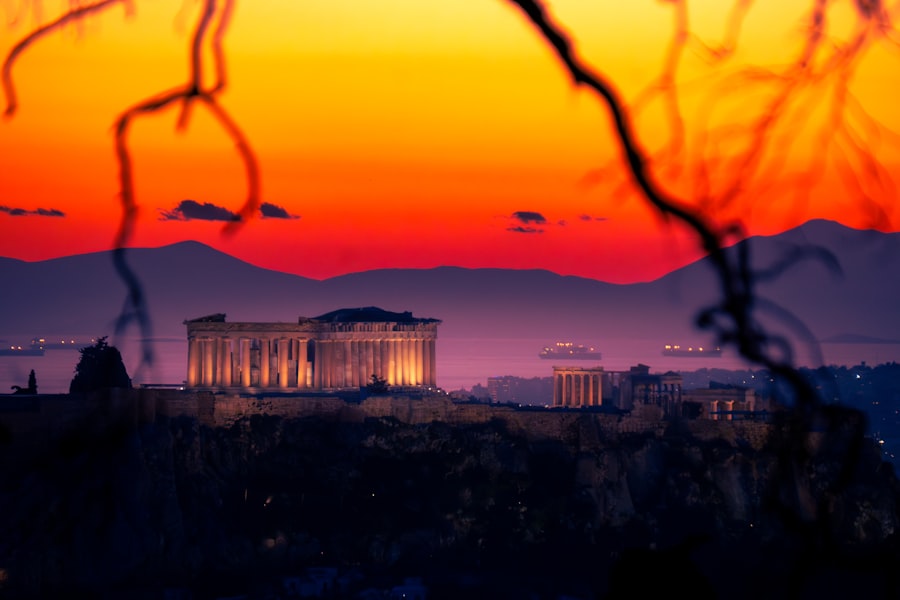
Today, it is a favorite gathering spot for locals and travelers alike to watch the sunset. From this elevated vantage point, you have a direct, unobstructed view of the Propylaea (the monumental gateway of the Acropolis) and the sweeping Athenian basin stretching all the way to the Aegean Sea.
- Vibe: Energetic, romantic, and breathtakingly scenic.
- Best Time: Sunset and blue hour, when the Acropolis lights first turn on.
- Equipment: A sturdy tripod is essential here for long exposures as the wind can get quite strong.
To get there, simply follow the pedestrian path leading away from the Acropolis ticket booth. Be extremely careful when climbing the rock steps, as thousands of years of footsteps have polished the stone into a very slippery surface. Wear shoes with excellent grip to protect yourself and your camera gear.
3. The Ancient Agora and the Temple of Hephaestus
If you want to capture a highly preserved ancient temple surrounded by lush greenery, the Temple of Hephaestus in the Ancient Agora is your dream location. Unlike the Parthenon, this temple still has its roof and columns almost entirely intact, offering a fantastic opportunity to shoot classic Greek architecture.
Framing Through Nature
The Ancient Agora is filled with beautiful olive trees, wild shrubs, and colorful bougainvillea. Use these natural elements to frame your shots of the Temple of Hephaestus. By shooting through the leaves of an olive branch, you can create a beautiful soft green bokeh in the foreground, which adds a dreamy, painterly vibe to your historic imagery. This technique helps to isolate the temple and gives the viewer a sense of discovering a hidden ruin in an ancient forest.
Exploring the Stoa of Attalos
Just a short walk across the Agora site is the reconstructed Stoa of Attalos. This long, covered walkway features double rows of columns that create a mesmerizing perspective. To capture the perfect leading lines, stand in the center of the colonnade and use a portrait orientation. The repeating shadows cast by the columns in the morning light create a dramatic, graphic composition that is perfect for architectural photography.
Pro Photography Tip: Use a fast prime lens (like a 50mm f/1.8) inside the Stoa of Attalos. Focus on the closest column and let the background columns fade into a beautiful, soft blur. This highlights the architectural details and textures of the stone.
4. The Picturesque Streets of Anafiotika
Tucked away right beneath the northeast slopes of the Acropolis is Anafiotika, a tiny scenic neighborhood that looks like it was transported directly from a Cycladic island. Built in the 19th century by workers from the island of Anafi, this micro-neighborhood features whitewashed cubic houses, bright blue doors, shuttered windows, and narrow labyrinthine pathways draped in vibrant pink bougainvillea flowers.
When photographing this area, you will completely forget you are in the middle of a bustling European capital. The vibe here is incredibly peaceful, quiet, and intimate. It is one of the most unique Athens historic photo spots because of the stark contrast between the island-style architecture and the sprawling modern city visible in the background.
- Composition Technique: Look for narrow alleyways where you can shoot upwards, framing the bright blue sky or the towering walls of the Acropolis cliff face between the white houses.
- Details Matter: Focus on the small things. Capture the sleeping stray cats on colorful window sills, the peeling paint on old wooden doors, and the handmade ceramic pots filled with geraniums.
- Respect the Locals: This is still a residential neighborhood. Keep your voice down, do not block the narrow paths with large tripods, and never photograph through private windows.
To find Anafiotika, start in the Plaka district and walk uphill toward the Acropolis. Follow the winding pathways upward until the neoclassical buildings disappear and are replaced by whitewashed stone walls and narrow stairs.
5. Odeon of Herodes Atticus
This magnificent stone Roman theater, completed in 161 AD, is located on the southwest slope of the Acropolis. It is still used today for concerts and theatrical performances, making it a living piece of Athenian history. Photographing this structure from above gives a sense of immense scale and symmetry.
To capture the best angle of the Odeon, walk along the main pedestrian path of Dionysiou Areopagitou and head up the path leading to the Acropolis entrance. Along the way, there is an elevated viewing platform that looks directly down into the theater. From here, you can capture the perfect symmetry of the arched stone walls, the stage, and the semicircular seating area. For more details on visiting hours and event schedules, you can consult traveler reviews on TripAdvisor.
6. The Roman Agora and the Tower of the Winds
The Roman Agora, located in the heart of the Plaka district, offers a different architectural style than the Greek ruins. The most photogenic structure here is the Tower of the Winds, an octagonal marble clocktower that is considered the world's first meteorological station. It features beautiful relief carvings representing the eight wind deities on its frieze.
Capturing the Details and Textures
To photograph the Tower of the Winds, use a telephoto lens (70-200mm) to zoom in on the intricate carvings at the top of the tower. The morning light hits the eastern and northern faces of the tower beautifully, bringing out the three-dimensional textures of the ancient carvings. For a wider composition, step back into the surrounding streets of Plaka and use the colorful neoclassical buildings to frame the ancient tower, showcasing the layers of history that define Athens.
Creative Angles From Outside the Gates
You do not always need to enter the archaeological site to get great photos. The Roman Agora is surrounded by a low iron fence, which allows for fantastic street-level photography. Try shooting through the fence, using a wide aperture to blur the metal bars in the foreground, focusing instead on the ancient columns and the tower bathed in the warm afternoon sun. This adds an element of urban exploration and layers to your final image, making it stand out as a top highlight among Athens historic photo spots.
Frequently Asked Questions
What are the best historic photo spots in Athens?
Top spots include the Acropolis, Plaka neighborhood, Monastiraki Square, Temple of Olympian Zeus, and the Ancient Agora.
When is the best time of day to photograph the Acropolis?
Golden hour at sunrise or sunset provides soft light and fewer crowds for stunning shots.
Can I take photos inside the Acropolis Museum?
Yes, but flash and tripods are typically prohibited to protect the artifacts.
Are there any less crowded historic spots for photos?
Try Filopappou Hill, Anafiotika, or the ruins at Kerameikos for quieter scenes.
What gear is recommended for photographing Athens' historic sites?
A wide-angle lens is ideal for architecture, plus a polarizer to reduce glare and enhance colors.

Sophie Lefebvre writes about the most photogenic places to visit, pairing stunning locations with the practical details of getting there. She helps travellers find the views worth planning a whole trip around.
💬 Comments (0)
No comments yet. Be the first!