Hoi An Lantern Photo Spots: A Visual Guide
Explore the most magical Hoi An lantern photo spots in 2026. Capture the vibrant nightlife of Vietnam's ancient town.
Hoi An Lantern Photo Spots: A Visual Guide
If you are searching for the ultimate Hoi An lantern photo spots, you have come to the right place to plan your visual journey. The moment the sun dips below the horizon, this ancient Vietnamese port town transforms into a glowing wonderland of silk, bamboo, and light. For photographers, content creators, and travelers seeking that perfect shot, navigating the crowded streets to find the best lighting and framing can be a challenge. In this guide, we will walk you through the most photogenic locations, complete with camera tips, walking directions, and composition secrets to make your portfolio shine.
1. The Famous Night Market Lantern Stalls
Located on An Hoi Island, just across the river from the main Ancient Town, the night market is home to the most iconic images of Hoi An. Here, several vendors display hundreds of illuminated silk lanterns in every shape, size, and color imaginable. The vibrant glow creates a dreamy, high-contrast background that is perfect for portrait photography.
Best Angles and Framing at the Stalls
To capture the depth of the stalls, position your subject close to the hanging lanterns while keeping the camera slightly further back. Use a wide aperture to create a beautiful, soft bokeh effect in the background. Ask your subject to look slightly away from the camera, gazing into the warm glow of a single lantern to establish a natural, candid vibe. Be mindful of the crowd; patience is key to catching a clean frame without other tourists blocking your shot.
Lighting Tips and Camera Settings
The main challenge here is the high contrast between the bright lanterns and the dark night sky. Set your camera to a wide aperture (around f/1.8 to f/2.8) to let in as much light as possible. Keep your ISO moderate (800 to 1600) to avoid excessive noise, and ensure your shutter speed is fast enough to prevent motion blur if you are shooting handheld. Manual white balance is recommended to prevent the camera from overcorrecting the warm, golden tones of the silk lamps.
Pro Photography Tips: Most shop owners charge a very small fee (usually around one dollar) to let you take photos in front of their displays. Pay this cheerfully, as it supports the local business owners, and ask if you can hold one of their handheld lanterns as a prop to add extra depth to your composition.
2. The Japanese Covered Bridge Area
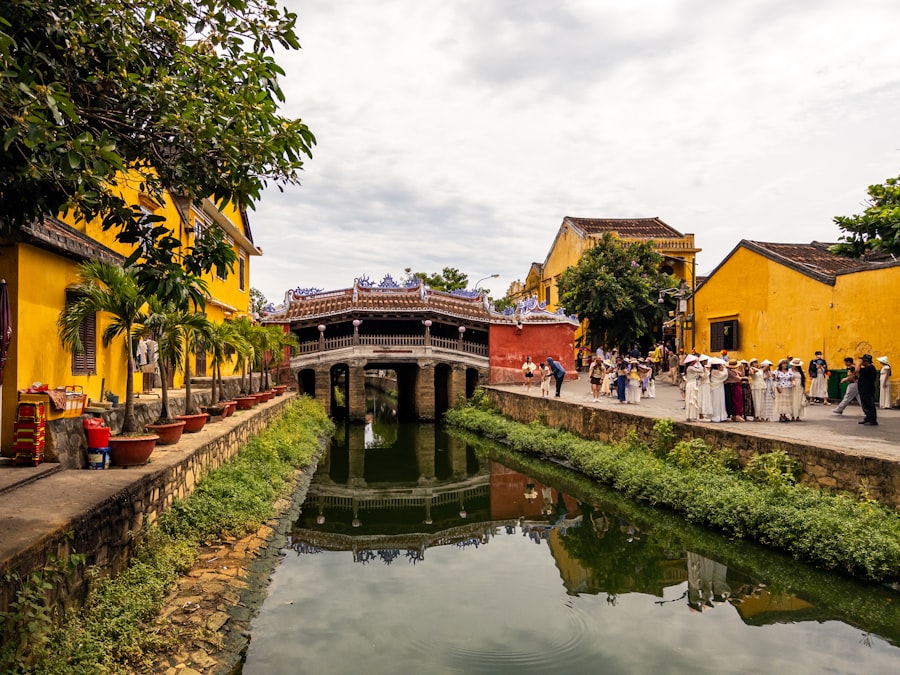
As one of the most historical landmarks in the region, the Japanese Covered Bridge is a must-visit. While the bridge itself is an architectural marvel, the surrounding canal area comes alive at night with floating paper lanterns and hanging silk decorations. This spot offers a more historic, moody atmosphere compared to the bustling market stalls.
To get here, simply walk to the western end of Tran Phu Street. The bridge connects the Chinese and Japanese quarters of the historic town. The best vantage point is from the small pedestrian bridge located just a few yards south of the main structure, which allows you to capture the bridge reflection in the calm river water.
- Best time to visit: Blue hour (just after sunset) when the sky has a deep blue hue that contrasts beautifully with the warm orange lights.
- Key composition element: Look for reflections in the river to double the visual impact of your shot.
- Recommended lens: A 35mm or 50mm prime lens to capture both the bridge and the surrounding atmosphere without distortion.
3. An Hoi Bridge (The Lantern Bridge)
Connecting the old town with the night market, the An Hoi Bridge is decorated with massive, colorful lantern sculptures shaped like dragons and traditional symbols. It is one of the most central Hoi An lantern photo spots you will encounter during your evening walk. The bridge offers a panoramic view of the Hoai River, lined with floating candles and glowing boats.
Because this bridge gets incredibly crowded, your framing needs to be strategic. Try using a low angle, pointing your camera slightly upward to cut out the crowd of pedestrians and focus instead on your subject against the glowing arches above. Alternatively, use a long exposure to turn the moving crowds into a ghostly blur, leaving your stationary subject sharp and clear.
Mastering the River Reflection
The water beneath the bridge acts as a giant mirror. To make the most of this, position yourself near the riverbanks just off the bridge. Shoot from a low perspective, placing the water line in the lower third of your frame. This composition technique emphasizes the vertical symmetry created by the colorful reflections dancing on the ripples of the river.
4. Traditional Wooden Boats on the Hoai River
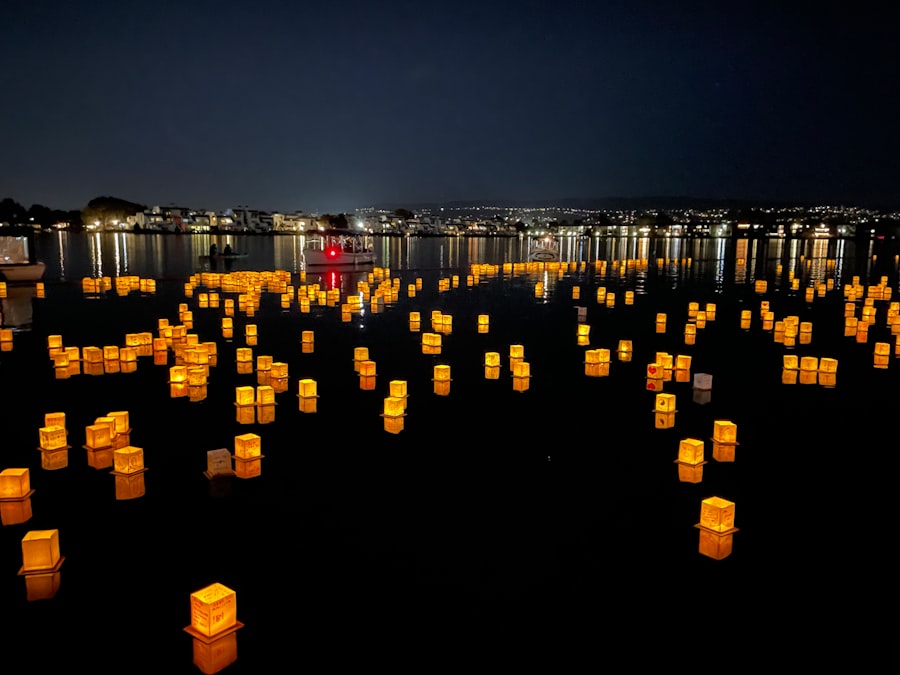
For a truly immersive visual experience, hire a small wooden boat (known locally as a sampan) for a ride along the Hoai River. These boats are decorated with their own colorful lanterns, and you will be given small paper lanterns with candles inside to release onto the water. This is undoubtedly one of the most magical Hoi An lantern photo spots available.
To find a boat, simply walk along the Bach Dang street waterfront. Friendly local rowers will offer rides. Negotiate a price before boarding, and aim to go during the twilight hour when there is still some ambient light in the sky to illuminate the historic yellow buildings in the background.
Pro Photography Tips: When shooting from a moving boat, you must prioritize shutter speed to prevent blurry images. Set your shutter speed to at least 1/125th of a second, raise your ISO to compensate for the darkness, and use a lens with optical image stabilization if available.
Creative Posing on the Water
To capture the ultimate travel vibe, have your subject sit at the bow of the boat, facing forward. Shoot from behind them or from a slight side angle to capture their silhouette as they gently lower a paper candle into the dark water. This creates an intimate, storytelling narrative in your imagery that resonates deeply on social media platforms like Instagram.
5. The Historic Assembly Halls and Teahouses
The ancient town is famous for its Chinese Assembly Halls, such as the Fujian Assembly Hall, and its preserved traditional merchant houses. During the evening, many of these courtyards hang beautiful, classic lanterns that offer a more quiet and sophisticated backdrop than the busy riverfront. According to travel guides on TripAdvisor, these structures represent the deep cultural blend of Japanese, Chinese, and Vietnamese heritage.
Walking through these courtyards, you will notice how the architecture frames the hanging lights. Look for doorways, circular archways, and window shutters to use as natural frames within your frame. This adds layers of depth and context to your photography, showcasing the rich history of the town.
- Fujian Assembly Hall: Located at 46 Tran Phu Street, featuring grand red gateways and spiral incense coils.
- Cantonese Assembly Hall: Found at 176 Tran Phu Street, offering stunning dragon statues illuminated by soft courtyard lamps.
- Reaching Out Teahouse: A peaceful oasis where quiet shadows and soft, ambient lantern light create a moody, nostalgic atmosphere.
6. Quiet Side Alleys of the Ancient Town
If you want to escape the crowds and find a more authentic, peaceful setting, wander down the narrow, yellow-walled alleys that run perpendicular to the main streets. Many of these alleys are strung with simple lines of colorful lanterns that hang between the old merchant homes. It is in these quiet spaces that you can truly capture the romantic, timeless vibe of Hoi An.
To find these hidden gems, explore the small lanes between Tran Phu Street and Nguyen Thai Hoc Street. These alleys are perfect for leading lines, a classic composition technique. Position your subject in the middle of the alley, using the parallel yellow walls and the overhead lanterns to guide the viewer's eye directly to your subject.
Capturing the Golden Hour transition
The transition from day to night in these alleys is spectacular. As the yellow paint of the historic buildings catches the last rays of the sun, the lanterns begin to flicker on. This overlap of natural and artificial light creates a rich palette of gold, ochre, and deep crimson that is highly prized by travel photographers writing for publications like Lonely Planet.
When shooting in these narrow spaces, a wide-angle lens (such as a 24mm) can help you capture the height of the walls and the overhead canopy of lights. Keep your compositions clean by waiting for pedestrians to pass, allowing the architecture and the quiet glow of the lanterns to tell the story of this ancient town.
Frequently Asked Questions
What are some iconic spots for Hoi An lantern photos?
The Japanese Covered Bridge and the Old Town's Nguyen Thai Hoc Street are unbeatable for lantern-lit scenes.
When is the best time to take lantern photos in Hoi An?
The golden hour just before sunset and on the 14th of each lunar month during the Full Moon Lantern Festival.
Where can I capture reflections of lanterns on water?
Along the Thu Bon River near the boat dock or at the Hoai River Square during evening hours.
Are there any rooftop spots for shooting Hoi An's lanterns?
Yes, many cafes like The Moon Bay or Vape Cafe offer rooftop views gazing over the Old Town's lanterns.
What equipment is recommended for night lantern photography in Hoi An?
A tripod is essential for long exposures, and a lens with f/2.8 or wider aperture helps in low light.

Sophie Lefebvre writes about the most photogenic places to visit, pairing stunning locations with the practical details of getting there. She helps travellers find the views worth planning a whole trip around.
💬 Comments (0)
No comments yet. Be the first!