6 Pittsburgh cityscape photography spots
Plan your 2026 photo trip with these top Pittsburgh cityscape photography spots for breathtaking skyline views.
6 Pittsburgh cityscape photography spots
If you are looking for the ultimate guide to the best Pittsburgh cityscape photography spots, you have come to the right place. Known affectionately as the Steel City, Pittsburgh is a dream destination for visual artists, offering a dramatic skyline, historic yellow bridges, and two rushing rivers that meet to form a third. The unique topography of southwestern Pennsylvania creates natural elevation, meaning you do not just shoot the skyline from the ground; you shoot it from towering cliffs, historic inclines, and waterfront paths. In this comprehensive guide, we will explore the absolute best locations to capture this glowing metropolis, detailing the best angles, lighting conditions, and composition secrets to elevate your portfolio.
1. Mount Washington and Grandview Avenue
No list of Pittsburgh cityscape photography spots would be complete without Mount Washington. Rising steeply directly across the Monongahela River from Downtown, this sheer hillside offers the most iconic, postcard-perfect view of the Golden Triangle. As you stroll along Grandview Avenue, the entire city unfolds before you like a glittering map. The vibe here is electric, especially at dusk when the office towers turn on their lights and the yellow bridges begin to glow. To make the most of this location, you must understand how to frame the sheer scale of the city below.
Best Angles and Composition at Grandview Avenue
The best composition from Grandview Avenue involves using the wooden observation platforms that overhang the cliff. Position your tripod to capture the sweeping curve of the Monongahela River leading your viewer's eye directly into the heart of the downtown skyscrapers. Use a wide-angle lens (16-35mm) to capture the vastness of the scene, or switch to a medium telephoto lens (24-70mm) to compress the buildings and make the skyscrapers look incredibly dense and imposing. Look for opportunities to frame your shot with the lush green foliage of the hillside during summer, or the stark, dramatic branches during the winter months.
Mastering the Lighting and Camera Settings
The blue hour is the absolute magic window for Mount Washington. This is the short period after sunset when the sky turns a deep, rich blue, matching the color temperature of the city lights. Set your camera to Aperture Priority or Manual mode, keep your ISO low at 100 to reduce digital noise, and set your aperture to f/11 to ensure a sharp depth of field from the foreground railings to the distant horizon. A sturdy tripod is mandatory here, as your shutter speeds will easily stretch to 10, 20, or even 30 seconds to capture the flowing headlights of the cars on the bridges below.
Pro Photography Tip: Bring a circular polarizing filter to cut down on any atmospheric haze rising from the rivers, and use a 2-second shutter delay or a remote shutter release to eliminate any camera shake when pressing the button.
2. Point State Park and the Great Fountain
Located at the very tip of Downtown Pittsburgh, Point State Park is where the Allegheny and Monongahela rivers meet to form the Ohio River. This historic site, once home to Fort Duquesne and Fort Pitt, is now a beautiful green space dominated by a massive, 150-foot-tall fountain. The vibe here is peaceful yet grand, offering a completely different perspective than the high-altitude lookouts of Mount Washington. Here, you are at eye level with the water, allowing you to capture stunning reflections of the skyscrapers.
Framing the Skyline with Water Reflections
For a truly dynamic composition, position yourself on the paved promenade surrounding the fountain. By getting low to the ground, you can use the wet concrete or the pool of the fountain itself to create a perfect mirror image of the PPG Place tower and the surrounding skyline. The massive column of water from the fountain acts as a powerful vertical element, contrasting beautifully with the horizontal lines of the Fort Duquesne and Fort Pitt bridges flanking the park. You can read more about the park's rich history on websites like TripAdvisor to understand how this urban sanctuary evolved.
- Best time to shoot: Sunrise, when the park is empty and the water is calm.
- Key lens: Ultra-wide angle (12-24mm) to fit both the fountain and the skyscrapers in a single frame.
- Creative technique: Use a Neutral Density (ND) filter to smooth out the spray of the fountain and the river currents into a silky, dreamlike texture.
3. The Roberto Clemente Bridge (Sixth Street Bridge)
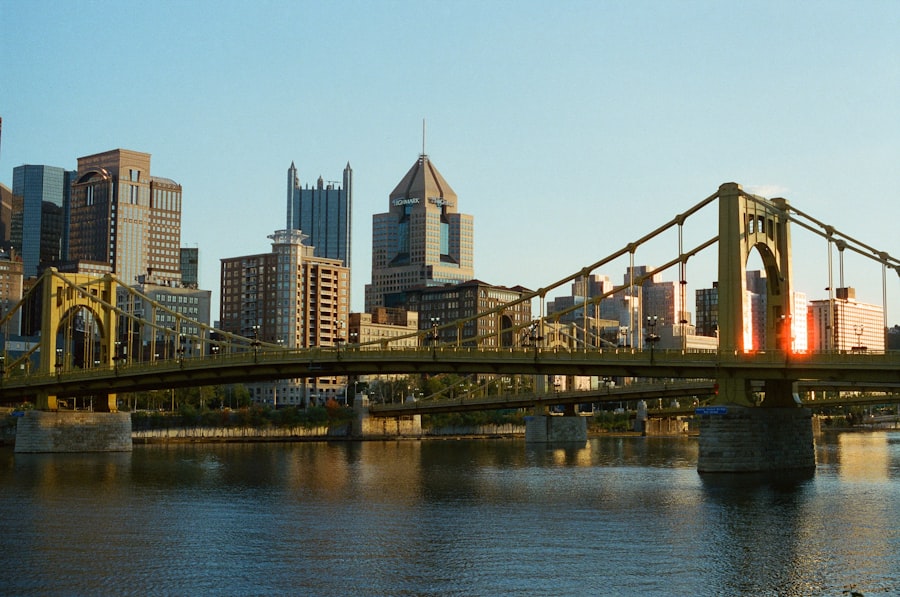
Pittsburgh is famous for its "Three Sisters" bridges—the Roberto Clemente, Andy Warhol, and Rachel Carson bridges. These are the only trio of identical, self-anchored suspension bridges in the United States, and they are painted a vibrant Aztec Gold. The Roberto Clemente Bridge is often closed to vehicular traffic during major sporting events, making it one of the most accessible Pittsburgh cityscape photography spots for pedestrians who want to shoot right from the middle of the roadway.
Capturing Symmetry and Leading Lines
The symmetry of the Roberto Clemente Bridge is a photographer's dream. Stand dead center on the pedestrian walkway or the empty roadway to use the massive yellow steel arches as powerful leading lines that direct the eye straight into the downtown buildings. The framing here is naturally tight and dramatic. Look for angles that include the iconic PNC Park, home of the Pittsburgh Pirates, which sits right at the North Shore entrance of the bridge. For more travel planning details on the North Shore, you can explore resources like Lonely Planet.
Getting the Perfect Night Vibe
As night falls, the bridge is illuminated by warm, yellow lights that contrast beautifully with the cool, dark water of the Allegheny River. To capture the perfect night vibe, shoot during twilight when there is still some color in the sky. Use a narrow aperture like f/16 to turn the bridge's light bulbs into beautiful, sparkling starbursts. Keep an eye out for passing riverboats, as their colorful cabins will leave vibrant light trails across your long exposure shots.
4. The West End Overlook
If you want a wider, more balanced view of the entire city than what Mount Washington offers, head over to the West End Overlook. Situated on Elliot Bluff, this quiet municipal park provides a panoramic view that lines up perfectly with the point of the downtown peninsula. From here, you can see all three rivers, the major bridges, and the entire skyline framed beautifully in a single shot.
Composition and Depth at the Overlook
The West End Overlook is highly regarded by landscape photographers because of its perfect alignment. Unlike Mount Washington, which views the city from the side, the West End Overlook looks directly up the throat of the Ohio River, showing how the city splits the waterways. Use the manicured gardens, stone pathways, and benches in the foreground to establish a strong sense of depth. This spot is perfect for creating high-resolution panoramic images by stitching multiple vertical frames together in post-processing.
Pro Photography Tip: Bring a telephoto lens (70-200mm) to this spot. Zooming in past the foreground allows you to compress the iconic yellow bridges, making them appear stacked directly on top of each other in front of the skyscrapers.
5. The Duquesne Incline
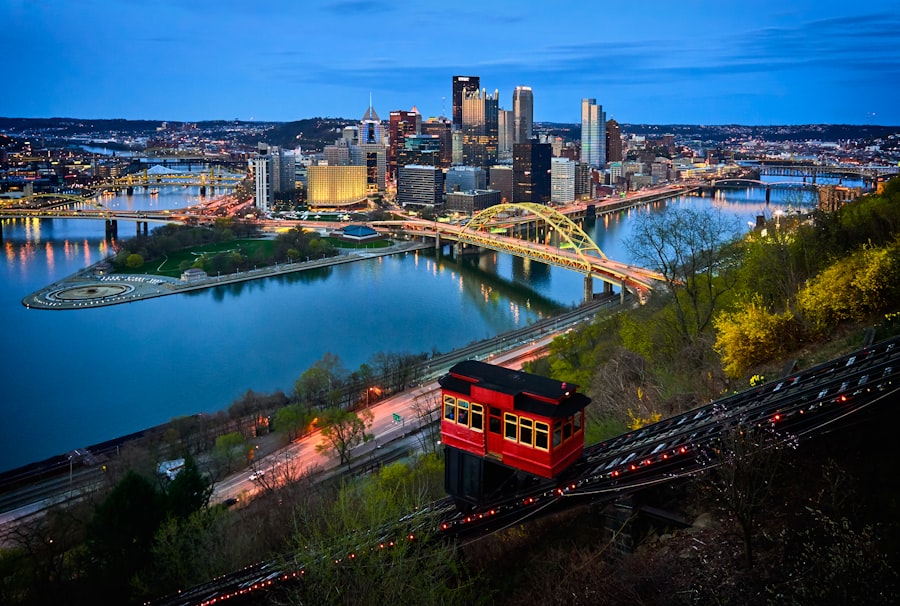
Dating back to 1877, the Duquesne Incline is a living piece of history. These red wooden cable cars still scale the steep slope of Mount Washington, offering passengers a nostalgic ride and photographers a truly unique vantage point. This is one of the most dynamic Pittsburgh cityscape photography spots because it combines historic transit elements with a modern, towering backdrop.
Creative Framing from the Observation Deck
While the ride up is thrilling, the real magic happens at the upper station's observation deck. From here, you have an unobstructed view of the Golden Triangle and the Duquesne Incline tracks. To capture a truly unique composition, wait for one of the historic red cars to ascend. Frame your shot so the bright red car occupies the lower third of your frame, with the gleaming skyscrapers of the city rising directly behind it. This juxtaposition of old-world transit and modern architecture creates a compelling story in your image.
- How to get there: Park at the lower station on West Carson Street and take the historic car up to the viewing platform.
- Best camera settings: Use a fast shutter speed (1/250s or faster) if you want to freeze the motion of the moving cable car during the day.
- Night technique: Use a slow shutter speed (2-5 seconds) at night to capture the red car as a glowing blur of light climbing the tracks against the sharp city background.
6. North Shore Trail and the Riverfront
For photographers who love to get close to the water, the North Shore Trail is an absolute paradise. This paved path stretches along the northern banks of the Allegheny and Ohio rivers, offering flat, easy walking access to some of the most dramatic riverside angles of the city. The vibe along the trail is active and modern, with runners, cyclists, and kayakers frequently passing by, adding a wonderful element of human interest to your landscape shots.
Low-Angle Reflections and Bridge Architecture
Walking along the North Shore Trail allows you to get incredibly close to the concrete piers and steel underbellies of the city's famous bridges. Walk down to the water's edge near the Heinz Quay or the Mr. Rogers statue. By setting your camera on a low tripod right at the riverbank, you can capture the massive steel structures of the Fort Duquesne Bridge arching gracefully over the frame. When the river is calm, especially during the early morning hours, the reflection of the downtown buildings on the water's surface is absolutely flawless, creating a symmetrical masterpiece.
Walking Directions and Practical Info
To reach the best shooting spots on the North Shore Trail, park near PNC Park or the Carnegie Science Center. From there, head directly down to the riverwalk path. Walk east toward the Three Sisters bridges. As you walk, you will find countless spots where the yellow steel structures frame the skyscrapers of the central business district perfectly. This flat, easy walk is highly recommended for sunset strolls, as the fading light reflects beautifully off the glass facades of the buildings across the river, bringing a warm, golden glow to your final images.
Frequently Asked Questions
What is the best time of day for cityscape photography in Pittsburgh?
The best times are during the golden hours after sunrise and before sunset, when the light is soft and warm. For city lights, try blue hour just after sunset.
Are there any free spots for photographing the Pittsburgh skyline?
Yes, many public parks and viewpoints like West End Overlook and Mount Washington's Grandview Avenue are free to access. These offer iconic views without any entry fees.
Do I need a telephoto or wide-angle lens for these spots?
A wide-angle lens is ideal for capturing the full skyline at spots like Point State Park. A telephoto lens can be useful for compressing and isolating certain buildings from hillside overlooks.
Can I catch a sunset train or boat in these cityscape photos?
Yes, the skyline views often include the Duquesne Incline or kayakers in the rivers, and busy roads with the city behind. You can also capture moving boats on the rivers.
Are any of these spots easily accessible by public transportation?
Most viewpoints on Mount Washington are accessible via the Duquesne or Monongahela Incline. Downtown spots and Strip District locations are walkable from bus stops or the T rail system.

Oliver Janssen scouts the best photography spots in every destination, from sunrise viewpoints to overlooked angles on famous landmarks. He shares exactly where to stand and when to be there for the shot.
💬 Comments (0)
No comments yet. Be the first!