Meteora monastery photography spots: Top Views
Master your 2026 landscape shots with this guide to the most dramatic Meteora monastery photography spots.
Meteora monastery photography spots: Top Views
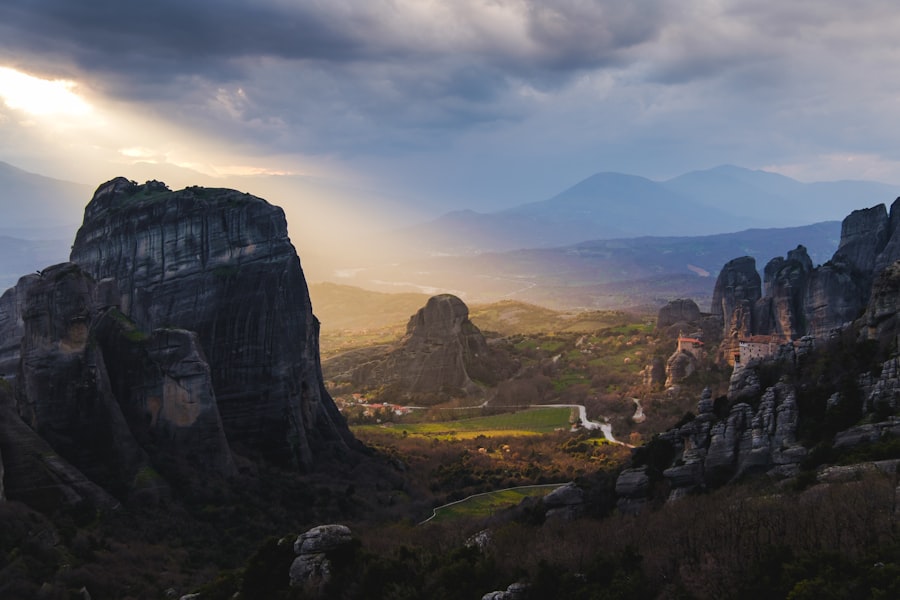
Finding the perfect Meteora monastery photography spots is like stepping into a real-life fantasy world where ancient stone pillars reach for the heavens and centuries-old monasteries precariously balance on sheer cliff edges. Located in the heart of Thessaly, Greece, this UNESCO World Heritage site offers some of the most dramatic and awe-inspiring landscapes on the planet. Whether you are a seasoned professional with a bag full of lenses or an enthusiastic traveler armed with a smartphone, capturing the ethereal beauty of these sacred places is an unforgettable experience. The sheer scale of the landscape, combined with the dramatic play of light and shadow, makes this region a true paradise for visual creators looking to capture a mystical vibe in their portfolios.
The Magic of Meteora Photography
Photographing this unique landscape requires more than just pointing and shooting; it demands an understanding of the terrain, the history, and the rapidly changing weather patterns. Hundreds of years ago, hermit monks climbed these seemingly inaccessible rock pillars to find solitude and escape persecution. Today, six active monasteries remain, offering a stunning contrast between the organic, weathered grey sandstone and the structured, red-tiled Byzantine architecture. To capture this harmony, you need to understand how the elements interact with the stone.
The vibe here changes dramatically depending on the season and the time of day. In the early morning, a thick blanket of low-lying fog often rolls through the valleys, swallowing the bases of the cliffs and leaving the monasteries floating on a sea of white clouds. By afternoon, the harsh Greek sun creates deep, dramatic shadows in the ravines, while the golden hour paints the entire landscape in warm hues of orange, copper, and gold. Planning your shoot around these shifts is key to getting those award-winning shots.
Pro Photography Tips: Always carry a sturdy tripod and a polarizing filter. The polarizer is essential for cutting through the haze in the valley, enhancing the deep blue of the sky, and bringing out the natural, rich textures of the sandstone cliffs. If you are shooting during the golden hour, set your camera to white balance shade or cloudy to warmly accentuate the natural light.
Sunset Rock: The Ultimate Panoramic Vista
If you only have time to visit one location during your trip, it absolutely must be the famous Sunset Rock, known locally as Psaropetra. This massive, flat-topped rock formation sits high above the valley floor and offers an unobstructed, 360-degree panoramic view of almost all the major monasteries. It is the premier location for capturing the grand scale of the region, making it one of the most famous Meteora monastery photography spots you can find.
Finding Your Way to Sunset Rock
Reaching this viewpoint is relatively straightforward, which means it can get busy as the sun begins to dip below the horizon. From the main town of Kalabaka, follow the winding asphalt road that snakes up into the hills toward the Holy Monastery of Varlaam. Just before the turn-off for the Monastery of Saint Stephen, you will see a small, dirt parking area on the left side of the road. Park your vehicle here and follow the short, uneven dirt path that leads directly onto the smooth, rocky plateau of Sunset Rock. Be extremely careful near the edges, as there are no safety railings or barriers.
Composition and Lighting Techniques
The composition options here are virtually limitless, but the classic shot involves framing the Monastery of Roussanou in the mid-ground while the sun sinks behind the distant Pindus mountain range.
- Framing: Use a telephoto lens (70-200mm) to compress the distance between the Roussanou monastery and the mountain peaks in the background, making the structure look even more isolated.
- Angles: Shoot from a low angle close to the surface of the rock to include the textured, lichen-covered stone in your immediate foreground, creating a powerful sense of depth.
- Lighting: Arrive at least one hour before the official sunset time. The pre-sunset light casts long shadows across the valley, accentuating the vertical grooves of the stone pillars.
The Holy Monastery of Roussanou from the Lower Viewpoint
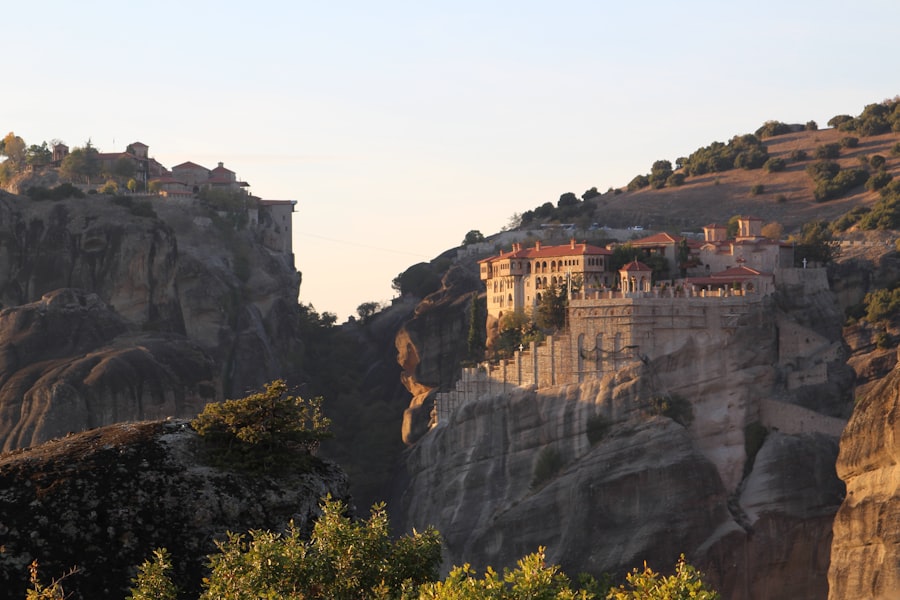
The Holy Monastery of Roussanou, established in the 16th century, is one of the most visually striking structures in the area. It sits on a much lower, narrower vertical pillar compared to its neighbors, which gives it an incredibly dramatic, vertical appearance. While many people photograph it from above, some of the most compelling compositions can be captured from the lower valley roads, looking up at its towering walls.
This perspective emphasizes the sheer height of the cliffs and the incredible architectural feat achieved by the builders who constructed it. From below, the monastery appears to grow directly out of the living stone, creating a seamless transition from nature to human creation. The lush green vegetation at the base of the cliffs provides a beautiful color contrast against the dark grey rock and the warm brickwork of the nunnery.
Pro Photography Tips: When shooting from a low angle looking up, watch out for perspective distortion. Use a wide-angle lens carefully, keeping your camera level to the horizon to avoid making the monastery look like it is leaning backward. Alternatively, step back and use a medium focal length to preserve the natural proportions of the scene.
Navigating to the Lower Roussanou Spot
To reach this specific viewpoint, drive along the main loop road connecting Kastraki to the monasteries. As you pass the trailhead for the Monastery of Saint Nicholas Anapafsas, keep a close eye on the right side of the road. There is a small gravel pull-off located just before the road begins to climb steeply toward Roussanou. Park here safely and walk along the roadside barrier to find a clear opening in the trees that frames the monastery perfectly against the sky.
Best Camera Settings for This View
Because you are shooting from a lower elevation, the sky will occupy a significant portion of your frame.
- Aperture: Use an aperture of f/8 to f/11 to ensure sharp details from the foliage in the foreground all the way up to the monastery walls.
- ISO: Keep your ISO at 100 to maximize image quality and minimize digital noise in the shadow areas.
- Exposure: Meter for the highlights on the monastery walls to prevent the sky from becoming completely blown out and white.
Great Meteoron: The Grandest Monastery
As the largest, oldest, and highest monastery in the region, the Great Meteoron (also known as the Holy Monastery of the Metamorphosis) is an absolute must-visit for any photographer. Founded in the 14th century by Saint Athanasios, it sits on a massive plateau over 600 meters above the valley floor. The size of the complex is staggering, featuring multiple courtyards, a grand church with beautiful frescoes, and a fascinating museum showcasing historical artifacts.
Photographing the Great Meteoron requires a mix of wide-angle landscape shots and intimate detail shots. The path leading up to the monastery, carved directly into the rock face, offers fantastic opportunities for architectural photography. Inside, the quiet courtyards, wooden balconies, and ancient stone archways provide endless framing options to capture a serene, spiritual vibe.
Getting to the Great Meteoron
Drive to the very end of the main monastery road, past Varlaam. There is a large, paved parking lot at the base of the Great Meteoron. From the parking area, you will descend a series of stone steps before climbing the steep stairs carved into the rock. Keep in mind that visiting the interior requires climbing over 300 steps, so pack light and carry only the essential camera gear you need for the walk.
Composition Styles for Great Meteoron
To capture the grandeur of this site, try these three distinct composition styles:
- The Leading Line: Use the steep stone staircase leading up to the entrance as a leading line to guide the viewer's eye through the frame.
- The Silhouette: During the late afternoon, position yourself on the steps and shoot toward the sun to create dramatic silhouettes of the wooden hoisting towers against the bright sky.
- The Telephoto Detail: Stand near the entrance of the neighboring Varlaam monastery and use a telephoto lens to capture detailed shots of the Great Meteoron's red-tiled roofs and stone walls hugging the cliff edge.
The Holy Monastery of Varlaam from the Ridge Road
The Holy Monastery of Varlaam is the second-largest monastery in the complex and sits directly opposite the Great Meteoron. It is famous for its beautiful gardens, its historic windlass tower once used to hoist supplies in a net, and its stunning main church decorated with intricate frescoes. The view of Varlaam from the adjacent ridge road is one of the most iconic and recognizable Meteora monastery photography spots in Greece.
From this vantage point, you can capture the monastery sitting proudly on its massive rock pillar, with the vast plains of Thessaly stretching out into the far distance. The contrast between the rugged, vertical cliffs and the soft, flat plains in the background creates a powerful sense of scale and isolation that defines the unique character of this region.
How to Access the Ridge Road Viewpoint
This viewpoint is incredibly easy to access. As you drive from Kastraki toward the Great Meteoron, the road winds along a high ridge. Approximately 500 meters before reaching the parking lot of Varlaam, you will find several dirt pull-offs on the right side of the road. Park your vehicle safely and walk to the edge of the ridge. You will find a series of flat rocks that serve as the perfect platform for setting up your camera tripod.
Mastering the Composition at Varlaam
To make your images of Varlaam stand out, focus on creating a balanced composition.
- Foreground Elements: Include some of the wild vegetation, olive trees, or unique rock formations in the foreground to add depth and context to the image.
- Mid-ground Focus: Place the monastery slightly off-center using the rule of thirds to create a more dynamic and visually pleasing balance.
- Background Elements: Use the distant mountains to frame the top of the image, drawing the viewer's eye back to the central subject.
- Lighting: This spot is beautiful in both the morning and the evening. Morning light highlights the front facade of the monastery, while evening light silhouettes the structure against a colorful sky.
The Hidden Gem: Saint Nicholas Anapafsas
Often overlooked by tourists rushing to see the larger complexes, the Holy Monastery of Saint Nicholas Anapafsas is a spectacular sight. It is the first monastery you encounter when traveling from the village of Kastraki, built on a highly restricted rock surface. Because of the limited space, the monks had to build upward rather than outward, resulting in a unique, multi-layered vertical layout that is incredibly photogenic.
This monastery is best photographed during the early morning hours when the rising sun illuminates its eastern facade. The surrounding lush green forest contrasts beautifully with the dark stone, creating a fresh, vibrant vibe that is very different from the dry, golden look of the afternoon sunset shots.
Directions to the Saint Nicholas Viewpoint
Drive out of Kastraki heading north toward the main loop road. Within a few minutes, you will see the towering pillar of Saint Nicholas Anapafsas rising on your left. Instead of driving up to the entrance, park in the small gravel area near the base of the trail. Walk back along the road toward Kastraki for about 200 meters. Look for an open field on the right side of the road that offers a clear, unobstructed view of the entire vertical structure framed by the surrounding trees.
Tips for Capturing the Perfect Shot
To capture the verticality of this unique monastery, consider turning your camera to a vertical orientation.
- Orientation: A portrait orientation works wonders here, emphasizing the extreme height of the pillar relative to its narrow width.
- Framing: Use the branches of the nearby trees to create a natural, organic frame around the edges of your shot.
- Lighting: The morning sun hits this spot perfectly, highlighting the texture of the stone and casting soft, gentle shadows that reveal the architectural details of the building.
Frequently Asked Questions
What is the best time of day to photograph the Meteora monasteries?
Early morning or late afternoon offers golden light that enhances the rock formations and monasteries.
Which spot offers a classic view of all six monasteries?
The Psaropetra viewpoint is famous for capturing multiple monasteries in one frame.
Where can I get the best view of the Great Meteoron monastery?
The nearby observation deck on the path to the monastery provides an unobstructed frontal view.
Is there a good spot for photographing sunset near Meteora?
The approach to the Holy Trinity Monastery provides a fantastic vantage point for sunset shots.
Can I shoot Milky Way photos at Meteora?
Yes, for astrophotography, the large rock outcrops by the Grand Meteoron offer excellent foreground anchors.

Sophie Lefebvre writes about the most photogenic places to visit, pairing stunning locations with the practical details of getting there. She helps travellers find the views worth planning a whole trip around.
💬 Comments (0)
No comments yet. Be the first!