5 Etretat cliffs photography spots
Explore the most dramatic Etretat cliffs photography spots to elevate your seascape portfolio in 2026.
5 Etretat Cliffs Photography Spots for Your Next Adventure
If you are searching for the absolute best Etretat cliffs photography spots to capture the raw, windswept beauty of Normandy, you have come to the right place. The dramatic chalk arches and needle-like sea stacks of Etretat have inspired artists for centuries, from Claude Monet to Gustave Courbet. Today, this stretch of the Alabaster Coast remains a holy grail for landscape photographers. To help you capture the magic, we have put together this ultimate guide to the most breathtaking vantage points, complete with tips on lighting, composition, and gear.
Whether you are aiming to shoot a dramatic long exposure of the Atlantic waves crashing against the white cliffs or a golden hour panoramic shot that glows with warm light, these spots offer endless creative possibilities. Before you pack your camera bag, be sure to check the local tide tables on TripAdvisor or the local tourism office website, as some of these locations can become dangerous or inaccessible at high tide. Now, let us dive into the five ultimate locations that will make your portfolio shine.
1. The Majestic Falaise d Aval and L Aiguille
This is arguably the most famous view in Etretat, featuring the massive natural arch known as the Falaise d Aval and the solitary 70-meter-high needle rock, L Aiguille, jutting out of the sea. The sheer scale of this geological masterpiece is humbling, and capturing it through your lens requires a good understanding of perspective and scale.
Best Angle and Composition Strategy
To capture the true grandeur of the needle and the arch, walk along the pebble beach toward the southern side of the bay. Position yourself so that the sweeping curve of the shoreline leads the viewer’s eye directly toward the arch. This framing creates a powerful leading line. Use a wide-angle lens (around 16mm to 24mm on a full-frame sensor) to include the massive textured pebbles in the foreground, the turquoise water in the midground, and the towering white cliffs in the background.
Ideal Lighting and Vibe
The vibe of this spot changes dramatically depending on the time of day. For a moody, ethereal look, visit during the blue hour just before sunrise. The soft, cool tones make the white chalk cliffs glow with a ghostly light. If you prefer warm, dramatic colors, late afternoon and sunset are perfect. The setting sun hits the western face of the arch, painting the entire landscape in brilliant shades of gold, orange, and pink.
Pro Photography Tips: Use a 10-stop Neutral Density (ND) filter during the daytime to blur the motion of the crashing waves. This creates a smooth, misty water effect that contrasts beautifully with the sharp, rugged textures of the chalk cliffs. Keep your tripod sturdy on the shifting pebbles.
2. The Spectacular Viewpoint from Falaise d Amont
Located on the northern side of the main bay, the Falaise d Amont offers a completely different perspective of the coastline. This is the cliff topped by the iconic stone chapel, Notre-Dame de la Garde. Looking back toward the town and the Falaise d Aval from this height provides one of the most classic panoramas in Europe.
How to Reach this Vantage Point
You can reach this spot by climbing the steep set of stairs that begins at the northern end of the boardwalk. It is a challenging walk that will get your heart pumping, but the views are worth every step. Alternatively, there is a narrow road that allows you to drive up to a parking lot near the chapel, though walking offers much better opportunities to spot unique angles along the way.
Camera Settings for the Perfect Panorama
- Aperture: Keep your aperture between f/8 and f/11 to ensure maximum sharpness from the foreground grass to the distant horizon.
- ISO: Keep your ISO as low as possible (ISO 100) to avoid any digital noise in the vast, open sky.
- Shutter Speed: If you are shooting handheld, ensure your shutter speed is at least 1/250s to counteract any camera shake caused by the strong coastal winds.
3. The Hidden Arch of Manneporte
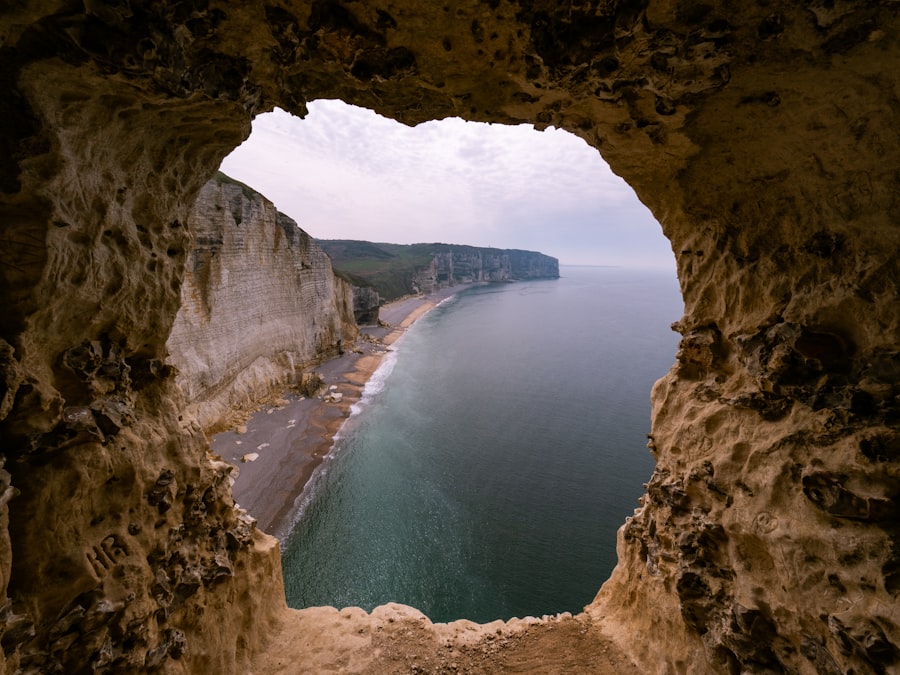
While the Falaise d Aval gets the most attention, the colossal Manneporte arch is actually much larger and incredibly photogenic. Located further south along the coastal path, this spot feels much more wild and isolated. It is one of the most rewarding Etretat cliffs photography spots for those willing to hike a little further.
Chasing the Perfect Composition
The scale of Manneporte is best appreciated by framing it with a human element. If you are traveling with a companion, have them stand near the edge of the path (at a safe distance) to provide a sense of scale. Alternatively, use the winding dirt path as a leading line that cuts through the vibrant green grass of the clifftops, leading directly toward the massive stone arch. This creates a beautiful contrast between the green fields, white cliffs, and deep blue sea.
The Golden Hour Vibe
Because of its orientation, Manneporte catches the very last rays of the setting sun. The light shines directly through the arch, creating a spectacular glowing portal effect. To capture this, position yourself on the cliffs just north of Manneporte. Use a medium telephoto lens (such as a 70-200mm) to compress the scene, bringing the distant arch closer and making it look even more imposing.
4. The Pebble Beach of Etretat at Low Tide
Do not spend all your time on top of the cliffs. Some of the most dramatic shots can be taken from down on the beach itself, right at the water’s edge. However, this perspective requires careful planning and a deep respect for the ocean tides.
Walking Directions and Safety
Start your walk from the main seafront promenade in the town of Etretat. At low tide, you can walk along the base of the cliffs toward the Falaise d Aval. You can even walk through a dark tunnel carved into the cliff (known as the Trou a l Homme) to reach the other side. Always check the local tide charts on resources like Lonely Planet before venturing out, as high tide can quickly trap you against the sheer rock face.
Creative Framing and Angles
Down on the beach, you are surrounded by giant, smooth pebbles that have been shaped by the tides for thousands of years. Get your camera very low to the ground—just inches above the wet pebbles. This unique angle makes the stones in the foreground look massive and creates an incredibly immersive perspective. The wet stones reflect the colors of the sky, adding extra vibrancy and depth to your composition.
Pro Photography Tips: Bring a microfiber cloth and a blower with you. The sea spray down on the beach is intense and will constantly cover your lens element with salt water. Wipe your lens clean before every single shot to prevent blurry spots and lens flare.
5. The Iconic Chapel of Notre Dame de la Garde
Perched high on the Falaise d Amont, this stone chapel is a photography subject in its own right. It stands as a silent sentinel watching over the sea, dedicated to the fishermen and sailors of Normandy who braved the dangerous waters of the English Channel.
Historical Context and Vibe
The original chapel was built in the 19th century but was unfortunately destroyed during World War II. It was later rebuilt in a beautiful, minimalist neo-Gothic style that blends perfectly with the rugged landscape. The vibe here is deeply spiritual and peaceful, especially in the early mornings when the sea mist rolls over the cliffs, partially shrouding the chapel in mystery.
Composition and Lighting Tips
- Framing: Shoot from a low angle to make the chapel tower look like it is reaching up into the dramatic, fast-moving clouds.
- Foreground: In spring and summer, look for wild coastal flowers growing on the cliff edges to add a splash of color to your foreground.
- Night Photography: If you stay after dark, you can shoot long exposures of the chapel silhouetted against a star-filled sky, with the distant lights of the town of Etretat glowing below.
Plan Your Etretat Photography Adventure
Visiting these incredible Etretat cliffs photography spots is an unforgettable experience for any photographer. The combination of dramatic geology, ever-changing weather, and historic charm makes this destination a true masterpiece of nature. To make the most of your trip, allow yourself at least two full days in the area. This ensures you have multiple opportunities to experience both sunrise and sunset, giving you the best possible chance to capture the perfect light.
Remember to respect the environment by staying on the marked paths to prevent cliff erosion, and always prioritize safety over getting the shot. With your camera, tripod, and this guide in hand, you are fully prepared to capture some of the most stunning coastal landscapes in the world. Pack your gear, watch the weather forecast, and get ready to create stunning images that will inspire others to explore the wonders of the Alabaster Coast.
Frequently Asked Questions
What is the best time of day to photograph the Etretat cliffs?
Golden hour, just after sunrise or before sunset, offers the most dramatic lighting and warm tones for the cliffs.
Where is the most famous viewpoint for the Porte d'Aval arch?
The top of the Aval cliff to the left (facing the sea) provides a classic vantage point overlooking the arch.
Is the Falaise d'Amont a good spot for sunrise photography?
Yes, it faces east, making it ideal for capturing the sunrise over the Manneporte arch.
Can you photograph the cliffs from the beach?
Yes, but check the tide tables as some spots are only accessible at low tide for unique low-angle shots.
How do you avoid crowds in your Etretat cliff photos?
Visit on weekdays during off-peak seasons or shoot at sunrise when the popular viewpoints are empty.

Sophie Lefebvre writes about the most photogenic places to visit, pairing stunning locations with the practical details of getting there. She helps travellers find the views worth planning a whole trip around.
💬 Comments (0)
No comments yet. Be the first!