Dubrovnik City Walls Photo Spots Guide
Explore the scenic Dubrovnik city walls photo spots in 2026. This visual guide covers the best angles of the old town.
Dubrovnik City Walls Photo Spots Guide
If you are planning a trip to Croatia, finding the ultimate Dubrovnik city walls photo spots is likely at the very top of your travel bucket list. This medieval stone masterpiece, which encircles the entire Old Town, offers some of the most dramatic, jaw-dropping coastal panoramas in the entire Mediterranean region. Walking these ancient ramparts is like stepping back in time, but to capture those postcard-perfect shots, you need to know exactly where to look, when to press the shutter, and how to frame your compositions.
The defensive stone barrier stretches for nearly two kilometers (about 1.2 miles) and reaches heights of up to 25 meters in certain sections. As you traverse this historic loop, the visual landscape changes constantly, shifting from endless Adriatic blues to a sea of terracotta rooftops, and then to dramatic mountain backdrops. In this comprehensive photography guide, we will explore the absolute best vantage points, optimal camera settings, and creative techniques to ensure your travel gallery looks absolutely spectacular.
1. The Dramatic Vistas of Minceta Tower
As the highest point along the entire defensive system, Minceta Tower is the crown jewel of the northern wall. Completed in the 15th century to protect the city from land-based attacks, this massive circular fortress offers an unmatched, bird-eye perspective of the entire historic core. When you reach the top platform, the view of the iconic orange tiled roofs stretching out toward the sparkling sea is simply breathtaking.
Angles and Composition at the Peak
To capture the scale of the Old Town, stand near the stone battlements on the southern side of the tower. Use a wide-angle lens (around 16mm to 24mm on a full-frame sensor) to include the rugged stone texture of the tower wall in your foreground, leading the viewer's eye down toward the labyrinth of narrow streets below. The contrast between the cold gray limestone and the warm terracotta tiles creates a powerful color harmony.
The Best Lighting and Vibe
The vibe here is grand and historic. The best lighting occurs during the late afternoon, just before the golden hour. At this time, the sun casts long, dramatic shadows through the streets below, highlighting the architectural grid of the city. If you visit in the morning, you will face harsh backlighting from the sea, making the late afternoon the absolute ideal time for this specific spot.
Pro Photography Tips: Set your aperture to f/8 or f/11 to ensure maximum sharpness from the stone details in the foreground all the way to the horizon. Use a polarizing filter to cut down on the sea glare and make the terracotta colors pop with rich saturation.
2. Framing the Famous Stradun from Pile Gate
Immediately after ascending the stairs at the main Pile Gate entrance, you will find yourself overlooking the western end of the Stradun, Dubrovnik's main limestone-paved limestone street. This is one of the most dynamic Dubrovnik city walls photo spots because it perfectly captures the bustling energy of the city from a secure, elevated vantage point.
From this elevated perch, you can look straight down the central artery of the Old Town. The polished white stones of the Stradun reflect the sunlight like a mirror, creating a luminous glow that is unique to this coastal gem. It is a fantastic location for storytelling photography, showing the relationship between the ancient defensive structures and modern life.
- The Shot: A symmetrical vertical frame looking straight down the Stradun.
- The Element: Look for the dome of the Franciscan Monastery to frame your upper-left corner.
- The Motion: Use a slow shutter speed to create a motion blur of the tourists walking below, adding a sense of life and movement to your static stone frame.
3. Capturing St. John Fortress and the Old Harbor
As you make your way to the southeastern section of the loop, the landscape shifts from urban streets to maritime history. St. John Fortress, a monumental structure that once defended the port from hostile ships, offers a spectacular view of the historic harbor. This area has a serene, maritime vibe that contrasts beautifully with the dense urban core.
Creative Framing with Stone Portals
Along this stretch of the wall, you will find several small stone lookout windows and arrow slits. These architectural elements are perfect for creating a natural "frame within a frame" composition. By positioning your camera inside the shaded recess of an arrow slit, you can frame a perfectly exposed shot of the bobbing wooden boats in the harbor, surrounded by the dark, textured stone of the fortress walls.
Managing Your Camera Settings
Because you are shooting from a dark interior space toward a bright exterior scene, your camera's dynamic range will be put to the test. To master this contrast, set your camera to bracket your exposures (taking three shots at different exposure levels). This allows you to blend the images later in post-processing, ensuring both the interior stone textures and the bright blue harbor water are perfectly exposed.
4. The Rugged Charm of Bokar Fortress
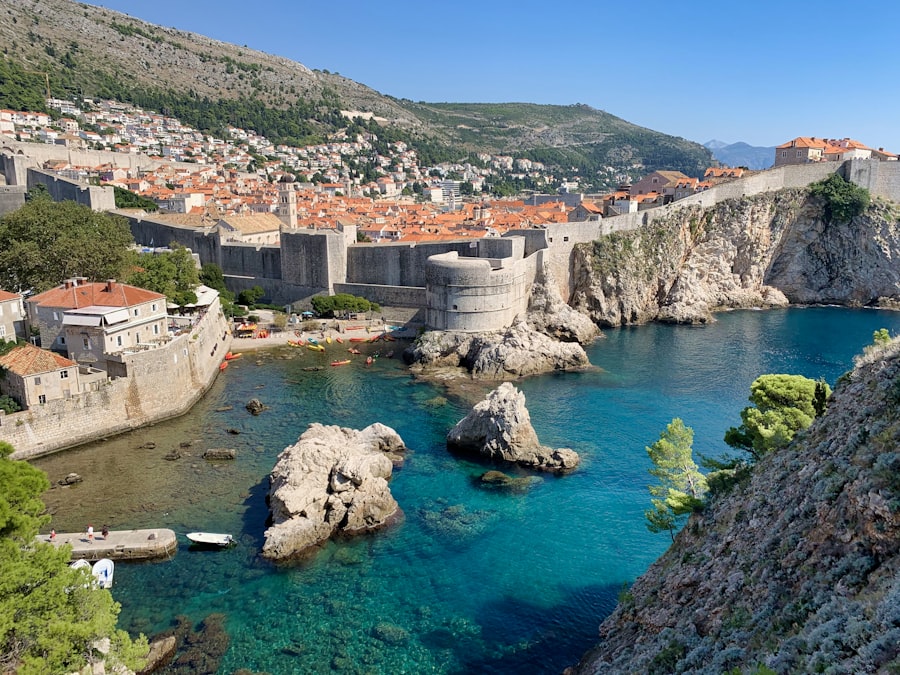
Bokar Fortress is one of the oldest preserved casemated forts in Europe, designed to defend the town's western harbor. From the southern wall walk, this cylindrical fort extends out over the cliffs, offering an incredibly dramatic profile against the deep blue Adriatic Sea. This spot is highly regarded on travel platforms like Lonely Planet as one of the most photogenic coastal defense structures in the world.
The visual drama here is unmatched. The fortress looks as though it is growing directly out of the natural rock formations. Below, the turquoise waves of the sea crash against the dark cliffs, creating a beautiful white foam that adds texture and motion to your seascape photographs.
Pro Photography Tips: Walk slightly past Bokar Fortress toward the south to look back at it. Frame the fortress on the right side of your third grid line, leaving the left side of the frame open to the vast sea and the distant Lovrijenac Fortress. This asymmetric composition creates a powerful sense of adventure.
5. Looking Across to Lovrijenac Fortress
Perhaps the most famous view in the entire city is the sight of Lovrijenac Fortress (often called Dubrovnik's Gibraltar) sitting majestically on a 37-meter-high cliff just outside the western walls. This viewpoint is a favorite for visitors sharing their journeys on travel communities like TripAdvisor because it perfectly captures the epic, fantasy-like scale of the region.
This is where you want to spend time experimenting with different focal lengths. A medium telephoto lens (around 50mm to 85mm) will compress the space between the city walls and the detached fortress, making Lovrijenac look incredibly imposing and close. This perspective emphasizes the sheer verticality of the cliffs and the defensive genius of the medieval builders.
- Ideal Time: Late afternoon, when the setting sun illuminates the western face of Lovrijenac in warm, golden light.
- Foreground Interest: Use the green pine trees growing along the cliffs below the wall to add a splash of natural color to your frame.
- Vibe: Epic, cinematic, and filled with historic drama.
6. Practical Tips for Your Photography Walk
To successfully capture all the stunning Dubrovnik city walls photo spots, you need to plan your walk with precision. The walls operate on a strict one-way system (counter-clockwise), meaning you cannot turn back easily once you pass a spot. You must be prepared to capture each location as you reach it.
Additionally, the Mediterranean sun can be brutal, especially during the summer months. There is very little shade along the two-kilometer walk, which can affect both your physical comfort and the quality of your images. Harsh midday light creates dark, unflattering shadows across the narrow alleys, making early morning or late afternoon the absolute best times to embark on your loop.
Beating the Crowds and the Heat
To get clean shots without hundreds of tourists in your frames, aim to arrive at the gates right when they open in the morning. The soft morning light is incredibly gentle on the stone facades, and you will have the pathways largely to yourself. Alternatively, starting your walk about two hours before closing time will reward you with the spectacular golden hour, though you will need to keep a steady pace to ensure you complete the loop before the exit gates lock.
Essential Gear for the Walls
Keep your gear lightweight. Walking up and down steep stone stairs for two hours with a heavy backpack is exhausting. A single high-quality zoom lens, such as a 24-70mm, is incredibly versatile and will cover almost every scenario you encounter, from wide-angle landscapes to tighter architectural details. Don't forget to wear comfortable, non-slip shoes, as the historic limestone steps have been polished smooth by millions of feet over the centuries and can be surprisingly slippery.
Frequently Asked Questions
What are the best photo spots along the Dubrovnik City Walls?
Top spots include the Minceta Tower for panoramic views, the St. John Fortress for harbor shots, and the seaward side for dramatic coastline images.
What time of day is best for photos on the walls?
Early morning or late afternoon for soft golden light, avoiding harsh midday sun.
How long does it take to walk the walls with photography stops?
Plan for 1.5 to 3 hours, depending on how many photos you take and the crowds.
Does the Dubrovnik City Walls ticket include photography restrictions?
No, personal photography is allowed everywhere, but tripods or commercial shoots may require special permits.
Can you take drone photos from the city walls?
Drones are prohibited from the walls and within the Old City in general, so stick to handheld cameras.

Oliver Janssen scouts the best photography spots in every destination, from sunrise viewpoints to overlooked angles on famous landmarks. He shares exactly where to stand and when to be there for the shot.
💬 Comments (0)
No comments yet. Be the first!