Top Kuala Lumpur Cityscape Spots for Creators
Planning a trip in 2026? Capture the skyline with this guide to the ultimate Kuala Lumpur cityscape spots.
Top Kuala Lumpur Cityscape Spots for Creators
If you are looking to capture the ultimate urban horizon, the search for the absolute best Kuala Lumpur cityscape spots starts right here in the beating heart of Malaysia. Kuala Lumpur is a photographer's dreamland, where futuristic skyscrapers slice through the clouds while historic temples and lush tropical canopies ground the scene below. For digital creators, videographers, and landscape photographers, this metropolis offers an endless playground of light, shadow, and architectural brilliance. Whether you want to capture the iconic twin spires reflecting in a glassy pool or find a secret rooftop that lets you look down on the bustling traffic arteries, we have compiled the ultimate guide to the most visual locations in the city.
To help you plan your next creative expedition, we have mapped out the most spectacular vantage points, complete with technical advice, historical context, and transit instructions. Grab your camera gear, pack a sturdy tripod, and let us dive into the ultimate visual journey through this Southeast Asian gem.
1. The Majestic Petronas Twin Towers from KLCC Park
Standing as the undisputed crown jewels of the Malaysian skyline, the Petronas Twin Towers are an absolute necessity for any visual creator. Completed in 1998, these postmodern Islamic masterpieces were once the tallest buildings in the world. Their stainless steel and glass facades reflect the changing equatorial light in spectacular fashion, making this one of the most versatile Kuala Lumpur cityscape spots you can photograph.
Optimal Framing and Angles at the Lake
The classic shot is best captured from the edge of the Symphony Lake inside KLCC Park. By positioning your tripod close to the water's surface, you can achieve a perfect mirror reflection of the illuminated towers. Use a wide-angle lens (around 16mm to 24mm) to fit the massive scale of the structures into your frame. The best composition involves placing the towers dead-center to emphasize their symmetrical beauty, utilizing the surrounding tropical palm trees as a natural frame on the left and right edges.
How to Get There and Camera Settings
- How to get there: Take the LRT Kelana Jaya Line directly to the KLCC Station. Follow the signs through the Suria KLCC mall to the park exit.
- Best time to visit: Blue hour (just after sunset) when the sky turns a deep indigo and the tower lights flick on.
- Settings: ISO 100, f/8 or f/11 for maximum sharpness, and a shutter speed between 2 to 5 seconds to smooth out the water ripples.
Pro Photography Tips: Avoid using a cheap polarising filter here at night, as it can create strange reflections on the metallic skin of the towers. Instead, use a clean lens cloth to wipe away the humid evening condensation before every single exposure.
2. The Sky Deck at KL Tower (Menara Kuala Lumpur)
For an unobstructed, 360-degree panoramic view of the entire valley, nothing compares to the Sky Deck at Menara Kuala Lumpur. Standing on a natural forest reserve hill, this communications tower offers a much higher vantage point than the twin towers themselves, allowing you to look down on the city's architectural giants.
Mastering the Glass Box Composition
The main attraction for creators here is the famous Sky Box, which extends out over the edge of the deck. This spot demands a strong sense of scale. Have your subject stand inside the glass box while you shoot from a lower angle back on the deck. This framing creates a dizzying, floating-in-mid-air vibe that performs exceptionally well on social media. Pay close attention to the harsh glare on the glass panels; you can minimize this by keeping your lens hood pressed flat against the glass surface if you are shooting outward.
Getting There and Essential Logistics
- How to get there: Take the Monorail to the Bukit Nanas Station, followed by a short walk up the lush Bukit Nanas forest hill, or grab a local taxi directly to the tower lobby.
- Ticket info: You can check operating hours and ticket prices on major travel platforms like TripAdvisor to plan your visit around clear weather.
- Camera settings: Shutter speed 1/125s during the day to freeze human subjects, or 1/10s with image stabilization turned on if you are shooting handheld at twilight.
3. Heli Lounge Bar: The Ultimate Rooftop Sunset Vibe
If you want a raw, unfiltered view of the city skyline without any glass barriers, the Heli Lounge Bar is one of the coolest Kuala Lumpur cityscape spots to experience. By day, it is a fully functioning helicopter landing pad; by night, it transforms into an open-air viewing deck where the wind rushes past you as you take in the sunset.
Capturing the Golden Hour Warmth
The vibe here is incredibly cinematic. As the sun sets behind the distant horizon, it bathes the city in a rich, golden glow. This is the perfect location to capture creative silhouettes of people holding drinks against the dramatic sky. Use a fast prime lens, such as a 50mm f/1.8, to create a beautiful shallow depth of field, rendering the distant skyscrapers into creamy, glowing bokeh balls.
Pro Photography Tips: Since this is an active bar, traditional bulky tripods are often restricted. Bring a compact travel tripod, a flexible Gorillapod, or rely on a high-quality camera body with excellent in-body image stabilization (IBIS) to get those tack-sharp low-light shots.
4. The Historical Contrast at Merdeka Square
For a completely different visual aesthetic, head to Merdeka Square (Dataran Merdeka). This historical site is surrounded by colonial-era architecture, most notably the Sultan Abdul Samad Building, which features intricate Moorish design, copper domes, and a towering clock tower. Directly behind this heritage site, the ultra-modern skyscrapers of the financial district loom large, creating a stunning juxtaposition of old and new.
Framing the Passage of Time
The best composition here is found by crossing the wide road to the grassy field. From this distance, you can shoot back toward the Sultan Abdul Samad Building. Use a medium telephoto lens to compress the distance between the historic arches in the foreground and the massive modern skyscrapers rising behind them. This framing tells a powerful story of Kuala Lumpur's rapid evolution from a quiet mining outpost to a global metropolis.
Walking Directions and Technical Advice
- How to get there: Take the LRT Ampang Line to the Masjid Jamek Station. Walk west along Jalan Tun Perak for about five minutes until you see the open grassy square.
- Lighting conditions: The heritage buildings are beautifully illuminated with warm yellow floodlights after dark, which contrasts beautifully with the cool blue tones of the sky.
- Settings: Keep your camera on a tripod, select an aperture of f/9 to keep both the foreground and background sharp, and use a 10-second self-timer to prevent camera shake.
5. The Colorful Steps of Batu Caves
Located just a short distance north of the city center, the ancient limestone hills of Batu Caves offer a dramatic natural backdrop that contrasts with the urban steel of the city. Guarded by a colossal golden statue of Lord Murugan, this sacred Hindu temple site features 272 steps painted in a brilliant rainbow of colors.
Creative Angles and Color Grading
To capture the sheer scale of the limestone cliffs and the colorful stairs, stand at the very base of the plaza. Use an ultra-wide lens and shoot from a very low angle, tilting your camera upward. This perspective makes the stairs look like they are ascending directly into the heavens. The vivid colors of the steps require careful attention to exposure; make sure not to overexpose the bright reds and yellows, allowing you to retain all the rich details for post-processing color grading.
Travel Details and Tips
- How to get there: Take the KTM Komuter train from KL Sentral directly to the Batu Caves Station. The journey takes about 30 minutes.
- Crowd control: Arrive early in the morning (around 7:00 AM) to avoid the intense heat and the large crowds of tourists and worshippers, allowing for a clean, uninterrupted composition.
- Further reading: For detailed cultural context and visitor guidelines, you can consult trusted guides on Lonely Planet.
6. The Overlooked Titiwangsa Lake Park View
While many tourists flock to the city center, local landscape photographers know that Titiwangsa Lake Park (Taman Tasik Titiwangsa) offers one of the absolute best Kuala Lumpur cityscape spots for a classic postcard panoramic view. Located on the northern edge of the city, this expansive park features a massive lake that perfectly reflects the entire skyline from a distance.
Creating the Perfect Symmetry
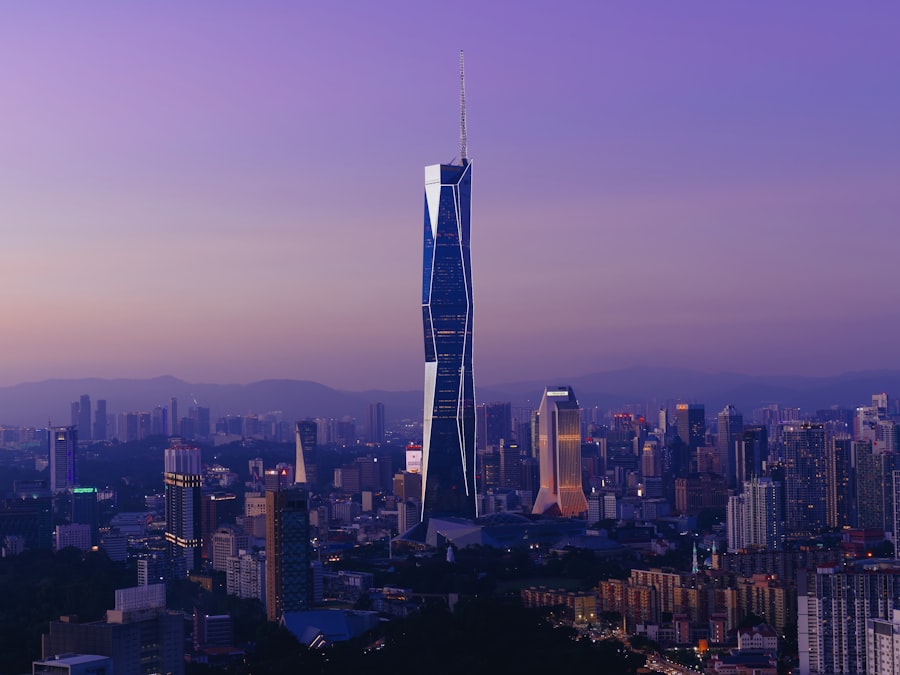
Walk along the edge of the lake until you find an opening in the trees where the Petronas Towers, KL Tower, and the new Merdeka 118 tower are all visible in a single frame. The composition here is all about perfect symmetry. Align the horizon line directly in the center of your frame to balance the real skyline with its watery reflection. If you visit during a calm morning, the water acts as a giant mirror, creating a mesmerizing, dreamlike atmosphere.
Getting to the Park and Best Settings
- How to get there: The easiest way is to use a ride-sharing app or take the MRT Putrajaya Line to the Hospital Kuala Lumpur Station and walk toward the park entrance.
- Best time to shoot: Sunrise is magical here, as the sun rises behind the city, casting beautiful pink and orange hues across the sky.
- Settings: Use a circular polarizer to control the reflections on the water, set your camera to manual mode, and use a neutral density (ND) filter to achieve a long exposure of 30 seconds or more to make the lake look as smooth as glass.
Frequently Asked Questions
What are the best spots in Kuala Lumpur for cityscape photography?
Popular spots include the KLCC Park, Menara Tower, and the Heli Lounge Bar, which offer stunning views of the Petronas Towers and the city skyline.
Are there any free locations to capture Kuala Lumpur's skyline?
Yes, locations like KLCC Park and the Bukit Bintang pedestrian bridges provide free, accessible vantage points for great cityscape shots.
What is the ideal time to shoot the Kuala Lumpur cityscape?
The golden hours—just after sunrise and before sunset—offer the best lighting, while nighttime shots highlight the glittering city lights, especially over the Petronas Towers.
Do I need a professional camera to enjoy these spots?
No, any smartphone or camera can capture impressive cityscape images; bringing a tripod and using HDR mode can help with low-light conditions.
Are there any lesser-known spots ideal for creators seeking unique perspectives?
Yes, rooftops like the Regalia Residence and the Tradewinds Tower offer less crowded, dramatic views, perfect for creative compositions of the cityscape.

Oliver Janssen scouts the best photography spots in every destination, from sunrise viewpoints to overlooked angles on famous landmarks. He shares exactly where to stand and when to be there for the shot.
💬 Comments (0)
No comments yet. Be the first!