5 Hokkaido wildlife photography spots
Our 2026 guide reveals the ultimate Hokkaido wildlife photography spots to capture majestic cranes and eagles in the snow.
5 Hokkaido wildlife photography spots
If you are searching for the ultimate winter wonderland adventure, exploring the best Hokkaido wildlife photography spots will place you face-to-face with some of the rarest and most majestic creatures on earth. Hokkaido, the northernmost island of Japan, transforms into a dramatic canvas of drifting sea ice, active volcanic vents, and ancient primeval forests during the colder months. For visual storytellers, this region offers a dreamlike aesthetic where minimalist white backgrounds contrast with the vibrant colors of wild creatures.
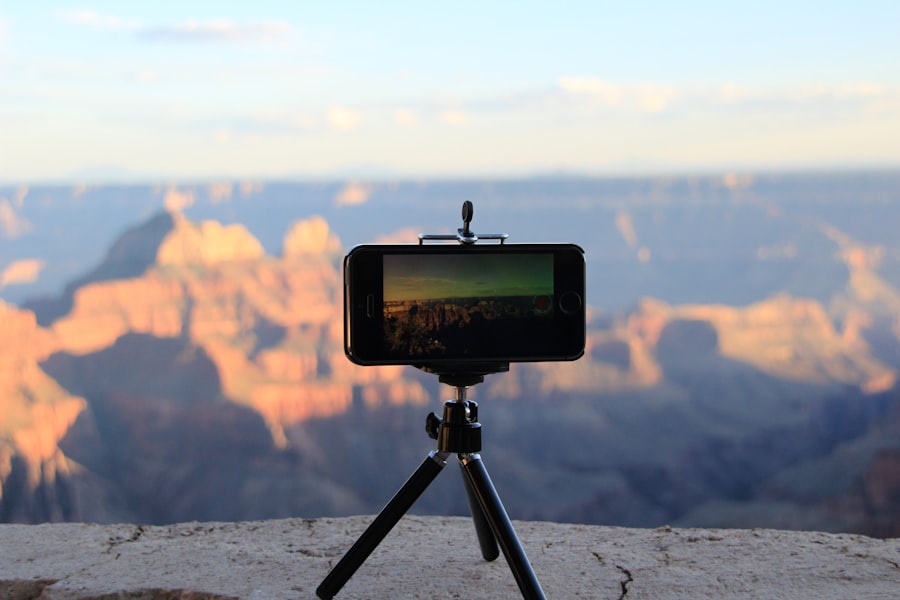
Capturing these moments requires more than just luck. You need to understand the behavior of the local fauna, master the challenging snowy conditions, and know exactly where to position your tripod. In this comprehensive guide, we will dive deep into five legendary locations that deserve a prime spot on your itinerary, sharing professional insights on how to frame, compose, and capture these unforgettable natural spectacles.
1. Lake Kussharo and the Whooper Swans
Located within the boundaries of Akan-Mashu National Park, Lake Kussharo is a massive caldera lake that serves as a vital winter sanctuary for hundreds of migrating whooper swans. While most of the lake freezes solid during the sub-zero winter months, geothermal hot springs along the sandy shoreline keep specific pockets of water warm and ice-free. This creates a surreal visual contrast where elegant white swans swim gracefully in steaming water, surrounded by walls of thick snow and ice.
The Best Camera Settings for Lake Kussharo
Photographing white swans against a bright snowy background can easily trick your camera's internal light meter, resulting in underexposed, gray-looking snow. To combat this, switch your camera to manual mode and set your exposure compensation to +1 or +2 stops. Keep your shutter speed high, at least 1/1000th of a second, to freeze the motion of the water droplets and the powerful flapping of the swans' wings. Use a wide aperture like f/4 or f/5.6 to isolate a single swan, creating a soft, creamy background blur that emphasizes the elegant curves of the bird's neck.
Exact Walking Directions and Access
To reach the best viewing point, Sunayu Beach, you will need to travel from Kushiro or Abashiri. If you are driving, take National Route 243 directly toward Lake Kussharo. For public transit users, take the JR Senmo Line to Kawayu Onsen Station, and then catch a local seasonal bus or a taxi for a brief 10-minute ride to the Sunayu area. Once you arrive at the main parking lot, walk past the small souvenir shop and head straight down to the sandy shoreline. You will immediately see steam rising from the water and hear the vocal calls of the swans gathered just meters from the shore.
Pro Photography Tips: To capture a truly unique composition, get as low to the ground as possible. Sit or lie on a waterproof mat at the water's edge to achieve an eye-level perspective with the swans. This extremely low angle creates an intimate vibe and allows the steam rising from the hot springs to frame your subject, adding a sense of mystery and depth to your final image.
2. The Red-Crowned Cranes of Tsurui Village
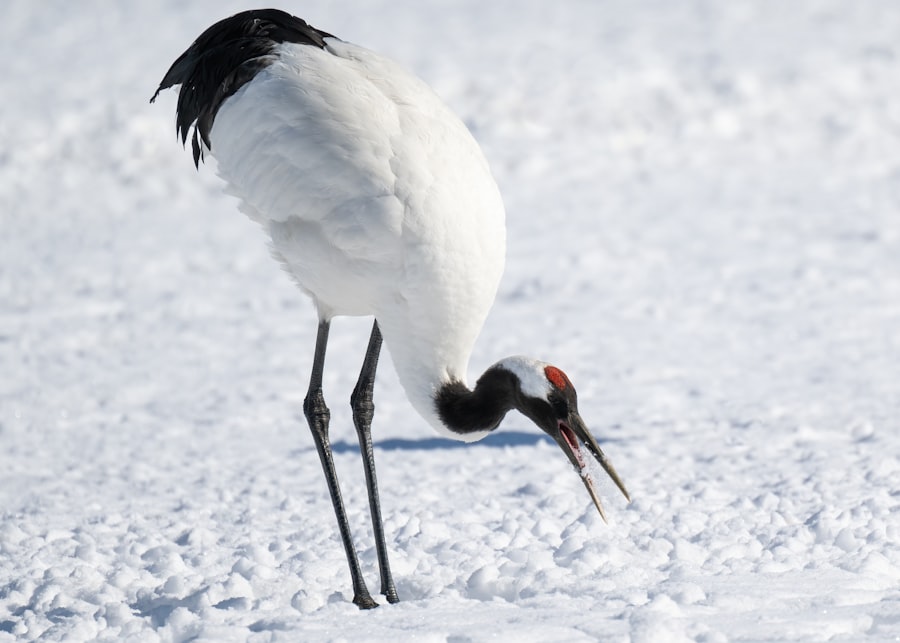
Tsurui Village is world-famous among nature lovers as the primary sanctuary for the endangered red-crowned crane, a bird deeply rooted in Japanese folklore as a symbol of longevity and fidelity. Decades ago, local residents began feeding the cranes during harsh winters, saving the species from near extinction. Today, the Otowa Bridge and the Akan International Crane Center are premier Hokkaido wildlife photography spots where you can witness these birds perform their intricate, synchronized mating dances in the freezing morning air.
- Otowa Bridge: The classic location to capture cranes standing in a misty, ice-covered river at sunrise.
- Tsurui-Ito Tancho Sanctuary: An open feeding field where dozens of cranes gather, leap, and dance during the day.
- Akan International Crane Center: A dedicated research facility offering close-up viewing opportunities and educational exhibits.
Composing the Perfect Sunrise Crane Shot
At Otowa Bridge, the challenge is managing the delicate morning lighting. Arrive at least an hour before sunrise to secure a spot on the narrow pedestrian path of the bridge. As the sun begins to rise behind the trees, the combination of freezing air and relatively warm river water creates a thick, ethereal mist. Use a telephoto zoom lens, such as a 400mm or 600mm, to compress the scene. Look for a composition that frames a small group of cranes surrounded by rime-covered branches, using the soft pink and golden hues of the early morning sky to color the mist.
3. Rausu and the Steller's Sea Eagles
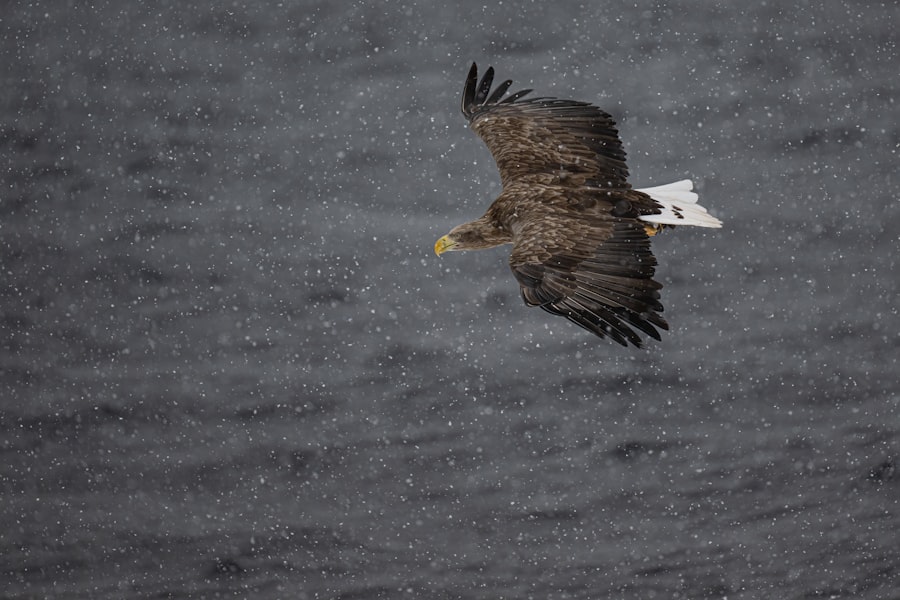
Perched on the edge of the Shiretoko Peninsula, which is recognized as a UNESCO World Heritage site, the small fishing port of Rausu offers one of the most dramatic wildlife spectacles on earth. Every winter, massive sheets of drift ice float down from the Sea of Okhotsk, bringing along giant Steller's sea eagles and white-tailed eagles. These birds of prey, boasting wingspans of up to 2.5 meters, gather on the floating ice to feed on fish, creating a high-energy environment filled with dramatic mid-air battles.
Mastering Action Shots on the Drift Ice
To capture these incredible aerial battles, you will need to board a specialized icebreaker boat from the Rausu harbor. Because the boat will be constantly rocking and moving, hand-held shooting is highly recommended over using a tripod. Keep your shutter speed incredibly fast, ideally between 1/2000th and 1/3200th of a second, to freeze the high-speed diving action. Set your camera to continuous autofocus with zone tracking, allowing the camera to lock onto the dark feathers of the eagles against the bright white ice and gray sky.
Exact Walking Directions and Harbor Access
Rausu is located on the eastern side of the Shiretoko Peninsula. If you are traveling by public transit, take the JR Semmo Line to Shibecha or Shiretoko-Shari Station, and then take a regional bus to the Rausu Bus Terminal. From the terminal, the main Rausu Port is a simple, flat 10-minute walk heading south along the coastline on Route 335. Walk past the fishing cooperative buildings toward the docks where the sightseeing boats are moored. Be sure to dress in layers, as the wind chill on the open water can drop temperatures far below freezing.
Pro Photography Tips: Pay close attention to the direction of the wind and the position of the sun. Eagles always take off and land into the wind. Position yourself on the deck of the boat so the wind is blowing at your back; this ensures the eagles will fly directly toward your lens, allowing you to capture stunning head-on angles and expressive facial details.
4. Mount Tokachi and the Elusive Ezo Pika
For photographers who enjoy a physical challenge and a search for smaller subjects, the rocky slopes of Mount Tokachi in the Daisetsuzan National Park are home to the Ezo pika. Often referred to as a living fossil, this tiny, adorable mammal is a subspecies of the northern pika and is believed to have inhabited Hokkaido since the last ice age. Measuring just 15 centimeters in length, these creatures live among the volcanic rock slides, scurrying out to gather vegetation and dry it in the sun before the heavy winter snows arrive.
How to Find and Frame the Ezo Pika
Finding the pika requires patience, sharp eyesight, and a quiet approach. They are highly active during the autumn months when they harvest leaves, but they can still be spotted on sunny winter days near rocky crevices. Because of their small size, a macro-telephoto setup or a high-quality zoom lens is essential. When framing your shot, try to include the colorful autumn mosses or the pristine white snow surrounding the rocks to provide environmental context, showing the harsh, beautiful landscape these tiny survivors call home.
5. The Red Foxes of Shiretoko National Park
No trip to Hokkaido's wilderness is complete without photographing the beautiful Ezo red fox. These curious and highly photogenic animals are widespread across the island, but the pristine, protected environment of Shiretoko National Park offers the most natural backdrop for capturing them in the wild. Unlike urban foxes, the wild foxes of Shiretoko hunt for rodents beneath the deep snow, leaping high into the air and diving face-first into the drifts in a behavior known as mousing.
Capturing the Perfect Forest Vibe
When you encounter an Ezo red fox, the goal is to capture its wild, untamed spirit. Avoid photographing them on paved roads or near human structures. Instead, wait for the fox to move into the snow-covered birch forests. The contrast of the fox's bright orange fur against the white snow and the vertical black-and-white lines of the birch trees creates a minimalist, fine-art aesthetic. Use a wide aperture to soften the forest background, making the vibrant orange of the fox pop dramatically from the frame.
- For more travel planning resources in the region, check out the detailed guides on Lonely Planet.
- To find local lodging, transport updates, and reviews of wildlife tours in eastern Hokkaido, consult TripAdvisor.
- Always respect local wildlife guidelines and maintain a safe distance from all nesting and feeding areas.
Essential Gear and Preparation for Hokkaido's Winters
Photographing in Hokkaido's extreme winter environment requires careful preparation for both you and your equipment. Temperatures regularly drop below minus fifteen degrees Celsius, which can cause camera batteries to drain rapidly. Always carry at least three spare batteries, keeping them in an inside pocket close to your body heat until the moment you need to use them. Additionally, when transitioning from the freezing outdoor air to a warm vehicle or indoor space, seal your camera equipment inside a plastic bag to prevent condensation from forming on the internal glass elements.
By visiting these incredible Hokkaido wildlife photography spots, you will not only capture stunning, professional-grade images to elevate your portfolio, but you will also experience the quiet, raw, and untouched beauty of one of Asia's last true wilderness frontiers.
Frequently Asked Questions
What is the best time of year for wildlife photography in Hokkaido?
The best time is winter (December to February) for snow monkeys and cranes, and spring (May to June) for brown bears and foxes emerging from hibernation.
Where can I photograph red-crowned cranes in Hokkaido?
Visit the Kushiro Marshland and the nearby town of Tsurui, especially in winter, where cranes gather at feeding stations.
Which spot offers the best chance to see Hokkaido brown bears?
Shiretoko Peninsula is your best bet; take a boat tour for coastal bears or hike (with a guide) in the Shiretoko National Park.
Are there any photography hides or blinds available for wildlife?
Yes, at spots like Onneto Lake and Tsurui you can find covered shelters overlooking feeding sites, ideal for low-disturbance shooting.
What equipment do I need for wildlife photography in Hokkaido?
A telephoto lens of at least 300mm, a sturdy tripod (especially for snow conditions), and a weather-sealed camera body are essential for sharp, reliable shots.

Oliver Janssen scouts the best photography spots in every destination, from sunrise viewpoints to overlooked angles on famous landmarks. He shares exactly where to stand and when to be there for the shot.
💬 Comments (0)
No comments yet. Be the first!