Top 10 Santorini Sunset Photography Spots 2026
Explore the most Instagrammable Santorini sunset photography spots for 2026, from iconic Oia to hidden viewpoints.
Top 10 Santorini Sunset Photography Spots 2026
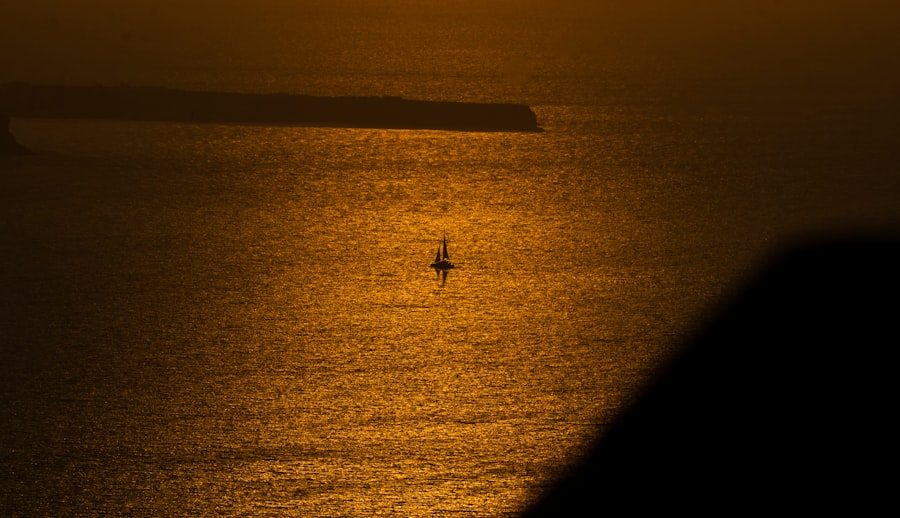
If you are searching for the absolute best Santorini sunset photography spots in 2026, you have landed in the right place. This island, forged by volcanic fire and sculpted by the Aegean wind, offers a kaleidoscope of golden-hour magic that is nearly impossible to replicate anywhere else on earth. I have spent years chasing the perfect light across Santorini's caldera, and I am here to share the ten locations that will transform your photography portfolio. Each of these Santorini sunset photography spots has its own unique personality, lighting conditions, and compositional challenges. Whether you are a seasoned professional or a passionate beginner, this guide will help you capture the sunset of a lifetime. Prepare to wake up early, walk the ancient paths, and wait for that moment when the sky explodes into a riot of orange, pink, and violet.
1. Oia: The Crown Jewel of Sunset Photography
No list of Santorini sunset photography spots would be complete without Oia. This iconic village, perched high on the northern tip of the island, draws crowds from every corner of the globe. The vibe here is electric, almost celebratory, as hundreds of photographers line up along the castle walls, tripods clicking, shutters humming in unison. But do not let the crowds discourage you. The rewards are monumental.
Oia Castle (Byzantine Castle Ruins)
The undisputed king of Santorini sunset photography spots is the Byzantine Castle ruins, also known as the Oia Castle. Built by the Venetians in the 15th century, this fortress offers a panoramic sweep of the caldera, the deep blue sea, and the sinking sun. The history here is palpable — you are standing where watchmen once scanned the horizon for pirates. For the best lighting, arrive at least two hours before sunset. The golden light wraps around the whitewashed buildings and the blue domes, creating a warm, buttery glow that is perfect for portraits and landscapes alike.
Camera settings: Use an aperture of f/8 to f/11 for maximum sharpness across the entire frame. ISO 100 to keep noise at bay. Shutter speed will vary based on your metering — spot meter on the sky to avoid blowing out the highlights. A graduated neutral density filter is your best friend here to balance the bright sky with the darker foreground.
Walking directions: From the main bus stop in Oia, walk towards the coast following the signs for "Kastro." You will pass through narrow alleys lined with boutiques and art galleries. The castle is at the very tip of the village. Look for the white-domed church of Panagia Platsani as a landmark — turn left just before it and follow the path uphill.
Pro Photography Tips: For a unique shot, climb down to the rocks just below the castle. Use a wide-angle lens (16-24mm) to capture the crowd silhouetted against the fiery sky. Include the windmill in the background for scale. This lower angle adds drama and depth to your composition, making the viewer feel like they are right there in the moment.
The Blue Dome of Oia (Anastasi Church)
Another must-visit among Santorini sunset photography spots is the iconic blue dome of the Anastasi Church. This is the postcard-perfect shot that everyone dreams of. The composition is pure poetry: a stark white dome against a cobalt sky, with the caldera stretching into infinity. The best time to shoot here is during the golden hour, when the light rakes across the dome's surface, accentuating every curve and shadow.
Angles and framing: Position yourself slightly to the left of the dome to include the bell tower in your frame. Use a medium telephoto lens (50-85mm) to compress the perspective and make the dome appear larger against the sea. Include a sliver of the neighboring blue dome in the background for a sense of place. Do not forget to look down — the cobblestone paths, with their intricate patterns, make excellent foreground elements.
- Arrive by 4:00 PM to secure your spot. The area gets packed quickly.
- Bring a small step stool to shoot over the heads of the crowd.
- Use a polarizing filter to deepen the blue of the dome and the sky.
2. Fira and the Fira-Firostefani Trail
The capital of Santorini, Fira, offers some of the most dramatic Santorini sunset photography spots. The entire cliffside is a vast, winding balcony that catches the last rays of the sun. The vibe here is more urban, with bars and restaurants spilling onto the patios, yet the photographic opportunities are extraordinary.
The Three Bells of Fira
The Catholic Cathedral of Saint John the Baptist, known as the Three Bells of Fira, is a gem among Santorini sunset photography spots. The three bells hang in an elegant arch, framing the caldera and the distant volcano. The history of this church dates back to the 18th century, and its location on the cliff edge makes it a prime subject for sunset photography.
Lighting and composition: The best light hits the bells about 45 minutes before sunset. The sun casts a warm sidelight that illuminates the white stone and the bronze bells. Use a narrow aperture (f/11) to keep the bells and the caldera in focus. Include the bell tower on the right to balance the frame. For a more intimate shot, zoom in on the bells with the sun setting behind them, using a small aperture for a starburst effect.
Walking directions: From the central square of Fira (Plateia Theotokopoulou), walk south along the caldera path for about 10 minutes. You will see the three bells hanging on your left above a steep staircase. There is a small terrace here that provides ample space for tripods.
Pro Photography Tips: Use a narrow aperture (f/16 or f/22) to create a starburst effect on the sun as it touches the horizon. Position the sun directly behind the largest bell for a dramatic silhouette. Bracket your exposures (three shots at different stops) to merge later in post-processing for a perfectly balanced image.
Firostefani's Blue Dome Church (Agios Theodori)
A short walk north from Fira, Firostefani is home to one of the most photographed churches on the island. Agios Theodori, with its brilliant blue dome and white bell tower, is a masterpiece of Cycladic architecture. This spot is less crowded than Oia, making it one of the more peaceful Santorini sunset photography spots.
Framing and vibe: Use the blue dome as your primary subject, with the caldera and the volcano of Nea Kameni in the background. A telephoto lens (70-200mm) will allow you to isolate the dome against the distant sea. The vibe here is serene, with the sound of the wind and the distant church bells. Arrive early to enjoy a coffee at the nearby cafe while you set up your gear.
- Walk along the caldera path from Fira to Firostefani (about 15 minutes).
- Look for the blue dome on your right as you approach the village square.
- Use a medium aperture (f/5.6 to f/8) for a soft background that enhances the dome.
3. Imerovigli: The Balcony of the Aegean
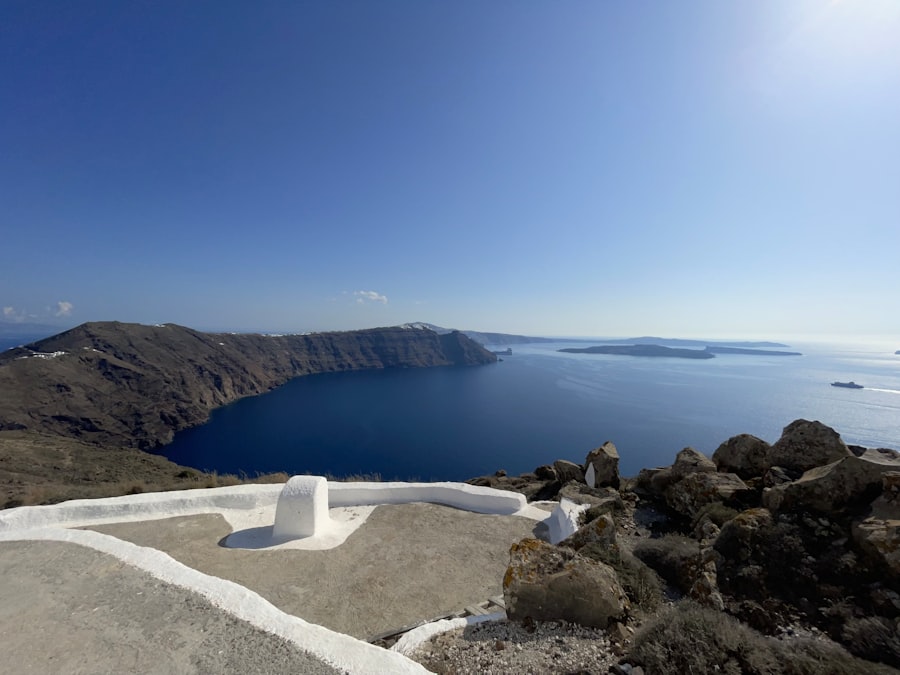
Imerovigli, known as the "Balcony of the Aegean," offers some of the highest vantage points among all Santorini sunset photography spots. The village is perched on the highest point of the caldera, providing an unobstructed view of the entire basin. The vibe here is exclusive and quiet, with luxury hotels cascading down the cliff.
Skaros Rock
The ancient fortress of Skaros, once the capital of Santorini during the Venetian era, is a rugged promontory that juts out into the caldera. It is one of the most dramatic Santorini sunset photography spots. The history of Skaros is rich: it was a fortified settlement that withstood pirate attacks for centuries. Today, it is a pilgrimage for photographers seeking a raw, natural foreground against a sublime sunset.
Camera settings and directions: Use a wide-angle lens (16-24mm) to capture the entire rock formation with the caldera stretching behind it. An aperture of f/8 will keep the foreground sharp. The hike to the top takes about 20 minutes from the village of Imerovigli. The path is steep and uneven, so wear sturdy shoes. Start your hike at least 90 minutes before sunset to allow time for the climb and setup.
Lighting: The sun sets directly behind the rock if you position yourself on the northern side. The light wraps around the weathered stones, casting long shadows that emphasize the texture. For a more abstract shot, use a long exposure (2-5 seconds) to smooth the sea while keeping the rock sharp.
- Park near the church of Panagia Malteza in Imerovigli.
- Follow the stone path down towards the rock, passing through a small gate.
- Be careful on the loose gravel — it can be slippery.
4. Akrotiori Lighthouse: A Solitary Sentinel
For those who prefer solitude and a more rugged setting, the Akrotiri Lighthouse is one of the most rewarding Santorini sunset photography spots. Located on the southwestern tip of the island, this lighthouse stands on a cliff overlooking the endless sea. The vibe here is raw, windswept, and utterly romantic.
History and angles: Built in 1892 by the French company "La Compagnie des Phares," the lighthouse guided ships through the treacherous waters of the caldera for over a century. It is a towering white structure with a red-striped top, iconic against the deep blue sky. For composition, include the lighthouse on one side and the sun on the other, using a wide-angle lens to capture the vastness of the seascape. A lower angle makes the lighthouse appear more imposing.
Walking directions: Drive or take a taxi to the Akrotiri area. From the village of Akrotiri, follow the road signs for "Faros" (lighthouse). The road ends at a small parking area. From there, walk a short distance along the cliff edge. There are no barriers, so stay safe.
Pro Photography Tips: This is an excellent spot for minimalistic compositions. Use a 50mm lens to isolate the lighthouse against the setting sun. Experiment with silhouettes by placing a person on the cliff edge. A shutter speed of 1/125th second with a small aperture (f/11) will freeze the motion of the wind-blown grass while keeping the structure sharp.
5. Pyrgos: The Hidden Hilltop Gem
Pyrgos is a fortified village that once served as the island's capital. It is one of the highest Santorini sunset photography spots, offering a 360-degree view of the entire island. The vibe here is authentic, unspoiled by mass tourism, with narrow alleys and traditional houses that look like a film set.
The Castle of Pyrgos
The medieval castle at the top of Pyrgos is a circular structure with four towers. From here, you can see the entire caldera, the airport, and the distant mountains of Crete on a clear day. The history of this castle dates back to the 12th century, when the island was under Byzantine rule. It was later fortified by the Venetians in the 15th century.
Lighting and composition: The golden hour in Pyrgos is magical because the light filters through the valley, illuminating the white houses in a warm glow. Use a telephoto lens to compress the view and make the castle appear larger against the sea. For a wider shot, include the church of Agios Georgios in the foreground. The sun sets directly in front of the castle, making it a perfect subject for a silhouette.
Walking directions: From the main square of Pyrgos, follow the signs for "Kastro." The walk uphill is about 10 minutes on cobblestone paths. The path is well-marked and passes through charming alleyways lined with bougainvillea.
- Wear comfortable shoes — the cobblestones can be uneven.
- Bring water — it gets warm on the hilltop.
- Use a polarizing filter to cut through the afternoon haze and deepen the colors.
6. Ammoudi Bay: The Fisherman's Perspective
Ammoudi Bay, located at the bottom of the Oia cliff, offers a completely different perspective among Santorini sunset photography spots. Instead of looking across the caldera, you are looking up at the whitewashed village, with the sun setting behind the old port. The vibe here is quaint, with small tavernas and fishing boats bobbing in the water.
Angles and framing: From the water's edge, aim your lens straight up to capture the dramatic cliffs of Oia with the sun peeking through the alleyways. Use a wide-angle lens to include the colorful boats in the foreground. The reflection of the sky on the calm water creates a mirror-like effect that is stunning. For a more intimate composition, focus on a single boat with the sun behind it, creating a classic Greek island silhouette.
Lighting: The sun sets about 15 minutes earlier in Ammoudi Bay because of the high cliffs. Plan to arrive by 5:00 PM to catch the last direct light on the boats. Use a graduated ND filter to balance the bright sky with the darker water.
Walking directions: From the main street of Oia, follow the path that leads down to the bay. There are approximately 300 steps, so it is a steep descent. Alternatively, you can drive down, but parking is very limited. The walk down takes about 15 minutes, and the walk back up is a strenuous 20-25 minutes.
7. Santo Wines Winery: Sunset with a Glass of Assyrtiko
For a more relaxed and sophisticated experience, the Santo Wines Winery in Pyrgos is one of the most luxurious Santorini sunset photography spots. Located on a cliff overlooking the caldera, the winery offers an infinity terrace where you can sip the island's famous Assyrtiko wine while the sky turns to molten gold. The vibe here is elegant, with well-dressed couples and the clink of glasses.
Composition and vibe: Place your wine glass in the foreground, with the caldera and the sunset behind it. Use a wide aperture (f/2.8) to blur the background into a soft bokeh, making the glass and its golden contents the hero of the shot. For a more environmental portrait, include the terrace railings and the distant volcano. The lighting here is soft and warm, perfect for capturing the rich colors of the wine and the sky.
Walking directions: The winery is located just outside Pyrgos village, accessible by car or taxi. There is ample parking. You can also take a bus from Fira to Pyrgos and then walk for 10 minutes. Make a reservation for the sunset session, as it is very popular.
Pro Photography Tips: Use a macro lens or a close-up filter to capture the details of the wine glass — the condensation, the rim of the glass catching the light, and the texture of the wine. A shutter speed of 1/200th second with a wide aperture will keep the subject sharp while blurring the background into a creamy canvas.
8. Profitis Ilias Monastery: The Highest Point on the Island
At 1,860 feet above sea level, the Monastery of Profitis Ilias offers the highest vantage point among all Santorini sunset photography spots. The view from here is unmatched — you can see the entire island, from the caldera to the eastern coast, and on a clear day, the mountains of Crete. The vibe here is spiritual and serene, with the sound of wind and the distant bells of the monastery.
History and angles: The monastery was built in the 18th century by the monks of the region. It is a working monastery, so be respectful of the residents. For photography, the best angle is from the eastern side of the monastery, looking west towards the caldera. Use a telephoto lens to zoom in on the distant blue domes of Oia and Fira. The light here is incredibly clear because of the altitude, allowing for sharp, contrasty images.
Walking directions: Drive or take a taxi to the top of the mountain. The road is winding but paved. There is a small parking area near the monastery. From there, walk around the perimeter to find the best viewpoints. Be mindful of the steep drop-offs.
- Bring a windproof jacket — it is very breezy at the top.
- A long telephoto (200mm+) is recommended for compressing the distant views.
- Use a UV filter to protect your lens from the salt spray and dust.
9. The Red Beach Overlook: A Fiery Foreground
The Red Beach, with its iconic volcanic red cliffs, is one of the most unique Santorini sunset photography spots. The colors here are extraordinary — the deep red of the iron-rich rocks, the turquoise of the sea, and the orange of the sunset create a painterly palette. The vibe here is adventurous, with a short hike required to reach the best viewpoints.
Composition and lighting: Use the red cliffs as the main subject in the foreground, with the sun setting behind the distant caldera. A wide-angle lens (16-24mm) will allow you to include the entire cliff face and the sky. The best light is during the golden hour, when the red rocks glow with an almost supernatural intensity. Use a polarizing filter to saturate the red tones and cut down the glare from the sea.
Walking directions: From the village of Akrotiri, follow the signs for "Red Beach." Park near the main road and walk down the trail to the beach. For the photography spot, take the path that climbs up the hill to the left of the beach. This leads to a viewpoint that overlooks the entire beach and the caldera. The hike takes about 10 minutes.
10. Final Photography Checklist for Santorini
To make the most of these incredible Santorini sunset photography spots, you need to be prepared. Here is a checklist of essential gear and tips to ensure you return with stunning images.
- Camera: A DSLR or mirrorless camera with manual mode.
- Lenses: Wide-angle (16-24mm), standard zoom (24-70mm), and telephoto (70-200mm or longer).
- Filters: Graduated neutral density (GND) filters, a polarizing filter, and a UV filter.
- Tripod: A sturdy tripod is essential for long exposures and sharp images in low light.
- Extra batteries and memory cards: Sunsets can be long, and you will shoot a lot.
- Comfortable shoes and water: Many of these spots require walking or hiking.
For more detailed information on traveling to Santorini, check out TripAdvisor's Santorini travel guide and Lonely Planet's Santorini destination page. Both resources offer excellent advice on transportation, accommodation, and dining options that will complement your photography adventures.
In conclusion, Santorini is a paradise for sunset photographers, and these ten Santorini sunset photography spots represent the very best the island has to offer. Each location has its own unique character, lighting conditions, and compositional possibilities. Whether you are standing on the ancient walls of Oia Castle, hiking up to Skaros Rock, or sipping wine at Santo Wines, you will find that the magic of the golden hour on this island is something you will carry with you forever. So pack your gear, plan your route, and get ready to capture the sunset of a lifetime in 2026. The light is waiting for you.
Frequently Asked Questions
What is the best time to arrive at Santorini sunset photography spots?
Arrive at least 1.5–2 hours before sunset to secure a prime location and capture the changing light colors.
Which village offers the most iconic sunset view in Santorini?
Oia is the most famous spot, especially around the Byzantine Castle ruins, for its classic blue-domed churches and caldera views.
Are there any less crowded alternatives to Oia for sunset photography?
Yes, spots like Fira's cable car area, Imerovigli, Pyrgos, and Akrotiri Lighthouse offer stunning sunsets with fewer crowds.
How can I avoid overexposed skies when shooting the sunset?
Use graduated neutral density filters or bracket exposures to balance the bright sun and darker foreground properly.
Do I need a tripod for Santorini sunset photography?
A tripod is highly recommended for sharp shots in low light and for long exposures to capture smooth sea reflections.
💬 Comments (0)
No comments yet. Be the first!