Top 10 Barcelona Park Guell Photo Spots 2026
Explore the most photogenic Barcelona Park Guell Photo Spots in 2026. From the serpentine bench to the colorful mosaic dragon.
Top 10 Barcelona Park Guell Photo Spots 2026
Welcome to the ultimate guide to the best Barcelona Park Guell Photo Spots in 2026. If you are a photography enthusiast planning a trip to Barcelona, you already know that Park Guell is one of the most visually stunning locations in the city. The combination of Antoni Gaudi's organic architecture, vibrant mosaics, and sweeping views of the Mediterranean creates a playground for any photographer. Whether you are a seasoned professional with a full-frame camera or a traveler capturing memories on your smartphone, this guide will walk you through ten incredible spots that will elevate your portfolio. We will dive deep into the history, the best lighting conditions, exact walking directions, camera settings, and composition techniques. By the end of this post, you will have a complete roadmap to capture the most iconic Barcelona Park Guell Photo Spots like a local expert. So grab your camera, put on comfortable shoes, and let us explore the magic of Gaudi's masterpiece together.
Park Guell is not just a park — it is a UNESCO World Heritage Site that blends nature with surrealist design. Originally conceived as a housing estate for wealthy families, it was transformed into a public park in 1926. Today, it attracts millions of visitors every year. The key to getting stunning shots is knowing where to go and when. This guide covers everything from the famous mosaic bench to hidden corners that most tourists overlook. Let us begin.
1. The Serpentine Bench at the Main Terrace
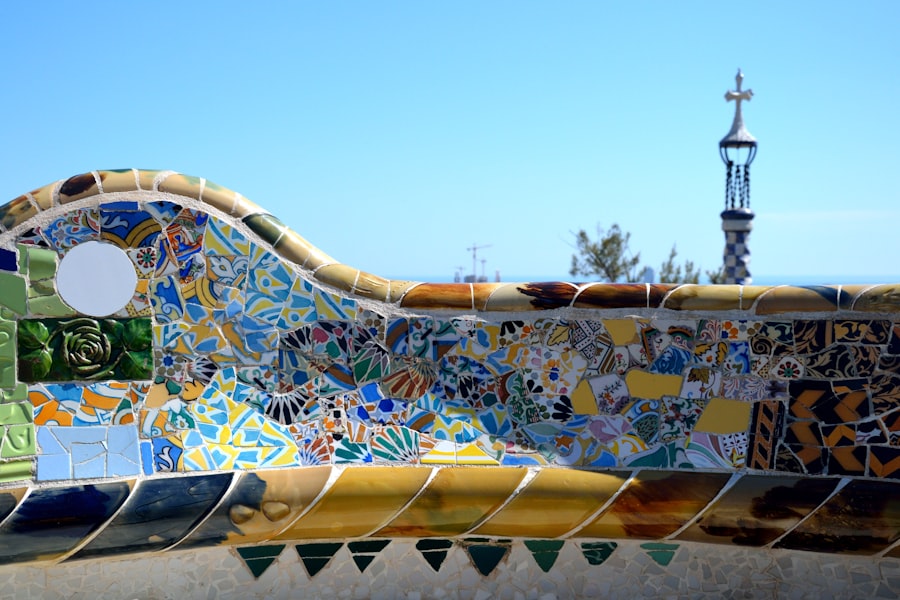
This is arguably the most photographed spot in the entire park, and for good reason. The Serpentine Bench, also known as the Trencadis Bench, wraps around the main terrace like a colorful dragon. Designed by Gaudi's collaborator Josep Maria Jujol, the bench is covered in thousands of broken ceramic pieces arranged in abstract patterns. The vibrant blues, greens, oranges, and whites create a visual feast that changes throughout the day.
Best Time to Shoot
The lighting here is absolutely critical. Early morning, right when the park opens at 9:30 AM, offers soft, golden light that brings out the warmth of the mosaics. The bench faces southeast, so morning light hits the tiles at a perfect angle, creating subtle reflections and depth. Avoid midday when the harsh sun washes out the colors and creates unflattering shadows. Late afternoon also works well, but the terrace gets crowded.
Camera Settings for Perfect Results
Use a wide-angle lens (16-24mm on full frame) to capture the sweeping curve of the bench with the Barcelona skyline in the background. Set your aperture to f/8 to f/11 for maximum depth of field, ensuring both the bench and the distant city are sharp. Keep your ISO at 100 for clean colors. If you are shooting with a smartphone, use the ultra-wide mode and tap the brightest area to expose for the highlights. The vibe here is joyful and surreal, so experiment with different angles — crouch low to emphasize the curve, or shoot from above to capture the full pattern.
Pro Photography Tip: Use a polarizing filter to reduce reflections on the glossy ceramic tiles. This will make the colors pop even more and give your images a professional, saturated look. Rotate the filter until you see the blue sky deepen and the tiles lose their glare.
Walking directions: Enter through the main gate on Carrer de Larrard and follow the stairway up past the dragon fountain. The terrace is directly above the Hypostyle Room. Expect a moderate uphill walk, but the reward is immediate.
2. The Dragon Staircase Entrance
As you enter the park through the main gate, you cannot miss the iconic dragon fountain — known locally as "El Drac." This colorful mosaic lizard is one of the most recognizable symbols of Barcelona. The staircase itself is a series of flights lined with ceramic tiles, fountains, and sculptural elements that tell a story of transformation. The dragon stands guard at the second landing, and it is a must-photograph element for any visitor seeking the best Barcelona Park Guell Photo Spots.
Composition Tips
To capture the dragon in its full glory, stand about ten feet below it and shoot upward with a wide-angle lens. This angle emphasizes its scale and the cascading water behind it. The light in the morning filters through the trees, creating dappled patterns on the mosaic. In the afternoon, the dragon is backlit, so use exposure compensation of +1 to prevent the face from becoming too dark. The trick is to include the colorful ceiling of the Hypostyle Room in the background for depth. The framing here is everything — align the dragon with the central axis of the staircase for a symmetrical composition that draws the eye upward.
- Best lens: 24-70mm zoom for flexibility
- Recommended aperture: f/5.6 to f/8 for a balance of sharpness and background blur
- Shutter speed: 1/125s minimum to freeze water motion
The vibe at the staircase is energetic and whimsical. Children love the dragon, and their reactions make great candid shots. Be patient and wait for a moment when the crowd clears — usually within the first 30 minutes of opening.
3. The Hypostyle Room (Doric Colonnade)
Just below the main terrace lies the Hypostyle Room, a forest of 86 hollow Doric columns designed to support the terrace above. Originally intended as a market space for the housing estate, this room is a masterpiece of structural engineering and acoustic design. The columns slant slightly inward, and the ceilings are covered in white trencadis mosaics that resemble clouds. This is one of the most atmospheric Barcelona Park Guell Photo Spots in the park, especially when the light streams through the gaps between the columns.
Framing Your Shot
Position yourself at the center of the colonnade and shoot straight down the row of columns. The converging lines create a powerful sense of depth. Use a focal length of around 35-50mm to compress the perspective slightly. The white ceilings act as a natural reflector, bouncing light onto the columns and creating a soft, diffused glow. For a dramatic effect, wait until a person walks through the colonnade to add scale. The best lighting occurs between 10:00 AM and 11:30 AM when the sun is high enough to cast diagonal shadows across the floor. The contrast between the bright ceiling and the darker columns gives the space a cathedral-like vibe.
Pro Photography Tip: Take a tripod for long exposures in the Hypostyle Room. The columns create natural leading lines, and a 2-second exposure at f/11 will capture the texture of the mosaics with incredible detail. Use a remote shutter or self-timer to avoid camera shake.
Walking directions: After passing the dragon staircase, continue straight through the entrance hall. The Hypostyle Room is the large covered area with columns. You cannot miss it — it is the main passage to the terrace above.
4. The Laundry Room Portico (Portico de la Bugadera)
This is one of the most underrated spots in the park. The Laundry Room Portico, located on the left side of the park as you enter, is a covered walkway with twisted stone columns that resemble petrified trees. Gaudi designed this area as a communal laundry space, and the sloping roof channels rainwater into a cistern. The columns are made of rough stone, and the ceiling is covered in wild vegetation. It is a hidden gem that offers a completely different vibe from the colorful mosaics of the main terrace.
The lighting here is moody and dramatic, especially in the late afternoon when the sun filters through the leaves and casts dappled shadows on the stone. Use a fast lens with a wide aperture (f/2.8 or f/4) to isolate the twisted columns against a soft background. The damp, earthy smell adds to the atmosphere, and you can almost feel the history of the space. This spot is perfect for portraits because the natural framing of the columns draws the eye to the subject. For landscape shots, include the greenery overhead to create a sense of enclosure. The composition here is about texture and form — get close to the stone to capture the grain and moss.
5. The Austria Gardens (Jardins d Austria)
Located on the right side of the park, the Austria Gardens are a serene escape from the crowds. This area features manicured hedges, palm trees, and gravel paths that wind around a central water feature. It was added after the park was converted to public use, and it offers a more classical garden aesthetic. The gardens are named after a donation from the Austrian community in Barcelona, and they provide a beautiful contrast to Gaudi's wilder structures.
The best Barcelona Park Guell Photo Spots in the Austria Gardens are the reflections in the pond and the geometric patterns of the hedges. Shoot early in the morning when the water is still and the light is soft. Use a wide-angle lens to capture the symmetry of the hedges leading to the central fountain. The vibe here is calm and orderly, perfect for meditative compositions. The gardens also offer excellent views of the surrounding hillsides, so turn your camera toward the distance for layered landscapes.
- Best time: 8:00 AM to 9:30 AM (before the park gets busy)
- Recommended settings: f/8 at ISO 200 for sharp landscapes
- Pro tip: Use a graduated ND filter to balance the bright sky with the darker foreground
Walking directions: From the main entrance, take the path to the right, past the school building. The gardens are about a three-minute walk uphill. There are benches where you can sit and wait for the perfect light.
6. The Main Staircase View Looking Up
This is a classic vantage point that appears on countless travel posters, and it is easy to see why. Standing at the base of the main staircase and looking up, you see the dragon fountain, the colorful ceramic tiles, and the ceiling of the Hypostyle Room all in one frame. It is a vertical composition that captures the layered history of the park. This is one of the most iconic Barcelona Park Guell Photo Spots because it tells the story of the park in a single shot.
To nail this shot, use a wide-angle lens (16-24mm) and position yourself as low to the ground as possible. The lower you go, the more dramatic the perspective. Focus about one-third of the way into the frame to get the entire staircase in sharp focus using hyperfocal distance. The best lighting is in the early morning when the sun illuminates the dragon from the side, creating three-dimensional form. Avoid shooting during the middle of the day when the staircase is in deep shadow. The vibe here is grand and cinematic — imagine you are shooting a scene from a movie.
7. The Mosaic Dome at the Hypostyle Room Ceiling
Look up when you are in the Hypostyle Room, and you will see four large circular mosaics on the ceiling. These medallions are made of broken ceramic pieces arranged in sunburst patterns. They are often overlooked because everyone is focused on the columns and the terrace above. But these ceilings are a photographer's dream for abstract close-ups. The patterns are so intricate that you can spend an hour just capturing details.
Lighting Considerations
The light hits the domes from the sides, so the best time is between 10:30 AM and 12:00 PM when the sun is high enough to illuminate the full circle. Use a telephoto lens (70-200mm) for tight detail shots. Set your aperture to f/5.6 for a balance of sharpness and soft edges. The white tiles reflect light beautifully, so you might need to reduce exposure by -0.7 to prevent clipping. The colors are vivid — blues, yellows, and greens — and they look best when slightly underexposed. The vibe is artistic and meditative, and these shots make great prints for your wall.
8. The Viaducts (Ponts)
Park Guell has several stone viaducts that run along the hillside, originally designed to carry carriages and pedestrians. These structures are made of rough-hewn stone and feature arched openings that frame the landscape beyond. The viaducts are less crowded than the main terrace, making them ideal for quiet photography sessions. The most famous is the Viaduct of the Rosary (Pont del Rosari), which has a series of arches that create natural frames for your subject.
Walk along the viaduct and look for spots where the arch frames the distant city or the sea. Use a focal length of around 24-35mm to capture both the arch and the view. The stone texture is rough and organic, providing a great contrast to the smooth ceramic tiles elsewhere. The lighting is best in the late afternoon when the arches cast long shadows across the path. The vibe here is ancient and timeless, as if you are walking through a Roman aqueduct.
- Location: Follow the path left from the main terrace, downhill
- Best lens: 24-70mm for versatility
- Pro tip: Use the arches as foreground frames to add depth to your compositions
9. The Cross on the Calvari Hill
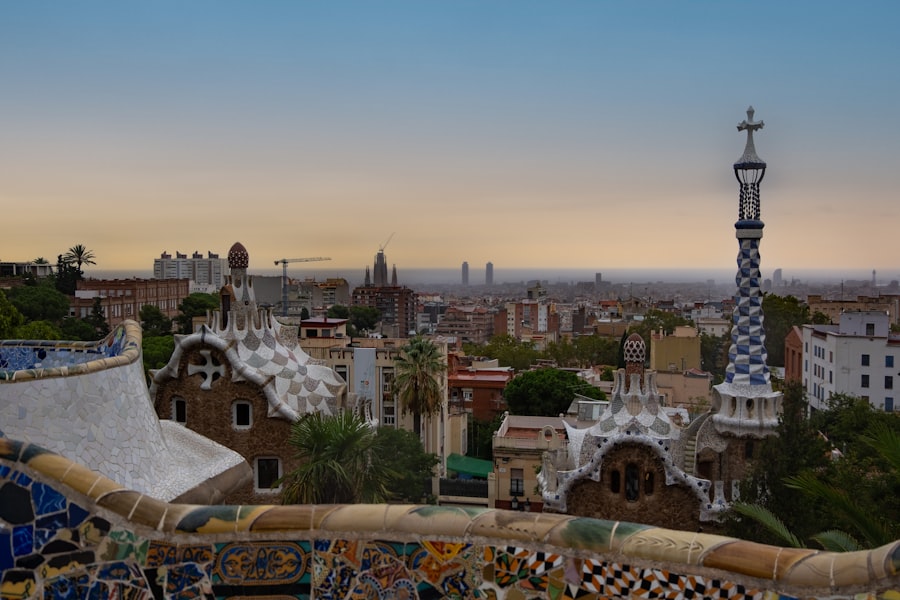
At the highest point of the park stands a stone cross on the Calvari Hill. This is the best place in the entire park for panoramic views of Barcelona. You can see the Mediterranean Sea, the Sagrada Familia in the distance, and the entire layout of the park below. The cross itself is relatively simple, but it serves as a powerful foreground element against the expansive backdrop. If you are looking for the ultimate Barcelona Park Guell Photo Spots for a sweeping cityscape, this is it.
Vibe and Atmosphere
The hike up to the cross takes about 10 minutes on a moderate incline. The effort is worth it because the view is breathtaking. The best time to shoot is at sunset, about one hour before the sun dips below the horizon. The golden light washes over the city, and the cross casts a long shadow toward the sea. Use a telephoto lens (70-200mm) to compress the layers of the city, or a wide-angle lens to capture the full scope of the sky. For a dramatic effect, include the cross in silhouette by exposing for the bright sky. The vibe is spiritual and elevated — you are literally above the city, and the perspective gives you a sense of the grandeur of Gaudi's vision.
External reference: According to Lonely Planet, the view from the Calvari Hill cross is one of the top five panoramic viewpoints in Barcelona. Many photographers consider it a hidden gem because most tourists do not make the climb.
10. The Entrance Gate Pavilions
The two small buildings at the main entrance — the Pavello of the Porter and the Pavello of the Administration — are classic examples of Gaudi's organic style. With their gingerbread-like roofs, ceramic chimneys, and flowing lines, these pavilions look like they belong in a fairy tale. They are often photographed from the front, but the best angle is from the side, where you can capture the curve of the roof against the sky. These buildings are among the first things you see when you enter, so they set the tone for the entire park experience.
Use a wide-angle lens to include both pavilions in one frame, or a telephoto lens to isolate the details of the roof tiles and chimneys. The morning light creates a warm glow on the facades, while the afternoon light emphasizes the shadows under the eaves. The vibe is playful and storybook, and these pavilions are a favorite subject for travel bloggers. For a unique perspective, wait until a cloud passes overhead and shoot when the light is diffused — the soft lighting brings out the pastel colors of the tiles.
External reference: TripAdvisor reviews regularly highlight the entrance pavilions as one of the most photographed spots in the park, with many visitors spending the first 20 minutes of their visit capturing every angle of these whimsical structures.
For those seeking the best Barcelona Park Guell Photo Spots, these ten locations offer a complete range of perspectives — from iconic landmarks to hidden corners. Each spot requires a different approach to lighting, composition, and camera settings, and we have covered them all in detail. Whether you are after the sweeping views from the Calvari Hill or the intimate details of the Laundry Room Portico, Park Guell delivers a visual experience that is unmatched in Barcelona. Remember to arrive early, be patient with crowds, and let the magic of Gaudi's design inspire your creativity. Happy shooting, and may your photos capture the soul of this incredible place.
If you enjoyed this guide, share it with your fellow photographers and bookmark it for your 2026 trip. The park changes with the seasons, and every visit offers new opportunities for unique shots. Keep experimenting with angles, lighting, and framing, and you will leave with images that tell a story. The Barcelona Park Guell Photo Spots we have covered are just the beginning — explore, wander, and discover your own favorite corners of this extraordinary park.
Frequently Asked Questions
What is the best time of day to photograph Park Guell in 2026?
Early morning or late afternoon provides the best golden hour lighting and fewer crowds.
Do I need a ticket to access the main photo spots?
Yes, the monumental zone with the iconic dragon staircase and mosaic bench requires a timed-entry ticket.
Where is the best spot for a Panorama of Barcelona?
The main terrace or the cross hill offers sweeping views of the city and sea.
Are there any new photo spot openings for 2026?
The restored Vallcarle access area features peaceful garden alleys perfect for candid shots.
What should I wear for photos at Park Guell?
Avoid green or blue to stand out against Gaudi's colorful tilework and natural tones.
💬 Comments (0)
No comments yet. Be the first!