Top 10 Miami Art Deco photo spots 2026
Discover the most Instagrammable Miami Art Deco photo spots along Ocean Drive and South Beach for the perfect shot in 2026.
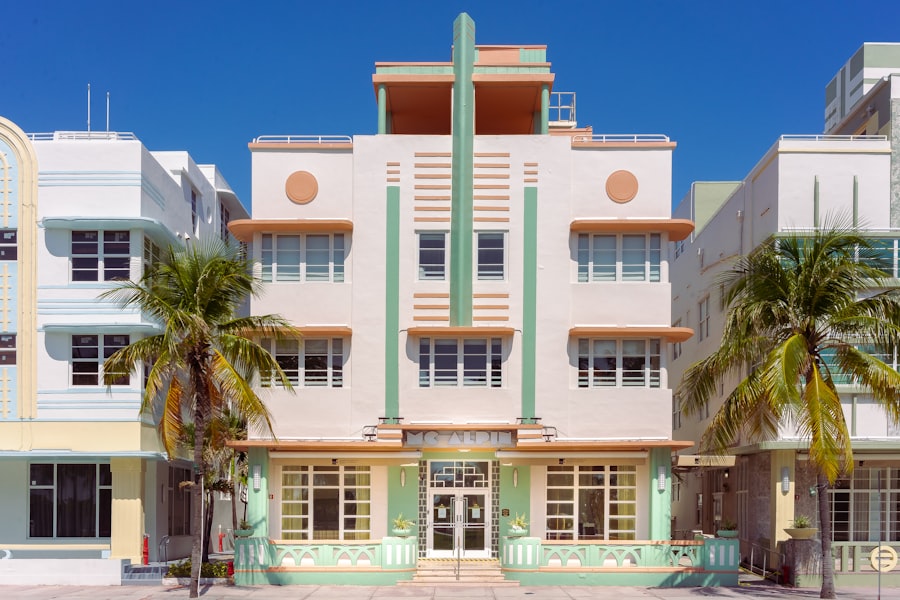
Introduction: Why Miami Art Deco is a Photographer's Paradise
If you are searching for the best Miami Art Deco photo spots in 2026, you have landed on the right page. The moment you step onto Ocean Drive, the pastel-colored facades, neon glow, and geometric lines hit you like a visual symphony. This is not just a neighborhood; it is a living museum where architecture meets tropical glamour. As a photographer, you will find endless opportunities to play with light, shadow, and vibrant color. Whether you are shooting with a DSLR, a mirrorless camera, or even your smartphone, the Art Deco Historic District offers a playground of symmetry and style. In this guide, I will take you through ten must-visit locations, share exact walking directions, historical context, and camera settings that will elevate your work. I have spent countless mornings and evenings wandering these streets, and I promise you, the magic is real. Let us explore the top Miami Art Deco photo spots that will make your portfolio shine.
1. The Colony Hotel & The Carlyle: The Crown Jewels of Ocean Drive
Start your journey at the intersection of Ocean Drive and 14th Street. The Colony Hotel, with its iconic neon sign and pastel pink facade, is arguably the most photographed building in South Beach. Built in 1935 by architect Henry Hohauser, this gem embodies the Streamline Moderne style with its curved corners, horizontal racing stripes, and porthole windows. Directly across the street, The Carlyle (also by Hohauser, 1939) mirrors the same aesthetic with its teal and white color scheme. Together, they form a dynamic duo that captures the essence of Miami's golden era.
Best time to shoot: Sunrise, around 6:30 AM to 7:30 AM. The soft golden light hits the facades straight on, reducing harsh shadows and making the pastel tones pop. The streets are empty, giving you clean frames without tourists or traffic.
Camera settings: For a classic shot, use a focal length of 24-35mm on a full-frame camera. Set aperture to f/8 for maximum sharpness across the entire building. ISO 100, shutter speed around 1/125 sec depending on ambient light. For the neon sign at dusk, switch to aperture f/2.8 and ISO 800-1600 to capture the glow without tripod shake.
Walking directions: Park or arrive via rideshare at the corner of 14th Street and Ocean Drive. Stand on the sidewalk directly in front of The Colony (north side of 14th Street). From here, you can frame both buildings in a single composition by angling your camera slightly east towards the ocean. For a tighter shot of The Carlyle, cross Ocean Drive to the beachfront sidewalk and shoot from a low angle looking up. This emphasizes the verticality of the tower.
Pro Photography Tips: Use the palm trees along Ocean Drive as natural foreground frames. Shoot through the fronds to add depth and texture to your image. For a unique perspective, lie on the ground and shoot upward, making the building appear even more monumental. The reflection in puddles after a rain shower creates a stunning mirror effect.
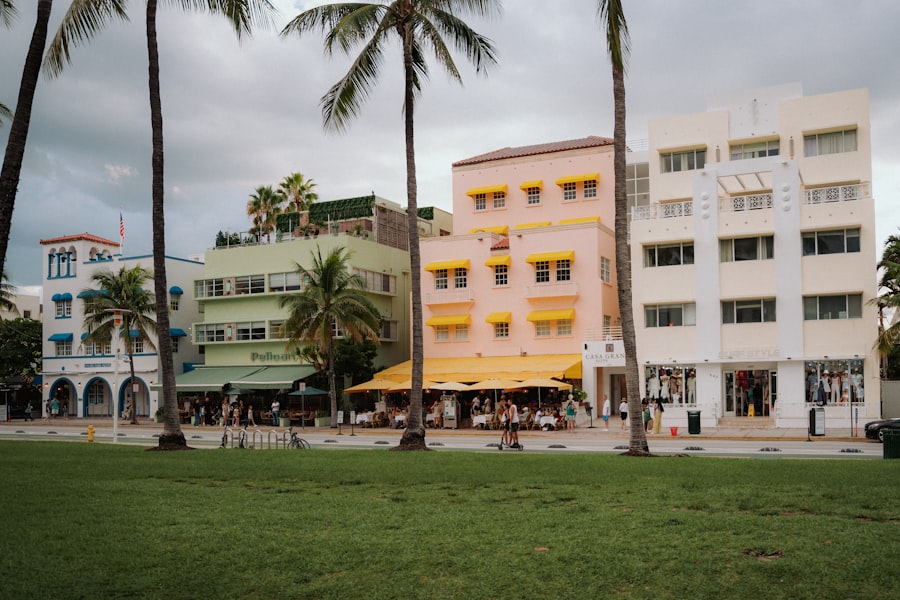
2. The Breakwater Hotel: Symmetry and Neon Magic
Located at 940 Ocean Drive, the Breakwater Hotel (1939, architect Anton Skislewicz) is famous for its perfectly symmetrical facade and the towering neon sign that reads "Breakwater" in classic script. The building features a central tower flanked by two wings, creating a balanced composition that is a dream for architectural photographers. The teal and white color palette is quintessentially Miami, and the neon comes alive at twilight.
Best time to shoot: Blue hour, roughly 15 to 30 minutes after sunset. The sky turns deep indigo, and the neon sign begins to glow against the darkening backdrop. This is when the Miami Art Deco photo spots truly come to life.
Camera settings: Use a tripod for long exposures. Set ISO to 100, aperture f/11, and shutter speed between 2 to 6 seconds depending on how bright the sky still is. Use a cable release or self-timer to avoid camera shake. For handheld shots, increase ISO to 1600 and use aperture f/2.8.
Walking directions: From the Colony, walk south on Ocean Drive along the eastern sidewalk. After two blocks (about 5 minutes), you will reach 9th Street. The Breakwater sits on the southeast corner of Ocean Drive and 9th Street. Stand directly across the street on the west sidewalk for a full-frontal view. For a dynamic angle, move to the north side of 9th Street and shoot diagonally across the intersection, capturing the building with the neon sign against the sky.
The history of the Breakwater is rich with stories of Hollywood stars who stayed here in the 1940s and 1950s. The hotel has been meticulously restored, preserving its original terrazzo floors and chrome details. When you photograph this building, you are capturing a piece of American cultural history.
3. The Park Central Hotel: Pastel Perfection at Collins Avenue
Moving away from the oceanfront, head to 640 Ocean Drive at the corner of 6th Street. The Park Central Hotel (1937, Henry Hohauser) is a masterpiece of Streamline Moderne with its curved corner entrance, horizontal banding, and soft peach and cream color scheme. This is one of those Miami Art Deco photo spots that looks incredible in both color and black and white. The curved glass block windows catch the morning light beautifully, creating a glowing effect.
Best time to shoot: Late morning, around 10 AM to 11 AM. The sun is high enough to illuminate the entire facade without casting deep shadows from nearby buildings. The light reflects off the white surfaces, making the building appear luminous.
Camera settings: Use a polarizing filter to cut through glare and saturate the colors. Aperture f/8, ISO 100, shutter speed 1/250 sec. If shooting in black and white, set your camera to monochrome mode with a yellow or orange filter to enhance contrast between the pastel walls and the sky.
Walking directions: From the Breakwater, continue south on Ocean Drive for three blocks to 6th Street. The Park Central is on the northeast corner. Stand on the opposite corner (southwest) to capture the curved entrance and the full width of the building. Walk closer to the entrance for details of the glass block windows and chrome railings.
I recommend spending at least 20 minutes here, exploring different angles. The lobby is also open to visitors and features original Art Deco furniture (ask at the front desk). The interior offers a different vibe with its cool pastels and geometric patterns. Remember, the best Miami Art Deco photo spots are not just about the exterior; the interiors often hold hidden treasures.
4. The Essex House Hotel: Green and Gold Grandeur
At 1001 Collins Avenue, the Essex House Hotel (1938, Henry Hohauser) stands out with its striking sage green and gold color scheme. This building is less known than the Ocean Drive icons, making it a quieter spot to shoot without crowds. The vertical neon sign, the symmetrical wings, and the decorative metal grilles make this a favorite among architectural photographers.
Best time to shoot: Late afternoon, around 4 PM to 5 PM. The sun is behind the building, creating a rim light effect on the edges of the structure. This emphasizes the three-dimensionality of the facade.
Camera settings: Use spot metering to expose for the highlights on the building's edges. Aperture f/8, ISO 100, shutter speed 1/125 sec. Bracket your exposures (-1, 0, +1 EV) to capture the full dynamic range and blend later in post-processing if needed.
Walking directions: From the Park Central, walk west on 6th Street to Collins Avenue (two blocks). Turn north on Collins Avenue and walk five blocks to 10th Street. The Essex House is on the northeast corner of Collins Avenue and 10th Street. Stand on the southwest corner for a full-frontal view. For a detail shot, walk to the north side of the building to capture the neon sign from an angle.
The Essex House has a fascinating history. It was one of the first hotels in Miami Beach to feature air conditioning, which was a huge selling point in the 1930s. The building has been carefully restored to its original condition, and the interior lobby retains its terrazzo floors and geometric wall treatments. If you can, ask a staff member if you can photograph the lobby. The green and black terrazzo pattern is a work of art in itself.
Pro Photography Tips: For a creative twist, use a slow shutter speed (1/4 sec) and pan your camera horizontally as you press the shutter. This creates a motion blur effect that makes the building look like it is moving. Experiment with different shutter speeds to find the right amount of blur. Also, try shooting through the metal grilles of the entrance to create a frame-within-a-frame effect.
5. The Tides Hotel: The Iconic Ocean Drive Silhouette
No list of Miami Art Deco photo spots would be complete without the Tides Hotel at 1220 Ocean Drive. Built in 1936 by architect L. Murray Dixon, the Tides is famous for its soaring vertical tower, curved facade, and blue neon sign that reads "The Tides" in elegant script. The building is a landmark of the Art Deco district and appears in countless photographs and films.
Best time to shoot: Sunset, approximately 30 minutes before the sun dips below the horizon. The warm golden light bathes the white facade in a honey glow, and the blue neon sign begins to stand out against the darkening sky. This is the golden hour for Miami Art Deco photo spots on Ocean Drive.
Camera settings: Use a graduated neutral density filter to balance the bright sky with the darker building. Aperture f/8, ISO 100, shutter speed 1/60 sec. if shooting handheld, or use a tripod for longer exposures. For the neon sign at full darkness, switch to manual focus and use aperture f/4, ISO 1600, shutter speed 1/30 sec.
Walking directions: From the Essex House, walk east on 10th Street back to Ocean Drive (two blocks). Turn south and walk two blocks to 12th Street. The Tides is on the southeast corner of Ocean Drive and 12th Street. Stand on the northwest corner for a classic view with the tower rising against the sky. For a more dramatic angle, walk to the beachfront sidewalk and shoot from a low position looking up, so the tower dominates the frame.
One of the best things about photographing the Tides is the variety of angles. You can shoot it straight on, from an angle, from across the street, or even from the beach. The building is so iconic that it works in any composition. I have shot this building dozens of times, and every time I find a new perspective. The blue neon reflected in the wet sand after a rain is absolutely breathtaking.
6. The Ritz Plaza Hotel: A Hidden Gem on Collins Avenue
Located at 1701 Collins Avenue, the Ritz Plaza Hotel (1939, Albert Anis) is a lesser-known but visually stunning example of Art Deco architecture. The building features a dramatic curved corner, horizontal racing stripes in cream and blue, and a towering neon sign that says "Ritz Plaza." The facade is adorned with decorative chevron patterns and glass block windows that catch the light beautifully.
Best time to shoot: Early morning, around 7 AM to 8 AM. The sun is still low in the east, casting long shadows that emphasize the building's curves and angles. The light is soft and warm, perfect for capturing the pastel tones.
Camera settings: Use a wide-angle lens (16-24mm) to capture the full height of the building. Aperture f/8, ISO 100, shutter speed 1/125 sec. To emphasize the curves, position yourself so the building fills the frame and use the curved corner as the focal point.
Walking directions: From the Tides, walk north on Ocean Drive to 17th Street (five blocks). Turn west on 17th Street and walk one block to Collins Avenue. The Ritz Plaza is on the northwest corner. Stand on the southeast corner for a view that captures the curved facade and the neon sign. Walk closer to the entrance for details of the glass block windows and chrome railings.
The Ritz Plaza is a fantastic example of how Art Deco architecture blends form and function. The glass block windows were not just decorative; they allowed natural light into the interior while maintaining privacy. The curved corner was designed to reduce wind resistance and create a more streamlined appearance. When you photograph this building, pay attention to the small details: the metal grilles, the door handles, the light fixtures. They all tell a story of an era when design was everything.
7. The Hotel Chelsea: A Colorful Facade on Ocean Drive
At 944 Ocean Drive, the Hotel Chelsea (1935, Henry Hohauser) is a burst of color with its bright turquoise and white facade. The building features a distinctive stepped roofline, porthole windows, and a neon sign that glows at night. This is one of the most colorful Miami Art Deco photo spots on the strip, and it photographs beautifully in both bright daylight and at twilight.
Best time to shoot: Midday, around noon to 1 PM. The direct sunlight saturates the turquoise color to its maximum intensity. Use a polarizing filter to reduce reflections and make the color even more vibrant.
Camera settings: Aperture f/11 for maximum depth of field, ISO 100, shutter speed 1/250 sec. If shooting in JPEG, set the saturation to +1 for a punchy look. If shooting RAW, you can adjust saturation in post-processing.
Walking directions: From the Ritz Plaza, walk south on Collins Avenue to 9th Street (eight blocks). Turn east on 9th Street and walk one block to Ocean Drive. The Hotel Chelsea is on the southwest corner of Ocean Drive and 9th Street. Stand on the northeast corner for a full-frontal view. For a unique perspective, walk to the middle of 9th Street and shoot through the palm trees, using them as a natural frame.
The Hotel Chelsea is a favorite among Instagrammers for its bold color and clean lines. The building is often less crowded than the more famous hotels, giving you more time to compose your shots without people walking into the frame. I recommend spending at least 15 minutes here, trying different angles. The stepped roofline is particularly photogenic when shot from a low angle with a wide lens.
8. The Delano Hotel: White-on-White Elegance
Moving slightly north to 1685 Collins Avenue, the Delano Hotel (1947, Robert Swartburg) is a later example of Art Deco that blends elements of Streamline Moderne with a more modern aesthetic. The all-white facade is punctuated by horizontal bands of windows, a dramatic entrance canopy, and a towering flagpole. The Delano is known for its minimalist elegance and is a favorite of fashion photographers.
Best time to shoot: Late afternoon, around 3 PM to 4 PM. The light is still strong but beginning to soften, creating gentle shadows on the white facade. The entrance canopy creates interesting patterns of light and shadow.
Camera settings: Use a lens with a focal length of 35-50mm to avoid distortion. Aperture f/8, ISO 100, shutter speed 1/250 sec. For the entrance canopy, try a shot from a low angle looking up, with the canopy framing the sky. Expose for the highlights to keep the white facade from blowing out.
Walking directions: From the Hotel Chelsea, walk north on Ocean Drive to 17th Street (eight blocks). Turn west on 17th Street and walk two blocks to Collins Avenue. The Delano is on the southeast corner of Collins Avenue and 17th Street. Stand on the northwest corner for a view of the full facade. Walk to the entrance for details of the canopy and the geometric patterns of the windows.
The Delano has undergone several renovations but has always maintained its Art Deco roots. The interior is stunning, with white marble floors, dramatic curtains, and a pool area that is a photo spot in itself (though access may be limited to guests). The exterior, however, is free to photograph and offers endless possibilities. The white facade is a blank canvas that reflects the colors of the sky and surrounding environment, giving you different looks throughout the day.
9. The National Hotel: A View Through the Palm Trees
At 1677 Collins Avenue, the National Hotel (1939, Roy France) is a classic example of Art Deco with its curved entrance, vertical signage, and striped awnings. The building is set back from the street behind a row of palm trees, creating a natural frame that adds depth to your photographs. This is one of the most elegant Miami Art Deco photo spots along the strip.
Best time to shoot: Late afternoon, around 4:30 PM to 5:30 PM. The sun is beginning to lower, casting long shadows from the palm trees across the facade. This creates a beautiful interplay of light and shadow.
Camera settings: Use a telephoto lens (70-100mm) to compress the perspective and isolate the building from the trees. Aperture f/5.6 to blur the background slightly, ISO 100, shutter speed 1/200 sec. For a wider shot that includes the trees, switch to a 24-35mm lens and use aperture f/11 for maximum depth of field.
Walking directions: From the Delano, walk north on Collins Avenue for one block. The National Hotel is on the west side of Collins Avenue between 16th and 17th Streets. Stand on the east side of the street, using the palm trees as a foreground element. Walk south along the sidewalk to find a gap between the trees that reveals the full facade.
The National Hotel is known for its iconic pool (which is worth a visit if you can get access), but the exterior is equally photogenic. The striped awnings add a touch of vintage glamour, and the vertical neon sign is a classic Art Deco element. I recommend shooting here both during the day and at night, as the two looks are completely different. At night, the neon reflects off the palm fronds, creating a magical atmosphere.
10. The Beacon Hotel & The Avalon Hotel: A Perfect Pair on Ocean Drive
For our final location, head to 720 Ocean Drive and 730 Ocean Drive, where the Beacon Hotel (1936, Henry Hohauser) and the Avalon Hotel (1941, L. Murray Dixon) sit side by side. The Beacon is a soft peach color with a curved corner and vertical tower, while the Avalon is a creamy white with horizontal banding and a streamlined entrance. Together, they represent the best of Art Deco design and make for a stunning composite shot.
Best time to shoot: Sunrise, around 6:30 AM to 7:30 AM. The low angle of the sun hits both facades equally, illuminating the pastel tones and creating a warm, inviting glow. The streets are empty, allowing you to get clean shots without distractions.
Camera settings: Use a wide-angle lens (16-24mm) to capture both buildings in one frame. Aperture f/11, ISO 100, shutter speed 1/125 sec. For a detail shot of the Beacon's curved corner, switch to a 50mm lens and use aperture f/4 to isolate the curve.
Walking directions: From the National Hotel, walk south on Collins Avenue to 7th Street (ten blocks). Turn east on 7th Street and walk two blocks to Ocean Drive. The Beacon and Avalon are on the northeast and northwest corners of Ocean Drive and 7th Street. Stand on the south side of 7th Street, in the middle of the intersection, to capture both buildings in a single frame. Be careful of traffic. For a tighter shot, stand on the east sidewalk and shoot across the street at the Beacon, then move to the west sidewalk for the Avalon.
These two hotels are a photographer's dream because of their proximity and contrasting styles. The Beacon is all about curves and softness, while the Avalon is about straight lines and horizontality. Together, they create a visual harmony that is the essence of South Beach. I have spent entire mornings shooting just these two buildings, experimenting with different angles and compositions. The light changes everything, and every click of the shutter reveals something new.
Final Thoughts: Making the Most of Your Miami Art Deco Photography Tour
I have shared with you ten of the best Miami Art Deco photo spots to visit in 2026, but the truth is, the entire Art Deco Historic District is a treasure trove of photographic opportunities. Every corner, every block, every alleyway has something to offer. The key is to be patient, observe the light, and let the architecture speak to you. Do not rush. Spend time at each location, trying different angles, different compositions, different times of day. The best photographs come from those who are willing to wait for the perfect moment.
Here is a quick summary of the gear I recommend for an Art Deco photo walk:
- Wide-angle lens (16-24mm) for full-building shots
- Standard zoom (24-70mm) for versatility
- Prime lens (50mm f/1.8) for detail shots and low light
- Polarizing filter to reduce glare and saturate colors
- Graduated neutral density filter for balancing exposures
- Tripod for long exposures at blue hour
- Cable release or remote shutter for sharp images
For more information on the history and architecture of the Art Deco District, I recommend visiting the TripAdvisor page for the Art Deco Historic District and the Lonely Planet guide to the Miami Art Deco District. These resources offer excellent background information that will enrich your photography experience.
Before I let you go, here are a few final tips to remember:
- Always shoot in RAW format for maximum flexibility in editing.
- Arrive early to avoid crowds and get clean compositions.
- Use the golden hour (first and last hour of sunlight) for the most flattering light.
- Experiment with reflections, shadows, and frames to add depth to your images.
- Do not forget to shoot the small details: door handles, light fixtures, window frames.
The Miami Art Deco photo spots I have featured here are just the beginning. As you explore, you will discover your own favorite corners and perspectives. That is the beauty of this district: it rewards curiosity and patience. So grab your camera, put on comfortable shoes, and get ready to capture the magic of Miami's architectural heritage. The light is waiting, and so are the stories these buildings have to tell. Happy shooting, and I will see you on the streets of South Beach.
Frequently Asked Questions
What makes Miami Art Deco unique for photography?
Miami's Art Deco district features pastel-colored buildings with sleek, geometric designs and neon accents that pop in photos.
What is the best time of day to photograph Art Deco buildings?
Golden hour (early morning or late afternoon) offers soft, warm light that enhances pastel hues and reduces harsh shadows.
Do I need a permit to take photos at these spots?
Generally no for casual or hobbyist photography, but commercial shoots may require a permit from the city.
Which Art Deco building is most photographed?
The Colony Hotel on Ocean Drive with its iconic neon sign and pale blue facade is a favorite.
How can I avoid crowds in my photos?
Visit on weekdays early in the morning, ideally before 9 AM, when tourist traffic is lightest.
💬 Comments (0)
No comments yet. Be the first!