Best London Rooftop Photography Spots 2026
Explore the most photogenic London rooftop photography spots in 2026. From Sky Garden to The Shard, capture golden hour magic.
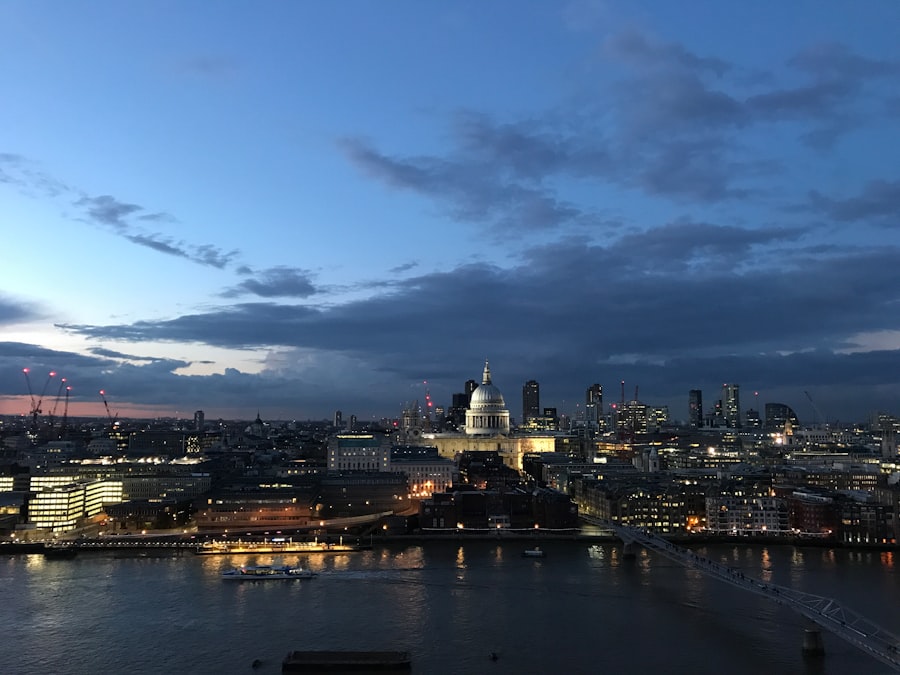
Discover the Ultimate Guide to the Best London Rooftop Photography Spots 2026
If you are chasing skyline magic in the British capital, the very first thing you need to bookmark is our curated list of London rooftop photography spots for 2026. London’s skyline is a living canvas — a blend of centuries-old spires, brutalist concrete, shimmering glass towers, and secret gardens suspended above the city’s roar. Whether you are a seasoned travel photographer or a weekend enthusiast with a mirrorless camera, these elevated platforms will transform your portfolio. In this long-form guide, I will walk you through each location with vivid detail: the history behind the structure, the exact walking directions to reach the top, the best camera settings to freeze that golden hour, and the specific composition techniques that make your shots stand out. Let’s climb, frame, and capture the city from above.
1. Sky Garden – The Green Oasis Above the City
Perched atop the iconic Walkie Talkie building (20 Fenchurch Street), the Sky Garden is arguably the most famous of all London rooftop photography spots. Opened in 2015, this three-storey public space is wrapped in floor-to-ceiling glass and lush Mediterranean landscaping. The vibe here is surreal — you are surrounded by ferns, olive trees, and succulents while the entire city sprawls beneath your feet. For 2026, the garden has introduced extended early morning slots for photographers, so you can beat the crowds and capture the sunrise light washing over the Thames.
History and Architecture
The building itself, designed by Rafael Viñoly, was controversial for its distinctive curved shape that concentrates sunlight onto the street below (the famous “walkie-scorch” effect). But the Sky Garden was conceived as a public amenity to give back to Londoners. The glass dome that crowns the structure creates a microclimate that keeps the plants alive all year. As you shoot, notice how the curved glass acts as a natural diffuser — soft, even light that eliminates harsh shadows, perfect for portrait or silhouette work.
Walking Directions and Access
To reach the Sky Garden, take the Tube to Monument station (Circle and District lines) or Bank station (Central, Northern, and Waterloo & City lines). Exit onto Cannon Street and walk south-west toward 20 Fenchurch Street. The entrance is on the ground floor — you will see a discreet escalator leading to a dedicated lift lobby. Book your free ticket online at least two weeks in advance (slots fill up fast in 2026). Once inside, take the lift directly to the 35th floor. The viewing deck wraps around the entire floor, so start on the south side for a clear view of the Shard, then move clockwise to capture Tower Bridge and the Thames.
Camera Settings and Composition
For wide shots of the skyline, use a 16-35mm lens at f/8 to f/11 to keep everything in focus from the foreground plants to the distant Gherkin. ISO 100, shutter speed around 1/125 sec depending on light. If you are shooting through the glass, press your lens hood flat against the pane to avoid reflections. The best framing trick is to use the trailing branches of a palm tree as a natural foreground element — this adds depth and leads the eye toward the river. For portraits, position your subject with the sun at a 45-degree angle behind them, exposing for the face and letting the background blow out slightly for a dreamy, high-key look.
Pro Photography Tips: Arrive 30 minutes before sunrise. The Sky Garden opens at 6:30 AM in summer 2026. Use a polarizing filter to cut through the glass glare and deepen the blue of the sky. Tripods are allowed only with a special permit — apply via the official website at least 72 hours in advance.
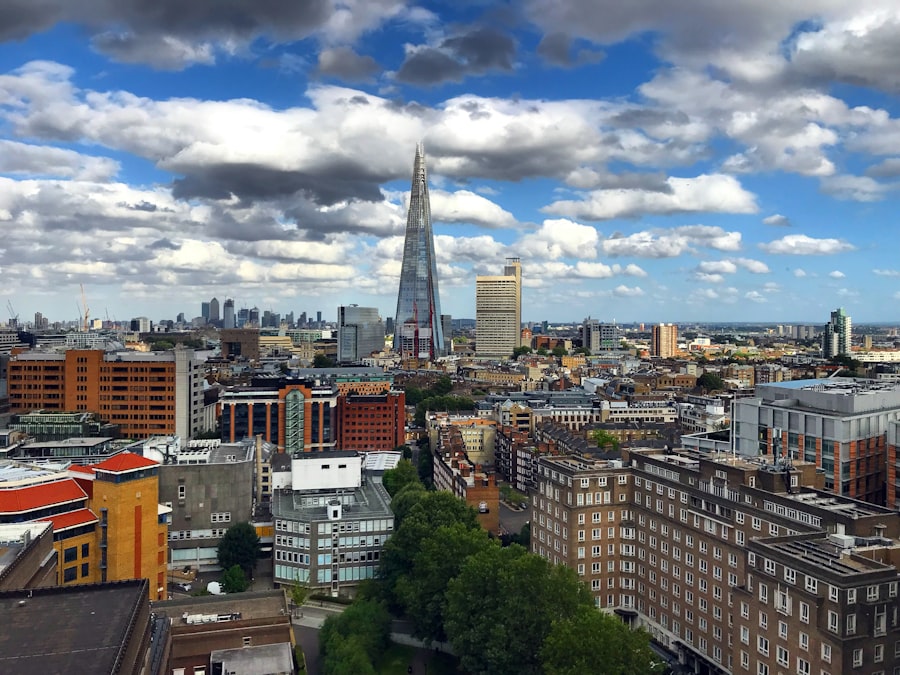
2. The Rooftop at One New Change – The Shard’s Perfect Mirror
Located directly opposite St Paul’s Cathedral, the rooftop terrace at One New Change offers one of the most symmetrical London rooftop photography spots in the city. This shopping centre’s sixth-floor terrace is free, open to the public, and provides an unobstructed, dead-on view of the cathedral’s dome framed by modern glass buildings. The lighting here is especially dramatic during the blue hour — the ambient sky casts a cool tint while the warm sodium lights of the city begin to flicker on. In 2026, the terrace has installed subtle LED strip lighting along the edge of the balustrade, which can add a nice leading line in long exposures.
Best Angles and Composition
Stand directly in front of the central railing and line up your shot so that the cross atop St Paul’s sits exactly between the two modern towers on either side. This creates a powerful triptych effect. Use a 24-70mm lens at 50mm to compress the scene. For a more abstract take, zoom into the reflections in the glass façade of the shopping centre itself — the cathedral appears distorted and multiplied, perfect for a fine-art series. The terrace also has a small bar area on the left; shoot from a low angle using the bar stools as foreground silhouettes.
Walking Directions and Timing
Take the Tube to St Paul’s station (Central line). Exit onto New Change, and you will see the glass entrance of the shopping centre. Walk through the ground-floor shops, take the escalators up to the sixth floor, and follow the signs to the terrace. No booking is required. The terrace is open from 10 AM to 10 PM daily in 2026. For the best lighting, aim for 7 PM in summer (June to August) or 4 PM in winter (November to February) to catch the golden hour hitting the cathedral’s stonework.
- Camera Settings: ISO 200, f/9, shutter speed 1/60 sec for handheld. For long exposures, use a sturdy tabletop tripod on the ledge (full-size tripods are discouraged but not banned).
- Lens choice: A tilt-shift lens is ideal here to correct perspective distortion — St Paul’s columns will otherwise lean inward.
- Editing tip: Boost the clarity slider slightly to make the carved stone details pop, and add a subtle vignette to draw the eye to the dome.
3. Madison Rooftop Bar – The View of St Paul’s at Sunset
Just a stone’s throw from One New Change, Madison Rooftop Bar sits atop the same complex but offers a different vantage point — a more western-facing view that captures St Paul’s with the sun setting directly behind it. This is one of the most romantic London rooftop photography spots for 2026, especially if you are shooting couples or want to include the iconic red double-decker buses passing on the street below. The bar itself has a chic, slightly upscale vibe, with velvet seating and potted olive trees. You do not need to buy a drink to take photos, but ordering a cocktail (try the “Cathedral Fizz”) gives you access to the prime tables near the glass balustrade.
Lighting and Golden Hour Magic
The key here is to arrive 90 minutes before sunset. The lighting transitions through three phases: first, a warm golden glow that bathes the cathedral’s west façade; second, a fiery orange burst as the sun dips below the horizon; and third, the deep blue of twilight when the building’s floodlights turn on. Use a graduated neutral density filter (3-stop) to balance the bright sky with the darker foreground. If you are shooting handheld, push your ISO to 800 and use a wide aperture (f/2.8) to keep your shutter speed above 1/100 sec.
Framing and Composition Details
Position yourself at the south-east corner of the terrace. Include the top of a streetlamp in the bottom left corner of your frame — this adds a sense of scale and a human element. For a more cinematic framing, use the railing as a leading line that diagonally cuts from the bottom right toward the cathedral’s spire. Shoot in vertical orientation to emphasize the height. The best part? You can capture both the cathedral and the modern Lloyd’s building in the same shot if you shift your angle slightly westward.
Pro Photography Tips: Use a remote shutter release or the 2-second timer to avoid camera shake. If the wind is strong (common on this open terrace), lower your tripod’s centre column and hang your camera bag from the hook for added stability. For 2026, the bar has installed new dimmable ambient lights that can create unwanted colour casts — set your white balance to “Flash” or 5500K to neutralize the warm tones.
4. The Rooftop at the National Gallery – A Secret Terrace Over Trafalgar Square
Few people know that the National Gallery houses a small, often overlooked rooftop terrace accessible via the Portico Restaurant. This hidden gem is one of the most underrated London rooftop photography spots for 2026. From here, you get a direct view of Nelson’s Column, the iconic lions, and the grand sweep of the Mall leading toward Buckingham Palace. The terrace itself is intimate — maybe 20 people can stand comfortably — but the payoff is enormous. The history of the building dates to 1838, and the terrace was added in a 1990s renovation that preserved the neoclassical façade while adding a modern glass canopy.
Walking Directions and Access
Enter the National Gallery through the main entrance on Trafalgar Square (nearest Tube: Charing Cross on the Bakerloo and Northern lines). Walk straight through the atrium, take the stairs to the first floor, and follow signs to the Portico Restaurant. The terrace is to the right of the restaurant’s main dining area. It is open during restaurant hours: 10 AM to 5 PM daily, with extended hours until 8 PM on Fridays in 2026. No reservation is needed, but you must be dining or at least ordering a drink to access the terrace. A coffee and a pastry will cost around £10 — a small price for an exclusive view.
Composition and Vibe
The vibe here is quiet and contemplative. You are high enough to see the traffic patterns of Trafalgar Square but low enough to capture the expressions of the bronze lions. Use a telephoto lens (70-200mm) to isolate the column’s statue of Admiral Nelson against a soft-focus background of government buildings. For a wide-angle shot, stand near the terrace’s left edge and include the ornate lamp posts and the edge of the gallery’s stone balustrade in your frame. The angles work best when you shoot slightly downward — this emphasizes the geometric patterns of the square’s paving stones.
- Camera Settings: f/5.6, ISO 400, shutter speed 1/200 sec to freeze any movement in the square below.
- Best time: Mid-morning (10:30 AM) when the sun illuminates the column from the east, casting long shadows that highlight the relief sculptures on the base.
- Editing: Increase the saturation of the blue sky and the gold leaf on the column’s capital for a regal, postcard-perfect look.
5. The Rooftop at the Royal Exchange – A Victorian Jewel in the Financial District
Nestled in the heart of the City of London, the Royal Exchange’s rooftop terrace is a lesser-known spot that blends Victorian grandeur with modern financial architecture. The building itself, dating to 1844, features a magnificent Corinthian portico and a glass-domed courtyard. The terrace is on the fourth floor, accessed via the Fortnum & Mason restaurant that opened on-site in 2025. As one of the newest London rooftop photography spots for 2026, it offers a rare perspective: you look down onto the Bank of England’s windowless fortress walls and up at the jagged profile of the Gherkin. The vibe is refined, almost secretive — perfect for capturing the tension between old money and new glass.
History and Unique Features
The Royal Exchange was originally built as a centre for commercial trade, with merchants gathering under its colonnades. The rooftop terrace was not originally open to the public; it was used by Exchange officials to survey the courtyard below. In 2026, the terrace has been refurbished with wrought-iron railings and wooden decking that echo the original 19th-century design. The south-facing side gives you a direct line of sight to the Shard, which rises like a crystalline needle behind the Bank of England’s flat roofline.
Walking Directions and Best Camera Settings
Take the Tube to Bank station (multiple lines). Exit onto Threadneedle Street, and you will see the Royal Exchange’s massive façade directly ahead. Enter through the main doors, walk across the marble floor, and take the lift to the fourth floor — the restaurant is clearly signposted. The terrace is open from 12 PM to 10 PM, but the best lighting occurs between 3 PM and 5 PM when the sun streams through the glass dome and casts cross-shaped reflections on the deck. Use a 50mm prime lens at f/1.8 for a shallow depth-of-field shot that blurs the background crowd while keeping the historic columns sharp. For a dramatic architectural shot, shoot at f/11 with a wide lens, including the dome’s iron ribs in the top of the frame.
- Pro tip: The terrace has a small water feature — a modern fountain that reflects the sky. Use it as a mirror for symmetrical compositions.
- Editing: Add a slight warm tone to the highlights to match the Victorian golden stone, and cool down the shadows to emphasize the modern blue glass of the surrounding towers.
6. The Rooftop at the Tate Modern – The View from the Blavatnik Building
For a gritty, industrial-chic perspective, the Tate Modern’s Blavatnik Building (the Switch House) offers a panoramic terrace that overlooks the Thames, St Paul’s, and the entire South Bank. This is one of the most dynamic London rooftop photography spots for 2026 because it captures the city’s ever-changing skyline from a brutalist angle. The building itself was once a power station — you can still see the massive turbine hall below. The rooftop is open-air, with a perforated metal screen that creates interesting shadow patterns. The vibe is artistic and raw, ideal for black-and-white street photography or abstract studies of light and steel.
History and Artistic Context
The Tate Modern opened in 2000, and the Blavatnik Building extension was completed in 2016. The rooftop terrace, called the “Viewing Level,” sits on the 10th floor. In 2026, the Tate has added a small café and seating area, making it a comfortable spot to wait for the perfect light. The terrace is free and does not require a ticket — just queue for the lift near the main entrance. The best part? You are high enough to see the curvature of the Thames as it bends around the City, and low enough to feel the breeze and hear the river’s traffic.
Composition Techniques and Lighting
For a classic London shot, position yourself at the south-east corner of the terrace. Frame St Paul’s between two ventilation shafts on the adjacent building — this creates a natural vignette. Use a 24mm lens at f/8 to keep the foreground railing and distant dome sharp. The lighting is tricky because the metal screen casts grid-like shadows; move around until you find a gap that lets the sunlight fall directly onto your subject. For portraits, backlight your subject with the setting sun and expose for the highlights — you will get a beautiful rim light around their hair.
Pro Photography Tips: The terrace faces west, so golden hour is spectacular. Arrive by 6 PM in summer. Use a black card or your hand to block stray light from the screen’s reflections. For long exposures at night, bring a wide-angle lens and shoot at f/16 with a 30-second shutter speed to capture light trails from the Millennium Bridge. A tripod is allowed — just be considerate of other visitors.
7. The Rooftop at the London Eye – The Ultimate 360-Degree Capsule Experience
While not a traditional “rooftop,” the London Eye’s capsules offer a floating rooftop experience that rivals any building. In 2026, the Eye has introduced a new “Photographer’s Pass” that allows you to book a private capsule for 45 minutes during sunrise or sunset. This is the most exclusive of
💬 Comments (0)
No comments yet. Be the first!