Edinburgh sunset photography spots: Calton Hill vs Arthur's Seat
Explore Edinburgh sunset photography spots at Calton Hill and Arthur's Seat for the best golden hour views in 2026.
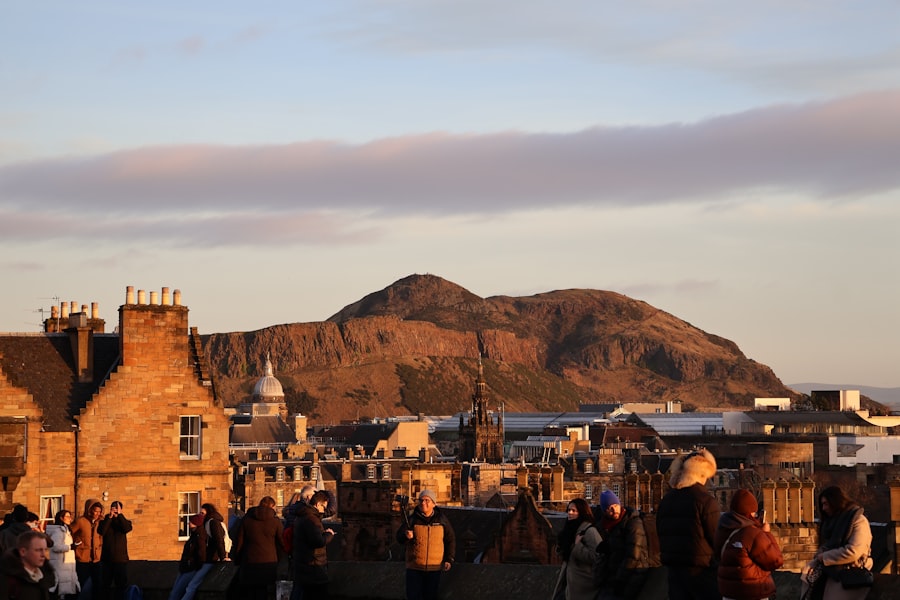
Edinburgh sunset photography spots: Calton Hill vs Arthur's Seat – The Ultimate Guide
If you are hunting for the best Edinburgh sunset photography spots, you have likely narrowed your search down to two iconic locations: Calton Hill and Arthur's Seat. As a passionate travel photographer who has spent countless evenings chasing golden light across this magnificent city, I can tell you that both spots deliver jaw-dropping results, but they offer vastly different experiences. In 2026, Edinburgh continues to captivate photographers from around the world with its medieval skyline, volcanic geography, and ever-changing Scottish light. This guide will walk you through every detail you need to know about these two legendary viewpoints, from exact walking directions and historical context to camera settings and compositional strategies. By the end, you will know exactly which location suits your photographic style and how to make the most of your sunset shoot. Let us dive deep into the heart of Edinburgh's golden hour magic.
Why Edinburgh sunset photography spots are world-class
Edinburgh sits on a series of ancient volcanic hills, which means you are never far from a dramatic vantage point. The city's UNESCO World Heritage status ensures that the skyline remains largely unchanged, with spires, domes, and castles piercing the horizon. When the sun dips low, the sandstone buildings glow with warm amber hues, and the Firth of Forth reflects the fading light like a liquid mirror. The quality of light here is unpredictable yet spectacular, often producing layers of pink, orange, and purple that shift by the minute. For any photographer, these Edinburgh sunset photography spots offer endless opportunities to capture something unique. The key is understanding the subtle differences between Calton Hill and Arthur's Seat so you can choose the perfect location for your vision.
Calton Hill: The Photographer's Urban Observatory
Calton Hill is arguably the most accessible and iconic of the two locations. Rising just 100 meters above the city center, it provides a sweeping panorama that includes Edinburgh Castle, the New Town, the Firth of Forth, and the distinctive National Monument – a partial replica of the Parthenon that never got finished. The hill is literally a five-minute walk from Princes Street, making it ideal if you are short on time or want to pack your gear without a strenuous climb.
History and Vibe of Calton Hill
Calton Hill has been a public space since the 17th century and is home to several historic monuments, including the Nelson Monument, the Dugald Stewart Monument, and the Old Royal High School. The vibe here is social and celebratory – you will find locals picnicking, tourists taking selfies, and of course, photographers setting up tripods. The atmosphere is electric yet relaxed, with the hum of the city below adding a sense of urban energy. In 2026, the hill remains a beloved gathering spot for sunset enthusiasts, and you will often hear a collective gasp when the sun finally breaks through the clouds. The framing opportunities are incredible here: you can shoot the Dugald Stewart Monument against the backdrop of Edinburgh Castle, or capture the National Monument silhouetted against a fiery sky. The lighting during golden hour is soft and directional, casting long shadows that emphasize the neoclassical architecture.
Best Camera Settings for Calton Hill
For a standard sunset shot on Calton Hill, start with an aperture of f/8 to f/11 to ensure front-to-back sharpness from the monument to the castle. Set your ISO to 100 for maximum dynamic range, and let your shutter speed fall where it needs to – typically between 1/30 and 1/125 second depending on the light. If you are shooting into the sun, use spot metering on the sky to avoid underexposing the foreground. A polarizing filter can help deepen the blue in the sky and reduce glare from the stone monuments. For HDR or bracketing, take three shots at -2, 0, and +2 EV to capture the full tonal range. The composition here benefits from leading lines – use the pathways or the edge of the monument to draw the viewer's eye toward the castle. Experiment with vertical angles by crouching low to include more foreground, or climb the steps near the Nelson Monument for a higher perspective.
Pro Photography Tip: Arrive at Calton Hill at least 45 minutes before sunset to claim a spot near the Dugald Stewart Monument. This allows you to set up your tripod and experiment with compositions while the light is still changing. Use a remote shutter release to avoid camera shake during longer exposures.
Walking Directions to Calton Hill
From Princes Street, head east toward the Balmoral Hotel. You will see a set of stone stairs just past the hotel on the left – these lead directly up to the hill. The climb takes about 5-7 minutes and is moderately steep but manageable for most fitness levels. Alternatively, you can enter via Regent Road, which offers a gentler slope. Once at the top, walk toward the Dugald Stewart Monument for the classic view. If you want a less crowded spot, head to the eastern edge near the Nelson Monument, where you can frame the Firth of Forth and the hills of Fife. Parking is limited nearby, so I recommend taking a bus or walking from the city center. For more details on the history of the monuments, check out the Lonely Planet guide to Calton Hill.
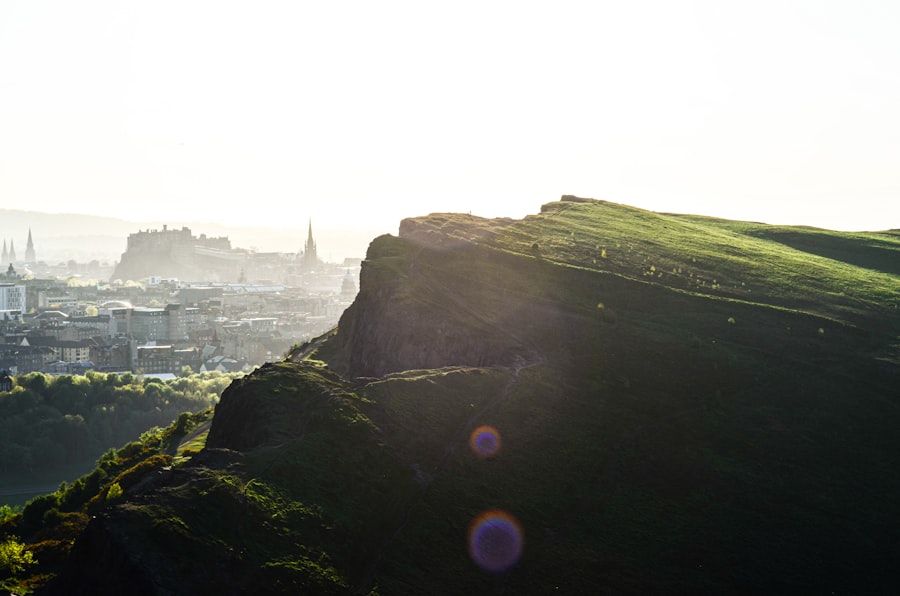
Arthur's Seat: The Wild Volcanic Summit
Arthur's Seat is the complete opposite of Calton Hill in almost every way. This ancient volcano rises 251 meters above sea level and offers a raw, untamed perspective of Edinburgh. The hike is more demanding, taking 30-45 minutes from the base, but the reward is a 360-degree panorama that spans the entire city, the Pentland Hills, the Forth Bridges, and even the Highlands on a clear day. The vibe here is wild and adventurous – you are surrounded by heather, gorse, and the feeling of being far removed from the urban hustle below.
History and Geology of Arthur's Seat
Arthur's Seat formed about 350 million years ago as a volcanic plug, and its name is shrouded in legend – some say it is linked to King Arthur, while others trace it to the Gaelic "Ard-na-Said," meaning "height of the arrows." The hill is part of Holyrood Park, a royal park that has been used for grazing and recreation for centuries. Unlike the manicured lawns of Calton Hill, Arthur's Seat is rugged and untamed, with rocky outcrops, hidden lochs, and ancient hillforts dating back to the Iron Age. The lighting here changes dramatically as you ascend – you move through shadows and bright patches, and the wind can pick up significantly near the summit. The angles you can achieve are truly unique: from the top, you can look down on Arthur's Seat itself, the Palace of Holyroodhouse, and the entire Old Town stretching toward the castle.
Best Camera Settings for Arthur's Seat
Because you will be shooting from a higher altitude with more atmospheric haze, consider using a longer focal length (70-200mm) to compress the cityscape and bring distant elements closer. For a wide-angle shot of the entire panorama, use a 16-35mm lens at f/10 to f/13 for hyperfocal distance. Set your white balance to "Daylight" or around 5500K to preserve the warm tones of the sunset. A graduated neutral density filter is invaluable here to balance the bright sky with the darker foreground. Shoot in RAW to retain maximum flexibility when editing the dynamic range later. The framing on Arthur's Seat is more open, so look for natural elements like rock formations, patches of heather, or the sinuous path leading up to the summit to anchor your composition. Pay attention to the vibe of the light – often, the clouds break just as the sun hits the horizon, creating dramatic rays that you can capture with a fast shutter speed of 1/500 or higher.
Pro Photography Tip: Check the wind forecast before heading up to Arthur's Seat. A sturdy tripod is essential, but on extremely windy days, consider weighing it down with your backpack. Also, bring a lens cloth – the summit can be misty, and you will need to wipe your front element frequently. Arrive at least one hour before sunset to allow time for the hike and to scout compositions.
Walking Directions to Arthur's Seat
Start at the Palace of Holyroodhouse, which is at the eastern end of the Royal Mile. Enter Holyrood Park through the main gate, and follow the path that leads up the hill past St. Margaret's Loch. You have two main routes: the easier, longer path via the Queen's Drive (about 45 minutes) or the steeper, more direct path up the grassy slopes (about 30 minutes). Both are well-marked. Wear sturdy hiking boots, as the terrain can be slippery, especially after rain. For a less crowded experience, go on a weekday or during non-peak tourist months. If you want to learn more about the geological history of the site, visit the TripAdvisor page for Arthur's Seat for visitor reviews and tips.
Comparing the Two: Which Spot Wins for Your Photography Style?
Both locations are world-class Edinburgh sunset photography spots, but they serve different photographic intentions. If your style leans toward architectural photography, urban landscapes, and symmetrical compositions, Calton Hill is your playground. The man-made structures give you clear framing opportunities and allow you to play with geometric patterns and leading lines. The lighting is softer and more controlled because you are at a lower elevation with more atmospheric protection. On the other hand, if you crave raw nature, sweeping panoramas, and a sense of wilderness, Arthur's Seat will fulfill your vision. The angles here are more dramatic, and the vibe is deeply immersive – you feel like you are on top of the world. I personally shoot both locations regularly, and I can tell you that neither is "better" – they are simply different tools in your photographic arsenal.
- Ease of Access: Calton Hill wins hands down – 5-minute walk from Princes Street vs 30-45 minute hike for Arthur's Seat.
- Foreground Elements: Calton Hill offers monuments and architecture; Arthur's Seat offers rugged rock formations and heather.
- Panoramic Scope: Arthur's Seat provides a 360-degree view; Calton Hill covers roughly 180 degrees of the city core.
- Crowd Levels: Both can be busy, but Calton Hill is typically more crowded due to its accessibility.
- Wind Exposure: Arthur's Seat is significantly more exposed – bring extra layers and secure your gear.
Practical Tips for Shooting Both Locations in One Evening
If you are visiting Edinburgh for just a few days, you might be tempted to shoot both Calton Hill and Arthur's Seat in the same sunset. Is it possible? Yes, but you will need to plan carefully. Start at Arthur's Seat about 90 minutes before sunset to allow time for the hike and shooting. The golden hour begins roughly 60 minutes before sunset, so you will have about 30-40 minutes of prime light at the summit. Then, descend quickly (allow 20-25 minutes) and make your way to Calton Hill for the last 20-30 minutes of the golden hour. The light will be lower and more dramatic at that point, giving you a completely different set of images. Keep in mind that this schedule is tight, and you will miss the blue hour at both locations if you rush too much. Alternatively, dedicate one evening to each spot for a more relaxed experience. Regardless of which approach you choose, these Edinburgh sunset photography spots will reward you with images you will treasure for a lifetime.
Essential Gear Checklist for Sunset Photography in Edinburgh
- A sturdy tripod – essential for sharp shots in low light and for long exposures of the city lights.
- A wide-angle lens (16-35mm) for expansive landscapes and a telephoto lens (70-200mm) for compressed cityscapes.
- Graduated neutral density filters to balance sky and foreground exposure.
- A polarizing filter to reduce haze and enhance colors, especially on Arthur's Seat.
- Extra batteries – cold weather drains them quickly, and you do not want to miss the best light.
- A headlamp or flashlight – the descent from both hills can be dark, and paths are uneven.
- Warm clothing and windproof layers – Scottish evenings are chilly even in summer 2026.
Composition Techniques for Edinburgh Sunset Photography Spots
Mastering composition is what separates a good sunset photo from a great one. At Calton Hill, use the Dugald Stewart Monument as a natural frame – position it in the left or right third of the frame, with Edinburgh Castle in the distance. The columns of the monument create a strong vertical element that anchors the image. At Arthur's Seat, look for sweeping S-curves in the path leading up the hill, and use them as leading lines toward the city below. Pay attention to the lighting quality: when the sun is low, the shadows become long and dramatic, so position yourself so that the shadows point toward the center of your frame for added depth. Experiment with different angles – lie down on the grass for a low-angle shot that emphasizes the foreground, or climb a few steps higher for a bird's-eye perspective. The framing should always guide the viewer's eye toward the most interesting part of the scene, whether that is a glowing castle, a distant mountain, or the curve of the shoreline. Remember, the best Edinburgh sunset photography spots are not just about the view – they are about how you interpret that view through your lens.
Final Verdict: Which Hill Should You Choose in 2026?
After spending countless sunsets on both hills, I can confidently say that your choice depends entirely on the story you want to tell. If you want a classic, postcard-perfect image of Edinburgh with neoclassical architecture and a bustling city backdrop, Calton Hill is your stage. If you want a dramatic, sweeping vista that showcases Edinburgh's volcanic origins and its place within the Scottish landscape, Arthur's Seat will deliver. Neither choice is wrong, and both are essential Edinburgh sunset photography spots for any serious travel photographer. My advice? Do both – but give each the time it deserves. Arrive early, watch the light change, and let the city's magic unfold before your lens. In 2026, Edinburgh's sunsets remain as captivating as ever, and with this guide, you are now equipped to capture them at their absolute best.
- Calton Hill: Best for urban architecture, easy access, and social atmosphere.
- Arthur's Seat: Best for raw nature, 360-degree views, and adventurous vibes.
Whether you choose the urban elegance of Calton Hill or the wild majesty of Arthur's Seat, you are guaranteed to leave with a memory card full of stunning images. So grab your camera, check the sunset time for today (in 2026, sunset ranges from 3:45 PM in winter to 10:00 PM in summer), and head out to one of these legendary Edinburgh sunset photography spots. The golden hour is waiting – and it is nothing short of spectacular.
Frequently Asked Questions
Which spot offers the best view of the Edinburgh skyline at sunset?
Calton Hill provides a panoramic view of the city skyline, including the Scott Monument and Edinburgh Castle, making it ideal for capturing the urban landscape at sunset.
Is Arthur's Seat better for a natural landscape sunset shot?
Yes, Arthur's Seat offers a more rugged, natural setting with views over the city and the Firth of Forth, perfect for dramatic sunset photos with a wild backdrop.
Which location is easier to access for sunset photography?
Calton Hill is easier to access, with a short, paved walk from the city center, while Arthur's Seat requires a moderate hike up a hill.
Are there any crowds at these spots during sunset?
Both can be crowded, but Calton Hill tends to have more tourists, while Arthur's Seat offers more space despite being popular.
What time should I arrive for the best sunset photos?
Arrive at least 30 minutes before sunset to secure a good spot and capture the changing colors, especially during peak seasons.
💬 Comments (0)
No comments yet. Be the first!