Krakow historic photography 2026 guide
Master Krakow historic photography 2026 with expert tips on lighting, camera settings, and composition in Old Town.
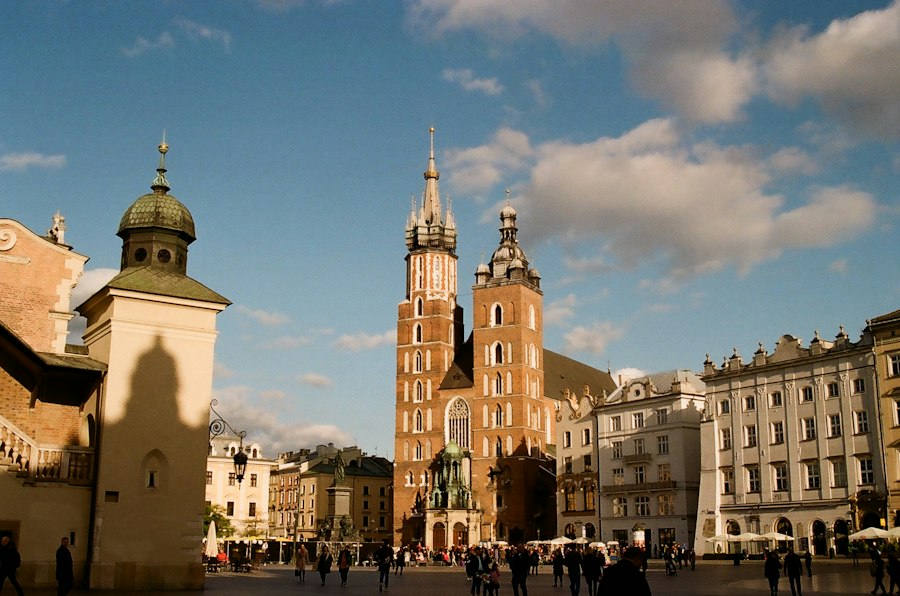
Mastering your Krakow historic photography 2026 trip requires the right blend of technical skill, early morning hustle, and an eye for timeless architecture. As a travel photographer, I have spent years wandering through cobblestone alleys, framing medieval spires, and chasing the perfect golden hour light across Europe. Krakow is a dream destination for visual storytellers, offering a rich tapestry of Renaissance arcades, Gothic towers, and atmospheric old-world charm. In this guide, I will show you how to capture iconic Polish landmarks with professional flair, so your photos will look like they belong in a fine art gallery.
Essential Gear and Camera Setup for Krakow in 2026
Before you hit the stone streets of the Old Town, you need to make sure your camera kit is tuned for maximum versatility. Krakow features tight alleys opening up into massive, grand squares, meaning your lens choice and camera settings will make or break your image quality.
First, let's look at your capture format. Always shoot in RAW rather than JPEG. A RAW file captures all the uncompressed image data from your camera sensor, giving you immense flexibility in post-processing to recover shadow detail in dark alleyways or tone down bright skies above historic roofs. JPEGs compress this data, permanently locking in color and exposure choices.
Here is my curated list of recommended equipment for your Krakow historic photography 2026 excursion:
- Full-Frame or APS-C Mirrorless Body: A camera with strong dynamic range helps manage contrast between bright stone facades and deep archway shadows. Check out the latest high-resolution sensors detailed in the Sony official camera specs to see how modern dynamic range handles high-contrast scenes.
- Wide-Angle Zoom Lens (16-35mm): Essential for fitting towering Gothic churches into your frame without having to back up through a crowd.
- Fast Prime Lens (35mm or 50mm f/1.8): Perfect for creating subject separation and soft background blur, known in photography jargon as bokeh.
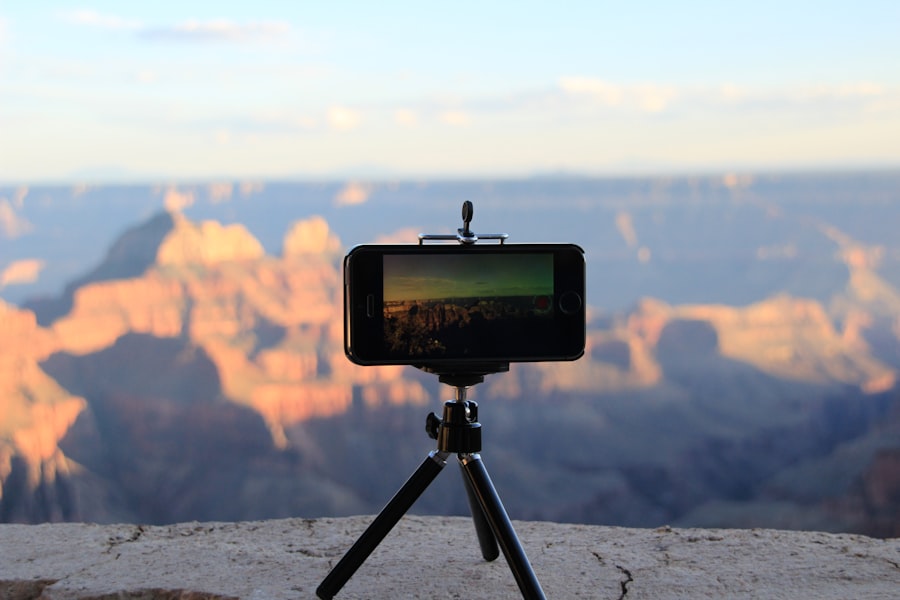
- Lightweight Travel Tripod: Crucial for long-exposure night shots along the Royal Route when low light forces slower shutter speeds.
- Circular Polarizer Filter: Helps cut reflections on wet cobblestones after rain and deepens the blue hues in daytime skies.
Understanding Exposure in Ancient Cities
Photographing centuries-old stone requires a firm grasp of the exposure triangle: ISO, shutter speed, and aperture. ISO measures your camera sensor sensitivity to light. A low value like ISO 100 provides the cleanest image, while high values like ISO 3200 allow shooting in dark interiors at the cost of digital noise or grain.
When capturing detailed stonework, aperture controls your depth of field. Setting your aperture to f/8 or f/11 ensures front-to-back sharpness across an entire building. However, if you want to highlight a tiny detail, like a carved wooden door handle, open your lens to f/1.8 or f/2.4 to blur the background and create stunning bokeh.
The secret is knowing how to manipulate Exposure Compensation. When bright sunlight hits light-colored historic stone, your camera light meter often gets tricked into underexposing the surrounding scene. By adjusting your Exposure Compensation dial to +0.7 or +1.0, you brighten the image instantly without altering your core shooting mode.
Golden Rule Cheat Sheet: Keep your base ISO at 100 for crisp architecture photos. Use f/8 for maximum lens sharpness on wide streetscapes, and switch to single-point autofocus to guarantee your focus point hits the focal detail precisely every single time.
My Main Market Square Mistake: A Before and After Story
During my early days exploring the Main Market Square, I made a classic amateur mistake. I arrived at noon on a bright summer day, pointed my lens at the historic Cloth Hall, and snapped away. The result? A flat, washed-out disaster. The harsh mid-day sun created severe highlights on the building roof and pitch-black shadows under the arcades, while dozens of tourists blocked the lower third of my frame.
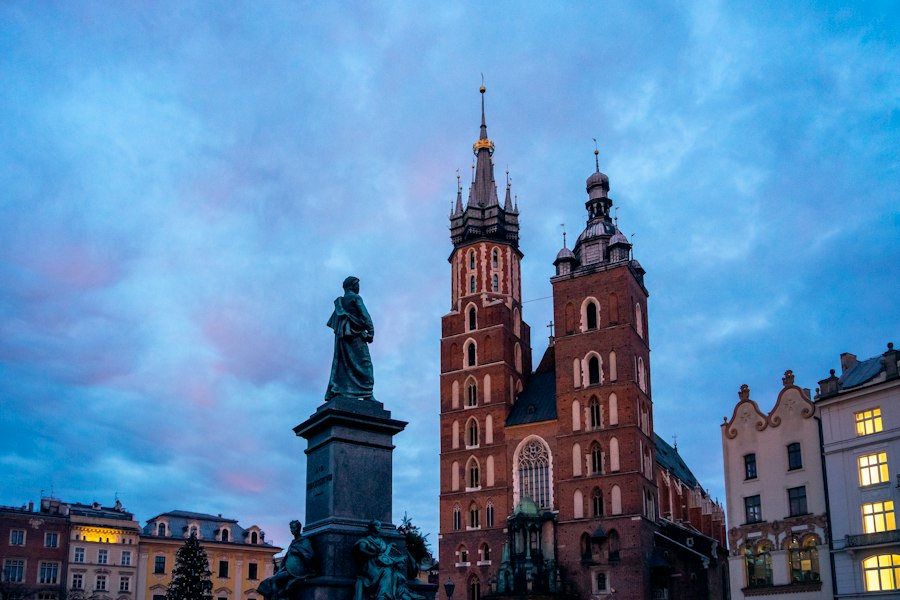
Now try this recovery approach that completely transformed my portfolio. I returned to the exact same spot at 5:45 AM the next day during the blue hour, just before sunrise. The sky was a deep, velvety indigo that matched the warm glow of the streetlamps hanging from the historic arcades. Using a tripod, I set my camera to ISO 100, f/11, and a shutter speed of 4 seconds. The long exposure turned a solitary early walker into a dreamy, motion-blurred silhouette while keeping the stone textures razor-sharp. That failed photo taught me that timing and light control are far more valuable than expensive gear.
Step-by-Step Guide to Framing Krakow Historic Photography 2026
To produce standout travel imagery, you need a repeatable composition process. Follow these exact steps to upgrade your Krakow historic photography 2026 shots from simple travel snapshots to portfolio-worthy art.
Step 1: Apply the Rule of Thirds to Gothic Spires
Step-by-Step, start by enabling the 3x3 grid overlay in your camera viewfinder. Instead of placing the famous St. Mary Basilica directly in the center of your frame, position the main tower along the right or left vertical line. Place the horizon line along the bottom third line to give the dramatic sky more room to breathe. For deeper composition techniques, read through the foundational guides on Adobe tutorials.
Step 2: Utilize Leading Lines along the Royal Route
Walk down Florianska Street and look down at the stone paving. Position your camera lower to the ground, around knee height. Use the natural lines of the cobblestones and the framing of historic shop fronts to direct the viewer eyes straight toward the Florians Gate in the background. This technique adds immense depth and three-dimensional realism to flat two-dimensional images.
Step 3: Master High-Contrast Interior Lighting
When moving indoors to document historic church interiors or cavernous halls, light drops dramatically. Switch your camera to manual focus if low-light autofocus begins to hunt. Keep your ISO manageable around 800 to 1600, widen your aperture to its lowest f-number, and rest your body against a historic stone column to stabilize your shot if you are shooting handheld without a tripod.
Top Locations for Krakow Historic Photography 2026
Planning your route saves valuable golden hour time. Here are the must-visit locations for your Krakow historic photography 2026 photo walk:
- Wawel Royal Castle Courtyard: Visit early to capture the layered Renaissance arcades. Focus on foreground arches framing background doorways.
- The Cloth Hall Arcades (Sukiennice): Photograph these symmetrical arcades late at night. The yellow light bouncing off the stone floors creates incredible mood and atmosphere.
- Kazimierz District Backstreets: The old Jewish Quarter offers weathered textures, vintage signs, and moody lighting that suit rich black-and-white digital conversions.
Color Profiles and Editing for Polish Architecture
Don't forget to give your RAW files a thoughtful digital finish. RAW images naturally look flat straight out of the camera because they preserve neutral color profiles. Increase contrast slightly, lift the shadow slider to reveal hidden stonework textures, and bring down the highlight slider to regain detail in bright cloud formations over the city.
When color grading your historic cityscape images, aim for warm, natural tones. Slightly warm up the white balance toward 5500K to accentuate the aged amber tones of historic bricks and plasterwork. With these techniques unlocked, your personal visual travel record will stand out for years to come!
Matthias Weber digs into the craft of travel photography, from camera settings to editing. He explains the technical side in plain language so you can spend less time fiddling with dials and more time shooting.
💬 Comments (0)
No comments yet. Be the first!