
Top 10 Reykjavik Colorful Houses Photo Spots 2026
Discover the most Instagrammable Reykjavik colorful houses for photography in 2026 — from rainbow streets to harbor views.
Top 10 Reykjavik Colorful Houses Photo Spots 2026
If you are dreaming of capturing the most photogenic Reykjavik colorful houses for your 2026 travel album, you have come to the right place. Reykjavik is a city that wears its personality on its sleeve, or rather, on its facades. From the deep reds and ochre yellows of the oldest timber buildings to the sky-blue and mint-green corrugated iron homes that dot the residential streets, this capital is a living canvas. In this guide, I am taking you to ten specific spots where the light, the angles, and the sheer charm of the architecture come together for unforgettable photos. We will talk about the best time of day to shoot, the exact walking routes to take, and the little historical details that make each location special. The Reykjavik colorful houses are not just a backdrop; they are the heart of the city's visual identity, and in 2026, with new pedestrian zones and improved lighting along the old harbor, the photo opportunities are better than ever. Grab your camera and let us walk the colorful streets together.
The Golden Trio of Old Town Reykjavik
The oldest part of Reykjavik, centered around the lake Tjornin and the parliament building, holds some of the most historic Reykjavik colorful houses you will ever see. These are the original timber structures from the 19th century, painted in bold shades of oxblood red, mustard yellow, and forest green. Walking here feels like stepping into a storybook, especially in the early morning when the low sun rakes across the textured wood. The vibe is quiet, almost solemn, but bursting with color at every corner. You want to arrive by 8:00 AM in summer or 10:00 AM in winter to catch the best side-light on the facades. The streets are narrow, so a wide-angle lens between 16mm and 24mm is your friend, allowing you to capture the full height of the buildings while including the dramatic Icelandic sky above.
Pro Photography Tips: For the wood texture on these historic Reykjavik colorful houses, shoot at f/5.6 to f/8 to keep the grain sharp. Use a polarizing filter to cut glare from corrugated iron roofs and deepen the blue of the sky. Your white balance should be set to daylight mode to preserve the warm ochres and reds without them turning orange.
Skólavörðustígur - The Rainbow Street View
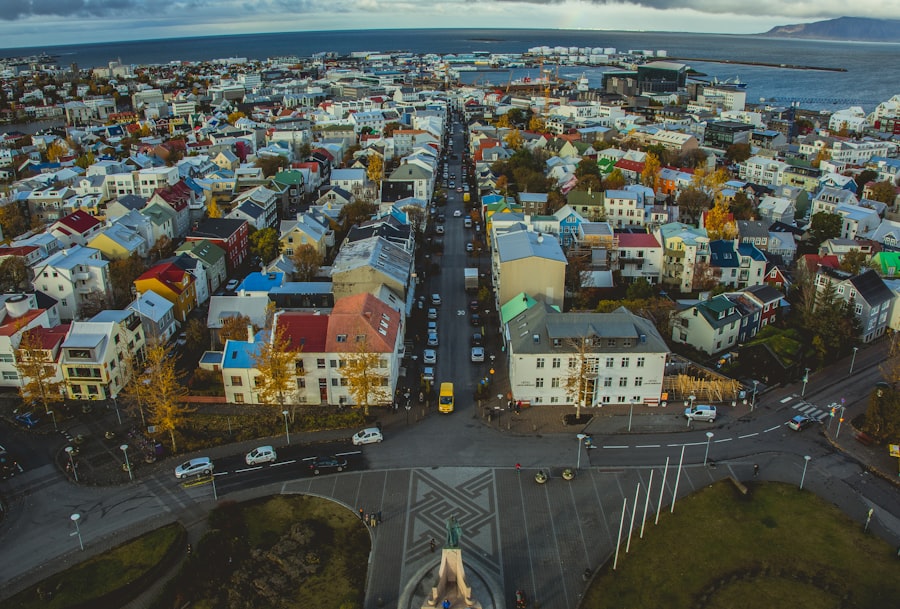
This is arguably the most famous street in Reykjavik, and for good reason. Skólavörðustígur runs uphill directly toward Hallgrímskirkja, and the entire street is lined with Reykjavik colorful houses painted in every shade of the rainbow. The trick here is not just to shoot the street head-on, but to walk halfway up and turn around. From that elevated angle, the colorful houses cascade down toward the harbor, with the sea and mountains forming a stunning backdrop. The best lighting for this spot is golden hour, about two hours before sunset, when the warm light hits the facades from the side and creates long, dramatic shadows. For composition, include the church spire at the top of the frame and let the colorful row of houses lead the eye down the hill. I recommend a focal length of 35mm to 50mm for a natural perspective that matches what your eye sees. The vibe here is joyful and bustling, especially in summer, so be patient and wait for gaps in foot traffic.
Hallgrímskirkja Framing with Colorful Roofs
Most photographers point their lens up at Hallgrímskirkja, but the real magic happens when you point down. Walk around to the side of the church plaza and look for the view that frames the iconic steeple between the rooftops of the Reykjavik colorful houses lining the streets below. The contrast between the stark, expressionist concrete of the church and the warm, painted timber of the houses creates a visual tension that is uniquely Icelandic. The best angle is from the corner of Skólavörðustígur and Frakkastígur, where a small stone staircase gives you a natural platform. Use an aperture of f/11 to f/16 to keep both the church and the distant houses in sharp focus. Arrive in the late afternoon when the sun lights the front of the church and casts the colorful houses into a soft, even glow. The vibe here is grand and cinematic, perfect for both wide establishing shots and tighter details of roof tiles.
Harbor District and the Old Maritime Charm
The harbor area is undergoing a beautiful transformation in 2026, with new walking paths and restored warehouses that showcase the industrial heritage of the Reykjavik colorful houses along the waterfront. These buildings were originally storage sheds for fish and goods, painted in bright colors so sailors could spot them from the sea. Today they house galleries, cafes, and design studios. The vibe here is salty, creative, and relaxed. The best time to shoot is during the blue hour, about 30 minutes after sunset, when the sky turns a deep indigo and the warm lights inside the houses glow through the windows. You will want a tripod for this, as exposure times stretch to several seconds. The reflections in the harbor water double the color impact, so look for puddles or calm sections of the bay to create symmetrical compositions.
Pro Photography Tips: For harbor reflections of the Reykjavik colorful houses, use a shutter speed of 2 to 4 seconds with your aperture at f/11. Set your ISO to 100 for clean, noise-free images. If you have a graduated neutral density filter, use it to balance the bright sky with the darker water. The result will be a mirror-perfect reflection that looks almost surreal.
Grandi Area - Where Industry Meets Color
The Grandi district is a former fishing and industrial zone that has been reborn as a trendy foodie and arts neighborhood. The Reykjavik colorful houses here are larger and more utilitarian than the old town cottages, with bold swathes of cobalt blue, mustard yellow, and vermilion on corrugated iron. The walking directions are simple: start at the Grandi Matholl food hall and walk west along the water. You will pass a row of warehouses that are perfect for geometric compositions. The key angle here is to shoot from a low crouch, using the foreground pavement or gravel to lead the eye into the frame. The lighting is best on overcast days, when the soft, diffused light brings out the saturation of the paint without harsh shadows. The vibe is contemporary and vibrant, and you will often find street art murals between the buildings that complement the colorful architecture. Use a 24-70mm lens here for flexibility, and do not be afraid to include people in your shots for scale.
Harpa's Glass and the Adjacent Colorful Houses
Harpa, the stunning concert hall with its faceted glass facade, is a modern icon. But right next to it, along the old harbor wall, stands a row of tiny, historic Reykjavik colorful houses that date back to the early 1900s. The contrast between the futuristic glass and the old wooden cottages is a photographer's dream. The best composition is to stand with your back to the sea and shoot so that Harpa's glass reflects the colorful houses opposite. This creates a layered image where reality and reflection blur. The lighting works beautifully in the morning when the sun comes from the east and lights both the glass and the houses evenly. Use a focal length of 50mm to compress the scene slightly, bringing Harpa and the houses closer together visually. The vibe here is architectural and elegant, a meeting of old and new Iceland. Walk along the harbor wall and experiment with different heights - sometimes kneeling gives you a better reflection than standing.
Þingholt - Reykjavik's Colorful Residential Heart
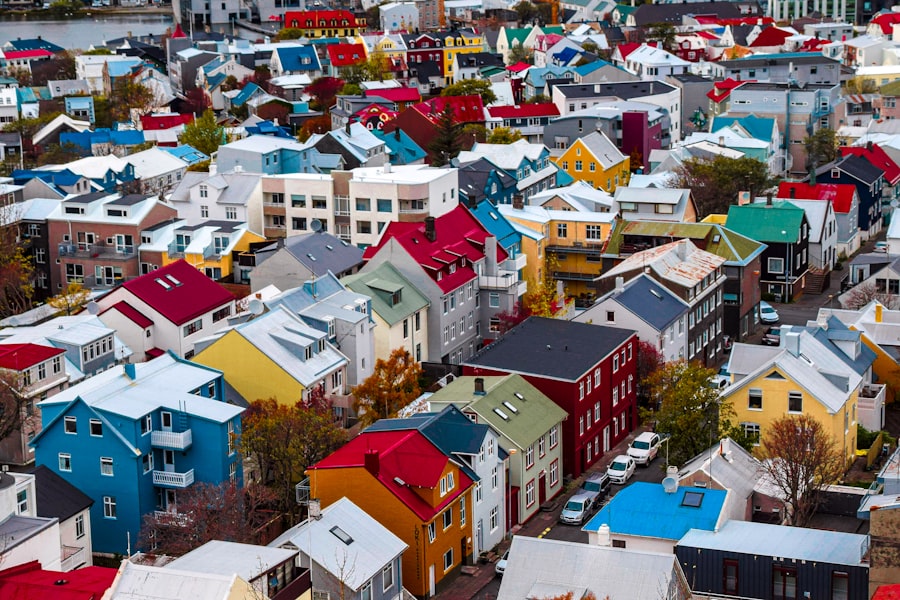
If you want to photograph everyday life wrapped in color, the Þingholt neighborhood is your paradise. This residential area, located just west of the city center, is a grid of streets lined with Reykjavik colorful houses that range from pale lavender to deep burgundy. The vibe here is quiet, residential, and deeply authentic. These are real homes, so be respectful of privacy, but the streets are public and welcome photographers. The best time to shoot is in the late morning, between 10:00 AM and 12:00 PM, when the sun is high enough to clear the rooftops and light the facades evenly. Use a 50mm or 85mm lens to isolate individual houses and capture details like window boxes, doors, and garden fences. The compositions here are all about repetition and pattern, so look for rows of similar-sized houses painted in alternating colors.
Hverfisgata Hidden Gems
Hverfisgata runs parallel to the main shopping street Laugavegur, but it is much quieter and more authentic. Here you will find a sequence of Reykjavik colorful houses that are slightly taller than those in the old town, with ornate wooden cornices and decorative window frames. The best angle is from the middle of the street, shooting down the row so that the houses create a colorful tunnel effect. The lighting works beautifully in the early afternoon when the sun is at a 45-degree angle, casting diagonal shadows across the facades. For composition, include the sky and any interesting clouds to add drama. The vibe here is artsy and understated, with small galleries and vintage shops tucked between the houses. Walk slowly and look up - many of the best details are on the second and third floors, above the street-level shops. A telephoto lens of 70-200mm can help you isolate those upper windows and doors.
Klapparstígur Perfect Symmetry
This short street is a hidden gem that many visitors miss. Klapparstígur is a dead-end lane lined with perfectly symmetrical two-story wooden houses painted in alternating shades of red, yellow, blue, and green. The Reykjavik colorful houses here are among the best preserved in the city, with original window frames and traditional Icelandic turf roofs on some of the garden sheds. The ideal spot to shoot from is the far end of the lane, where you can capture the full row in one frame. Use an aperture of f/11 to ensure everything from the foreground to the end of the street is sharp. The lighting is best in the late afternoon, when the warm sun filters through the trees and dapples the facades with soft light. The vibe here is intimate and timeless, like a secret garden of color. Bring a small step stool if you want to shoot over the garden fences for a clean, unobstructed view of the house fronts.
- Best time of year for shooting Reykjavik colorful houses: Late May to early September gives you 18+ hours of daylight and the famous midnight sun.
- Recommended gear: A wide-angle zoom (16-35mm) for streets and a fast prime (50mm f/1.8) for detail shots of doors and windows.
- Key light direction: South-facing facades get the most consistent light in Reykjavik, so plan your morning and afternoon routes accordingly.
East Side Treasures You Can't Miss
The eastern edge of the city center, stretching from Hallgrímskirkja toward the residential area of Hlíðar, offers some of the most dramatic Reykjavik colorful houses sets in the capital. The streets here are steeper, the houses are larger, and the views open up toward the ocean and the mountains of Esja. This area is less visited by tourists, so you will have the streets mostly to yourself. The vibe is peaceful and expansive, perfect for contemplative photography. The best walking route is to start at the top of Frakkastígur and work your way down toward Grettisgata, letting the houses frame your descent.
Grettisgata Pastel Row
Grettisgata is a long, sloping street that descends from the church toward the harbor. The east side of the street is lined with a continuous row of Reykjavik colorful houses painted in soft pastels: pale pink, baby blue, mint green, and butter yellow. These are early 20th-century homes with traditional corrugated iron cladding, and they catch the morning light beautifully. The best angle is to stand on the west side of the street and shoot across, using the slope of the hill to create a dynamic diagonal composition. The lighting is perfect from 8:00 AM to 10:00 AM, when the sun rises behind the houses and creates a rim-light effect on their edges. Use a focal length of 35mm to capture the full row with the hill's gradient. The vibe here is cheerful and residential, with flower boxes and small front gardens adding pops of green. For a unique composition, include the shadow of Hallgrímskirkja falling across the pastel facades in the late afternoon.
Laugavegur Shopping Street Bursts
Laugavegur is Reykjavik's main shopping street, but its side streets and alleys are where the Reykjavik colorful houses really shine. At the intersection of Laugavegur and Klapparstígur, you will find a cluster of old wooden houses painted in electric blue, hot pink, and deep orange. These houses house boutique shops and cafes, and their vibrant colors contrast beautifully with the modern glass storefronts on the main street. The best time to shoot is during the golden hour, when the low sun beams directly down the street and lights up the facades. The composition here is all about contrast: old versus new, bright versus muted, organic wood versus sleek glass. Use a 24mm wide-angle lens to capture the full scene, and wait for a moment when the street is relatively empty of cars. The vibe is energetic and colorful, a true reflection of modern Reykjavik's creative spirit. Grab a coffee from one of the cafes and spend an hour walking the alleys - you will find dozens of micro-compositions that reward patient observation.
Camera Settings and Gear Recommendations for 2026
Getting the perfect shot of Reykjavik colorful houses requires a combination of the right gear, smart settings, and an understanding of the unique Icelandic light. In 2026, mirrorless cameras are the standard, but any camera with manual controls will work. The key is to shoot in RAW format so you can recover shadow and highlight detail during editing. For the colorful houses, you want to preserve the saturation of the paint without letting it blow out, so expose for the brightest part of the facade and let the shadows fall where they may. Here are my recommended camera settings for different scenarios:
- Golden hour portraits of houses: Aperture f/4 to f/5.6, shutter speed 1/125s, ISO 100, exposure compensation +0.7 to brighten facades.
- Blue hour reflections: Aperture f/11, shutter speed 2-4 seconds, ISO 100, use a tripod and a 2-second timer to avoid shake.
- Overall street scenes with sky: Aperture f/8, shutter speed 1/250s, ISO 200, use a polarizing filter to saturate the blue and red tones.
Do not forget to pack extra batteries in winter - the cold drains them fast. And always carry a lens cloth, as sea spray and rain can spot your front element in moments. For reference, you can find excellent walking maps of these neighborhoods on TripAdvisor and detailed historical context on Lonely Planet's Iceland guide.
Final Thoughts and Practical Navigation
Reykjavik is a small city, and all ten of these spots are within a 30-minute walk of each other. I recommend starting at the harbor in the early morning, moving to the old town by mid-morning, exploring Þingholt after lunch, and finishing at Grettisgata and Laugavegur for golden hour. The Reykjavik colorful houses are not just photo subjects; they are pieces of living history, each with a story to tell about the city's growth from a fishing village to a modern capital. As you walk these streets, pay attention to the small details: the way the light catches a brass door handle, the reflection of a red house in a rain puddle, the texture of corrugated iron after a fresh rain. These are the images that will stay with you long after you leave. And in 2026, with new pedestrian-friendly infrastructure and improved street lighting, Reykjavik is more photogenic than ever. So take your time, explore every alley, and let the colors guide your lens.
Pro Photography Tips: When editing your photos of Reykjavik colorful houses, boost the vibrance slider by about 10-15% to make the paint colors pop without oversaturating skin tones. Use the dehaze tool lightly to add contrast to the sky. And always straighten your horizons - a tilted street can ruin an otherwise perfect composition. For social media, crop to a 4:5 vertical ratio for Instagram; for prints, keep the full 3:2 frame for maximum impact.
- Travel tip: Visit on a Sunday morning when the streets are quiet and the low sun creates long, dramatic shadows across the colorful facades.
- Safety note: The streets can be icy in winter, so wear sturdy shoes with good grip, especially on the steeper streets like Skólavörðustígur and Grettisgata.
- Cultural note: Many of these houses are still private residences, so always photograph from public sidewalks and never trespass into gardens or driveways.
I hope this guide helps you capture the magic of the Reykjavik colorful houses on your 2026 trip. Every corner of this city holds a new color, a new angle, a new story. Go find yours, and share it with the world.
Frequently Asked Questions
Where are the best spots to photograph colorful houses in Reykjavik?
The best spots include Vinstragata, Skólavörðustígur, and Hverfisgata in the Grandi district.
What time of day is ideal for photographing Reykjavik's colorful houses?
Early morning or late afternoon, when the low sun creates soft, warm light and long shadows.
Are there any guided photo tours focusing on Reykjavik's colorful houses?
Yes, several tour operators offer photography walks covering iconic street art and colorful buildings.
Can I visit these colorful houses year-round in 2026?
Yes, the houses are accessible year-round, but take note of limited daylight in winter and Midnight Sun in summer.
Which colors are most typical of Reykjavik's colorful houses?
Common colors include vibrant green, blue, yellow, and orange, often with light wooden window frames.

Oliver Janssen scouts the best photography spots in every destination, from sunrise viewpoints to overlooked angles on famous landmarks. He shares exactly where to stand and when to be there for the shot.
💬 Comments (0)
No comments yet. Be the first!