
Top 10 Hong Kong Neon Signs Photo Spots
Explore the top Hong Kong neon photography spots in this curated guide to iconic signs and secret alleys.
Top 10 Hong Kong Neon Signs Photo Spots
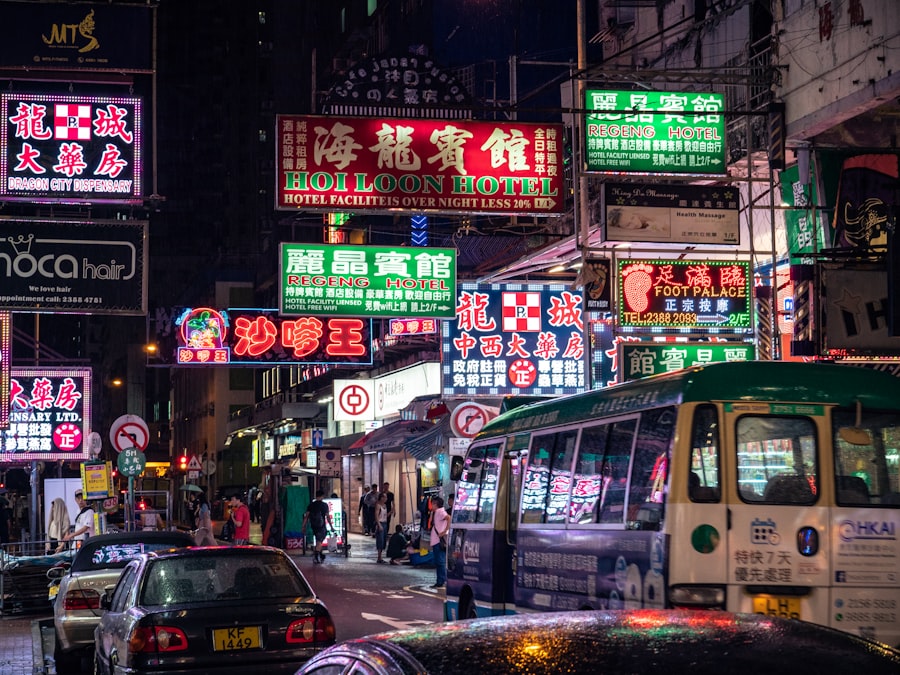
If you are hunting for the best Hong Kong neon photography spots, you have come to the right place. The city that never sleeps is a living, breathing canvas of electric light, where towering neon signs blaze in every color imaginable, casting their glow onto rain-slicked streets, bustling markets, and silent back alleys. For photographers, this is nothing short of paradise. The interplay of light and shadow here is unlike anywhere else on earth, and the sheer density of signage in districts like Mong Kok and Wan Chai means you can fill a memory card without walking more than a few blocks. In this guide, I will take you through ten of the most iconic locations to capture that classic Hong Kong aesthetic, with detailed advice on lighting, angles, composition, and framing. Whether you are a seasoned pro or a passionate beginner, these spots will transform your portfolio.
The Magic of Hong Kong Neon
Hong Kong neon signs are more than just advertisements; they are cultural artifacts. Many of these signs have been glowing for decades, their hand-bent tubes forming intricate Chinese characters and whimsical shapes that tower above the streets. The history of neon in this city dates back to the 1920s, and by the 1980s, Hong Kong was one of the most neon-drenched cities on the planet. Today, while many signs have been removed due to safety regulations, a stunning number remain, especially in older districts. For a photographer, the challenge and joy lie in capturing the raw energy of a place where tradition and hyper-modernity collide. The vibe of each location shifts dramatically from night to night, influenced by weather, crowds, and the ever-changing light of passing trams and taxis. Every frame you take at these Hong Kong neon photography spots will feel alive, urgent, and utterly unique.
1. Nathan Road, Kowloon - The Neon Spine
Nathan Road is the most famous thoroughfare in Kowloon, and for good reason. Stretching from Tsim Sha Tsui all the way up to Sham Shui Po, this road is lined with guesthouses, electronics shops, and jewelry stores, each with its own luminous sign. The best section for photography lies between Jordan and Mong Kok, where the signs are densest and the street is narrow enough to create a natural tunnel of light. Walking directions: Start at Jordan MTR station, Exit B2, and walk north along Nathan Road. You will immediately be surrounded by towering signs on both sides. The best camera setting here is a shutter speed of around 1/30 second with an aperture of f/8, using a wide-angle lens (16-24mm) to capture the full vertical scale. The lighting is intense, so be prepared to underexpose by one stop to preserve the highlights. For composition, stand in the middle of the footbridge at the intersection of Nathan Road and Argyle Street for a bird's-eye view of traffic and signs. The vibe is electric, chaotic, and overwhelmingly colorful. This spot alone could keep you busy for hours.
Pro Photography Tips: Use a tripod for Nathan Road's long exposures, but also try hand-held shots at 1/60 second with image stabilization to catch the motion blur of passing taxis. The red tails create stunning light trails that frame your subject perfectly.
2. Temple Street Night Market - Chaos in the Best Way
Temple Street Night Market in Yau Ma Tei is one of the most atmospheric locations in Hong Kong. By day, it is a quiet street of shuttered stalls; by night, it transforms into a sensory overload of neon, sizzling food, and bargaining voices. The market runs from Temple Street to the surrounding blocks, and the neon here is a mix of old-school restaurant signs, fortune-teller lamps, and vendor banners. Walking directions: Take MTR to Yau Ma Tei station, Exit C, and walk toward the Tin Hau Temple. The market starts around 6 PM and peaks at 9 PM. For photography, use a 35mm or 50mm prime lens at f/2.8 to isolate subjects against the glowing background. The lighting is a warm mix of red, orange, and yellow, creating a cozy yet chaotic vibe. Focus on framing: shoot through the gaps between stalls, capture a cook flipping noodles with a neon sign above his head, or find a fortune teller's booth lit by a single red bulb. The history here stretches back to the 1920s, and every corner tells a story. For the best angle, climb the footbridge on Temple Street near the market entrance and shoot downward to capture the sea of umbrellas and glowing signs.
3. Mong Kok - The Neon Maze
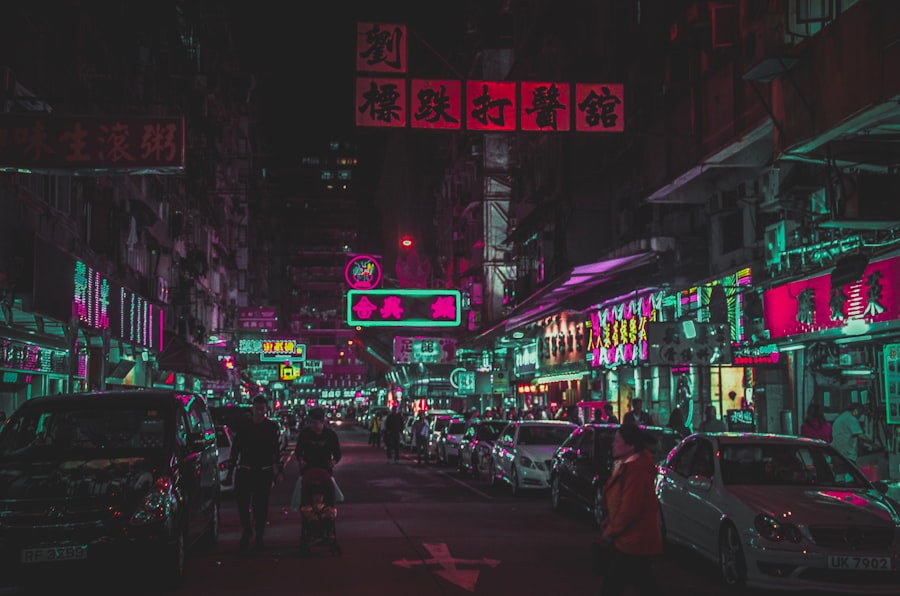
Mong Kok is the undisputed king of Hong Kong neon. With the highest population density on earth, this district has neon signs stacked five or six stories high, sometimes crossing the street from one building to another. The vibe is pure adrenaline, and every alleyway hides a new visual surprise.
Portland Street - Red and Pink Dreams
Portland Street in Mong Kok is famous for its budget guesthouses and its towering vertical neon signs. The street is relatively narrow, which means the signs feel like they are closing in on you, creating an immersive canopy of light. Walking directions: From Mong Kok MTR station, Exit E2, walk north on Portland Street for two blocks. The best spot is near the intersection with Argyle Street. Camera settings: ISO 400, aperture f/5.6, shutter speed 1/20 second. Use a 24-70mm lens at the wide end to capture the full height of the signs. The lighting is predominantly red and pink, with occasional blue accents. For composition, place yourself on the opposite side of the street and shoot upward at a 45-degree angle to emphasize the vertical lines. The history of these signs goes back to the 1960s, when guesthouses first proliferated here to serve budget travelers. Try a slow panning shot of a taxi with the neon reflected in its roof for a dynamic effect.
Sai Yeung Choi Street - Vertical Neon Cascades
Just a few blocks east, Sai Yeung Choi Street offers a slightly wider perspective but an even denser concentration of signs. This is where you will find the famous "neon waterfall" effect - rows of signs that seem to pour down the facades of buildings like liquid light. Walking directions: From Mong Kok MTR, Exit D3, walk east along Sai Yeung Choi Street. The best shooting position is at the intersection with Soy Street. Camera settings: f/8 for deep depth of field, shutter speed 1/15 second on a tripod. The lighting here is cooler, with more white and blue tones mixed in with the reds. For framing, include a tram or double-decker bus in the lower third of your image to give scale to the towering signs above. The vibe is loud, fast, and unforgettable. This is one of the Hong Kong neon photography spots where you should stay for at least 30 minutes, letting the traffic and crowd patterns change around you.
4. Wan Chai and Causeway Bay - Neon Corridors
Across the harbor on Hong Kong Island, Wan Chai and Causeway Bay offer a different flavor of neon. Here, the signs are slightly more spaced out, but they are larger and often more colorful, with a backdrop of modern skyscrapers that adds a futuristic feel.
Wan Chai Neon Intersection
The intersection of Johnston Road and Hennessy Road in Wan Chai is a neon paradise. The iconic "Samsen" building is covered in old-style neon signs, and the tram rattles through the middle of it all. Walking directions: Take MTR to Wan Chai station, Exit A3, and walk to the junction of Johnston Road and Hennessy Road. Stand on the central median for the best vantage point. Camera settings: shutter priority mode at 1/30 second, aperture f/5.6, ISO 800. The lighting is a mix of warm and cool tones, with green and blue signs contrasting against orange streetlamps. For composition, wait for a tram to pass and capture it at the exact moment it aligns with a prominent neon sign. The vibe here is classic Hong Kong: a collision of old and new, east and west. The history of this intersection dates back to the 1950s, when Wan Chai was the city's entertainment district. Use a wide-angle lens to capture the full scene, from the tram tracks to the neon canopy above.
Causeway Bay's Yee Woo Street
Yee Woo Street in Causeway Bay is a lesser-known gem where the neon feels almost intimate. The street is lined with small restaurants, each with its own hand-made sign, and the lighting is warm and inviting. Walking directions: From Causeway Bay MTR, Exit F, walk north along Yee Woo Street toward the harbor. The best spot is near the intersection with Paterson Street. Camera settings: aperture f/2.8 to blur the background, shutter speed 1/40 second, ISO 400. The lighting is mostly warm amber and red, with occasional cool blue accents from nearby shops. For framing, shoot from across the street and include a reflection in a puddle or a shop window. The vibe here is relaxed compared to Mong Kok, with fewer tourists and a more local feel. This is a great spot for portrait photography, as the neon provides a soft, colorful fill light.
Pro Photography Tips: In Wan Chai and Causeway Bay, the best light often comes after a rain shower. Wet streets act like mirrors, reflecting neon signs and doubling the visual impact. Carry a rain cover for your camera and shoot at f/11 for maximum sharpness.
5. Yau Ma Tei and Sham Shui Po - Raw Urban Grit
These two districts are less polished than Tsim Sha Tsui or Central, but they offer some of the most authentic and photogenic neon in Hong Kong. The vibe here is raw, real, and full of character.
Yau Ma Tei Tin Hau Temple Area
Around the Tin Hau Temple in Yau Ma Tei, the neon is mixed with the glow of incense and red paper lanterns. This area is one of the oldest parts of Kowloon, and the signs here have a classic, vintage feel. Walking directions: From Yau Ma Tei MTR, Exit C, walk toward the temple at 150 Temple Street. The best neon is on the surrounding streets, especially along Public Square Street. Camera settings: ISO 200, aperture f/4, shutter speed 1/30 second. Use a 35mm lens for a natural perspective. The lighting is warm and golden, with red and orange tones dominating. For composition, frame the temple's roof tiles with a neon sign in the foreground to create depth. The history of the temple goes back to 1865, making this a unique blend of old and new. The vibe is calm and contemplative, a sharp contrast to the chaos of Mong Kok.
Sham Shui Po's Apliu Street
Sham Shui Po is the go-to district for gritty, street-level neon photography. Apliu Street is famous for its electronics market, but the real magic is in the overhead signage that crisscrosses the street. Walking directions: Take MTR to Sham Shui Po station, Exit A2, and walk south along Apliu Street. The best section is between Kweilin Street and Yee Kuk Street. Camera settings: f/5.6, shutter speed 1/20 second, ISO 800. The lighting is erratic and mixed - bright white from streetlights, warm yellow from shop windows, and pink and red from neon signs. For framing, look up and shoot through the maze of wires and signs, or get low and include the reflection of a puddle. The vibe here is raw and unpolished, perfect for black and white photography with a neon accent. The history of Sham Shui Po dates to the 1970s as a working-class industrial center, and the signs here have a no-nonsense, functional aesthetic.
- Camera gear checklist for these spots: Wide-angle lens (16-24mm), fast prime (35mm f/1.4 or 50mm f/1.8), sturdy tripod, remote shutter release, lens cloth for rain and humidity.
- Best times to shoot: The golden hour of neon starts at civil twilight (about 6:30 PM) and lasts until about 9 PM. After midnight, the streets are quieter but some signs are turned off.
- Recommended reading: Check out TripAdvisor's Hong Kong attractions page for updated tips on street photography locations, and consult Lonely Planet's Hong Kong guide for cultural context on the districts mentioned here.
6. Tsim Sha Tsui and Central - Neon with Skyline Vistas
For photographers who want to combine neon with Hong Kong's famous skyline, Tsim Sha Tsui and Central offer unbeatable options. The neon here is less dense, but the backdrop of Victoria Harbour adds a majestic quality.
Tsim Sha Tsui Promenade
The Tsim Sha Tsui Promenade offers a view of the Central skyline across the harbor, but the real neon magic happens when you turn around and shoot the hotels and shops along Salisbury Road. The "Symphony of Lights" show at 8 PM adds lasers and spotlights to the mix, but the neon signs on the hotels - like the iconic neon of Chungking Mansions nearby - provide a classic Hong Kong look. Walking directions: From Tsim Sha Tsui MTR, Exit E, walk south to the promenade. The best spot is near the Hong Kong Cultural Centre. Camera settings: f/11 for deep depth of field, shutter speed 10 seconds on a tripod to capture the harbor reflections. The lighting is a mix of skyline glow and foreground neon from the Avenue of Stars. For composition, use a 24mm lens and include the neon sign of the InterContinental hotel on the left with the skyline on the right. The vibe here is grand and cinematic.
Central's Lan Kwai Fong
Lan Kwai Fong is the nightlife hub of Hong Kong, and its neon is a riot of color. Unlike the Chinese characters of Kowloon, the signs here are mostly in English, with bar and club names blazing in every hue. Walking directions: From Central MTR, Exit D2, walk up D'Aguilar Street. The whole area is a maze of neon-lit alleyways. Camera settings: f/2.8, shutter speed 1/50 second, ISO 1600. The lighting is harsh and contrasty, with deep shadows and bright highlights. For framing, shoot from the top of the escalator on Lan Kwai Fong and angle downward to capture the crowd and the signs. The vibe is energetic, loud, and glamorous. The history of this area as a nightlife district began in the 1970s, and the neon here is constantly changing. Use a flash with a diffuser if you want to light up a subject's face against the neon background.
Camera Settings for Hong Kong Neon Photography
Getting the right camera settings is crucial for these Hong Kong neon photography spots. Here is a quick reference for the most common scenarios:
- Low-light static scene (tripod): ISO 100-200, aperture f/8-f/11, shutter speed 2-10 seconds. This gives maximum sharpness and depth of field, perfect for wide shots of Nathan Road or the Tsim Sha Tsui Promenade.
- Hand-held street scene (no tripod): ISO 800-1600, aperture f/2.8-f/4, shutter speed 1/30-1/60 second. Use image stabilization if available. Ideal for Temple Street and Mong Kok.
- Motion blur of traffic: ISO 200, aperture f/16, shutter speed 1/2-1 second on a tripod. Best for Sai Yeung Choi Street and the Wan Chai intersection.
- Portrait with neon background: ISO 400, aperture f/2.8, shutter speed 1/60 second, with a rear-curtain sync flash. Perfect for Lan Kwai Fong or Yee Woo Street.
Final Thoughts on Hong Kong Neon Photography
Hong Kong's neon signs are a fleeting art form. Many are being removed each year, yet the city's spirit remains etched in light. By visiting these ten Hong Kong neon photography spots, you are not just taking pictures - you are documenting a living, breathing culture that has defined this city for nearly a century. Each location offers a different vibe, a different lighting challenge, and a different story. My advice: slow down. Spend time at each spot. Watch how the light changes as a taxi passes, as a tram rattles by, as a cloud shifts overhead. That is where the magic happens. Bring extra batteries, wear comfortable shoes, and always keep your lens clean - the humidity in Hong Kong is no joke. Now get out there and capture the neon before the sun comes up again.
Frequently Asked Questions
What is the best time to photograph neon signs in Hong Kong?
The best time is after sunset, around 7 p.m. to midnight, when the signs are fully illuminated against the dark sky.
Do I need a special camera to capture neon signs well?
While a DSLR or mirrorless camera offers more control, most modern smartphones can capture great shots with night mode enabled.
Are there any regulations against photographing neon signs in public?
Photographing from public spaces is generally allowed, but respect private property and avoid obstructing traffic or pedestrians.
Which locations are must-visits for neon sign photography?
Top spots include Mong Kok streets like Nathan Road and Tung Choi Street, plus Wan Chai and the Yau Ma Tei area.
How can I avoid overexposure or glare from the bright signs?
Lower your ISO and use a fast shutter speed to balance the brightness, or try spot metering on the sign.

Oliver Janssen scouts the best photography spots in every destination, from sunrise viewpoints to overlooked angles on famous landmarks. He shares exactly where to stand and when to be there for the shot.
💬 Comments (0)
No comments yet. Be the first!