6 Rottnest Island aerial spots
Explore the spectacular Rottnest Island aerial spots to capture vibrant pink salt lakes and turquoise bays in 2026.
6 Rottnest Island aerial spots for Stunning Drone and Landscape Photos
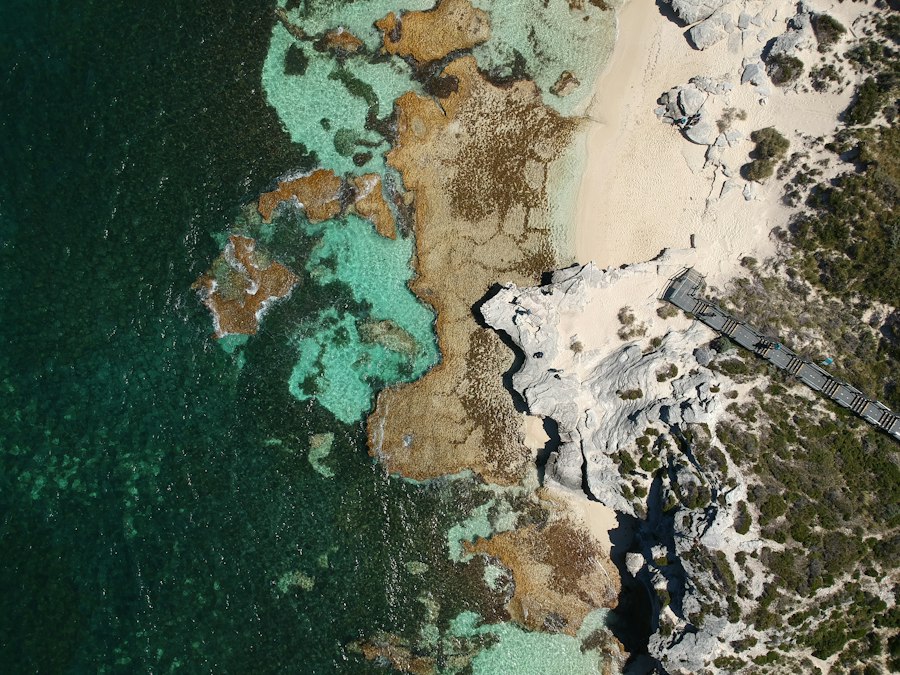
If you are looking for the ultimate drone photography playground, capturing the breathtaking Rottnest Island aerial spots will completely transform your portfolio. Located just a short ferry ride off the coast of Perth, Western Australia, this low-lying limestone island is world-famous for its adorable quokkas. However, for visual creators and landscape photographers, the true magic of "Rotto" lies in its dramatic, neon-turquoise coastlines, salt lakes, and shallow coral reefs when viewed from above. Whether you are flying a drone or shooting from elevated coastal lookouts, the perspective from the sky reveals a mesmerizing patchwork of deep blues, pale mint greens, and brilliant white sands.
To help you capture the perfect shot, we have compiled a comprehensive guide to the six best vantage points on the island. We will dive into the history, the exact walking directions, the best camera settings, and how to master the lighting and composition at each unique location.
1. Wadjemup Lighthouse and the Central Highlands
Standing tall at the highest point of the island, Wadjemup Lighthouse offers an incredible 360-degree vantage point of the entire offshore landscape. First constructed in 1849 and later rebuilt in 1896, this historic landmark has guided mariners safely through the treacherous reefs of the Indian Ocean for generations. From this elevated central hub, the island unfolds beneath you like a vibrant map.
Best Angles and Composition
When photographing the lighthouse itself, try a top-down topiary composition. Frame the white stone tower exactly in the center of your shot, surrounded by the radial green shrubbery and the winding access roads. The contrast between the stark white architecture and the dark green coastal heath creates a very clean, structured visual vibe.
Camera Settings and Lighting
To capture the immense detail of the brickwork and the distant horizon, set your camera to an aperture of f/8 or f/10 for maximum sharpness. Use a circular polarizer to cut through the haze of the ocean. The golden hour just before sunset is the absolute best time to shoot here, as the warm light casts a long, dramatic shadow of the lighthouse across the island.
Pro Photography Tips: If you are flying a drone here, always check local aviation laws and register your flight paths. Keep your drone at a safe distance from the lighthouse lantern house to avoid radio interference, and use the long shadow of the tower to create a leading line leading the viewer's eye toward the sea.
2. The Vibrant Basins of The Basin
The Basin is undoubtedly one of the most famous swimming spots on the island, and it is also one of the premier Rottnest Island aerial spots for capturing high-contrast water photography. This natural amphitheater features a shallow, sandy-bottomed pool protected by a wide shelf of fossilized reef. The history of this spot is deeply tied to early holidaymakers who frequented these shallow waters for safe bathing as early as the 1900s.
- Vibe: Energetic, tropical, and highly refreshing.
- Distance: A very easy 10-minute walk or a quick 3-minute bike ride north from the main Thomson Bay settlement.
- Key Feature: The stark contrast between the bright white sand of the beach and the deep, dark purple of the offshore reef.
To reach this spot, simply follow the paved coastal path heading north from the main settlement. As you arrive, you will find an elevated grassy bank that serves as an excellent launchpad or handheld shooting platform, giving you a natural elevated angle without even leaving the ground.
Framing and the Polarizing Filter
The key to shooting The Basin from above is mastering your framing. Position the curving shoreline in the lower third of your frame, allowing the turquoise swimming bowl to dominate the center. You must use a high-quality Polarizing Filter (PL) to eliminate the glare on the water surface. This reveals the intricate underwater rock formations and the tiny shadows of swimmers floating in the crystal-clear water.
3. Pink Lake and the Inland Salt Lakes
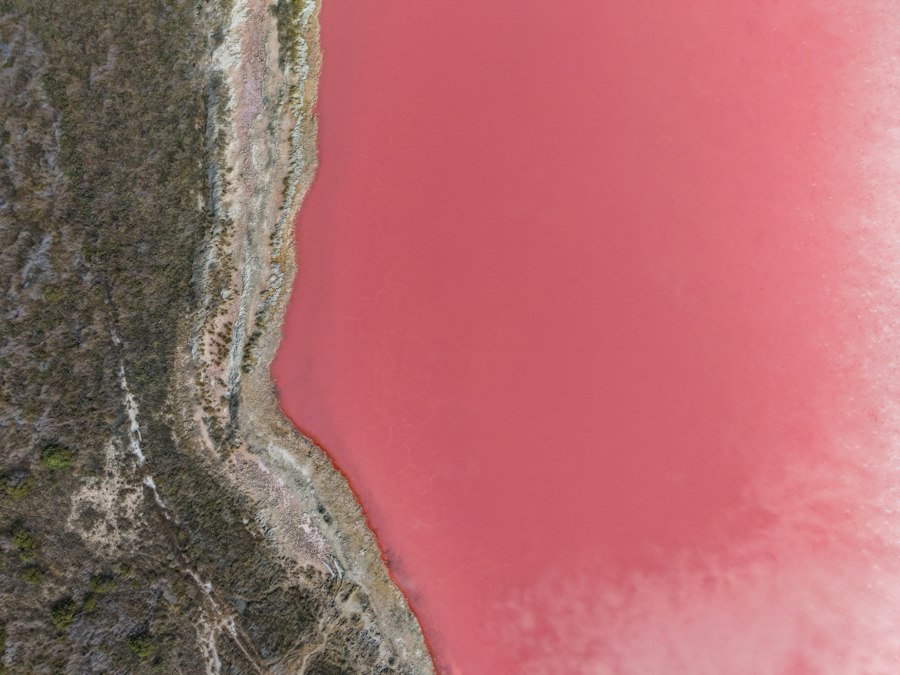
While the beaches get all the glory, the interior of Rottnest Island is home to a series of stunning permanent salt lakes. These lakes cover about ten percent of the island's total area and have a rich history. In the 19th century, salt was harvested here and exported to the mainland. Today, these lakes are known for their striking pink, orange, and deep red hues, caused by the presence of specialized algae and salt-loving bacteria.
Capturing the Abstract Colors
From an aerial perspective, these lakes look like abstract watercolor paintings. The color intensity changes dramatically depending on the season and evaporation levels. During the dry summer months, the salt crusts over, leaving bright white geometric patterns along the pink water margins. When shooting these patterns, look for leading lines created by the old wooden fence posts that still run through some of the lake beds.
Pro Photography Tips: Shoot directly top-down at a 90-degree angle to create a flat, graphic art aesthetic. Keep your ISO low (ISO 100) and use a faster shutter speed to ensure the delicate salt crust textures remain perfectly sharp without any motion blur from wind ripples.
4. Little Salmon Bay
If you want to capture the quintessential Western Australian coastal aesthetic, Little Salmon Bay is the place to do it. Located on the southern side of the island, this sheltered bay is protected from the harsh southerly winds. This makes it a haven for snorkelers and a dream location for aerial creators looking to capture calm, glass-like water. You can read more about the bay's rich marine life on TripAdvisor reviews of Rottnest Island.
Walking Directions and Logistics
To reach Little Salmon Bay, take the island's Explorer Bus to Stop 6, or enjoy a scenic 30-minute bicycle ride along the southern coastal road from the main settlement. The road drops down right to the edge of the bay, offering immediate access. For a great land-based high angle, walk up the wooden stairs to the lookout point on the eastern headland before launching any equipment.
Mastering the Midday Sun
Unlike most landscape locations where golden hour is king, Little Salmon Bay actually looks its best under the midday sun. When the sun is directly overhead, the light penetrates deep into the water, illuminating the white sand patches between the dark seagrass meadows. This high-contrast lighting creates a spectacular mosaic of emerald, teal, and navy blue that is ideal for showcasing the pure clarity of the Indian Ocean.
5. Henrietta Rocks and the Shark Shipwreck
Henrietta Rocks is a rugged, wind-swept stretch of coastline that offers both natural beauty and a touch of maritime history. Just 50 meters off the beach lies the visible wreck of the "Shark," a small hopper barge that sank here in 1939. This site is highly regarded by maritime historians and is featured in regional travel guides like Lonely Planet Western Australia.
Composition and Storytelling
The presence of the shipwreck makes this one of the most compelling Rottnest Island aerial spots for visual storytelling. To compose your shot, position the rusted silhouette of the wreck in one of the outer thirds of your frame. Use the natural lines of the reef pointing toward the wreck as a visual guide. The dark, decayed metal of the ship contrasting against the bright, sandy seabed creates an eerie yet beautiful focal point.
- Vibe: Dramatic, historical, and adventurous.
- Best Time: Early morning, when the wind is calmest and the water is glassy.
- Aperture: f/5.6 to f/8 to maintain crisp detail from the shallow reef up to the deep water drop-off.
6. Geordie Bay
Geordie Bay is one of the largest northern bays on the island and is highly popular for its cozy holiday units and moored yachts. The bay's sweeping crescent shape and deep, sandy channel make it a brilliant subject for wide-angle aerial views. Historically, Geordie Bay has been a safe haven for local fishermen, and today it retains a relaxed, classic holiday vibe.
Framing the Moored Boats
The main visual draw of Geordie Bay is the neat rows of boats bobbing gently on their moorings. When viewing these boats from a high angle, they appear to float mid-air due to the extreme clarity of the water. To capture this effect, shoot during a clear morning with light offshore winds. Frame your shot so the white hulls of the yachts cast clean, dark shadows on the sandy bottom below, which emphasizes the depth and purity of the water.
Essential Camera Setup
For the best results at Geordie Bay, set your white balance to "Sunny" or "Daylight" to preserve the natural warmth of the sand and the cool tones of the water. Avoid using auto white balance, as the large blocks of blue water can trick your camera into making the image look too warm or too cold. Keep your composition balanced by using the sweeping curve of the beach to frame the cluster of boats in the center.
By exploring these gorgeous Rottnest Island aerial spots, you will capture the absolute best of Western Australia's raw, coastal beauty. Pack your polarizers, plan your routes around the wind, and prepare to bring home some of the most vibrant coastal imagery of your photography career.
Frequently Asked Questions
What are the best Rottnest Island aerial spots for photography?
The best spots include Cape Vlamingh, Pinky Beach, and the Basin. These locations offer stunning coastal views and clear waters from above.
Do I need a drone permit to fly over Rottnest Island?
Yes, you need a permit from the Rottnest Island Authority to fly a drone. Rules are strict to protect wildlife and visitors.
Can I fly a drone at The Basin on Rottnest Island?
The Basin is a popular aerial spot but has restrictions during peak times. Always check local signage and avoid flying over crowds.
What is the best time of day for aerial photography on Rottnest Island?
Early morning or late afternoon offers the best light and fewer people. These times also reduce wind for smoother drone flights.
Are there any no-fly zones for drones on Rottnest Island?
Yes, no-fly zones include areas near the airport, the settlement, and wildlife sanctuaries. Always consult the official map before flying.

Oliver Janssen scouts the best photography spots in every destination, from sunrise viewpoints to overlooked angles on famous landmarks. He shares exactly where to stand and when to be there for the shot.
💬 Comments (0)
No comments yet. Be the first!