
Paris Art Nouveau Streets: Top 10 Photo Spots
Discover the top 10 most photogenic Art Nouveau streets and hidden passages in Paris, perfect for a stunning 2026 visual tour.

Paris Art Nouveau Streets: Top 10 Photo Spots
From the moment you set foot on the Paris Art Nouveau Streets, you are stepping into a living gallery of organic forms and elegant ironwork, and as we look ahead to 2026, these architectural wonders remain the ultimate subject for your camera lens. This guide is crafted for you, the visual storyteller, eager to capture the essence of an era that celebrated nature in metal and stone. We will dive deep into ten iconic locations, providing you with not just addresses, but the historical context, the precise camera settings to use, and step-by-step walking directions to ensure you spend your time shooting, not searching. Get ready to explore the Paris Art Nouveau Streets where every doorway, balcony, and metro entrance is a frame-worthy masterpiece.
Why Paris Art Nouveau Streets Are a Photographer's Paradise
The Paris Art Nouveau movement, peaking around the 1900 World's Fair, left an indelible mark on the city's urban fabric. Architects like Hector Guimard, Jules Lavirotte, and Henri Sauvage transformed functional elements into flowing, botanical art. For photographers, this means a playground of textures, lines, and details. The vibe here is one of timeless elegance, where the past whispers through intricate railings and curved glass. Capturing these Paris Art Nouveau Streets requires an eye for detail and a understanding of how light plays on sculpted surfaces. As Lonely Planet notes in its "2026 Paris City Guide," the concentration of Art Nouveau in districts like the 16th and 9th offers a cohesive and immersive visual journey, perfect for thematic photo series.
Your Essential Art Nouveau Photography Toolkit
Before we hit the cobblestones, let's talk gear and mindset. The Paris Art Nouveau Streets demand versatility. You'll be shooting grand facades and tiny, intricate details, often in narrow lanes with challenging lighting.
- Lenses: A wide-angle (16-35mm) for full building shots and a sharp prime (50mm or 85mm) for compressing details like door handles and ceramic work.
- Tripod: Essential for early morning or blue hour shots when tripods are often permitted, allowing for low ISO and crisp details.
- Polarizing Filter: To manage reflections on vibrant stained glass and glossy tiles, boosting color saturation.
- Composition Mindset: Always look for leading lines, symmetrical framing, and the interplay between organic architecture and the Parisian sky. Angles are everything—don't just shoot head-on; crouch low or find a balcony opposite to capture a unique perspective.
Spot 1: Castel Béranger - 14 Rue La Fontaine, 16th
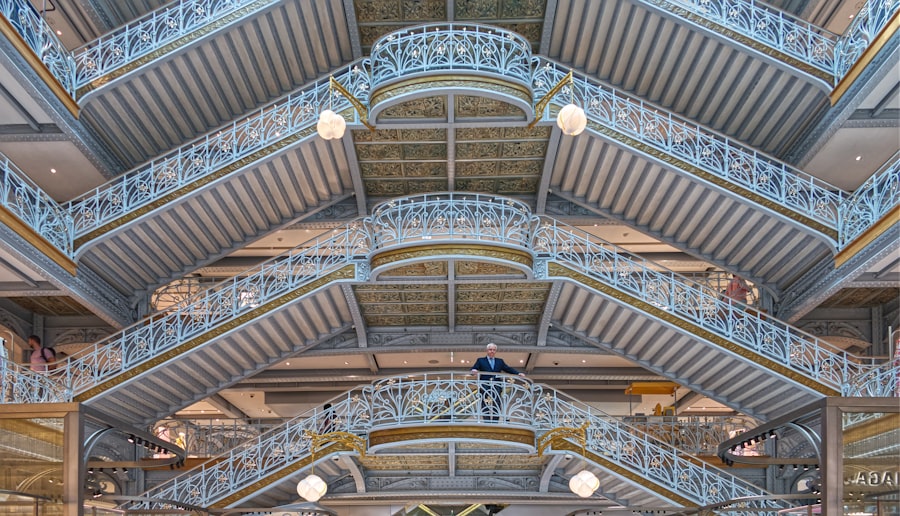
Often called Hector Guimard's first masterpiece, this apartment building at 14 Rue La Fontaine is the seminal stop on any tour of Paris Art Nouveau Streets. Completed in 1898, it announced the style to Paris with its asymmetrical facade, a riot of colored bricks, wrought iron, and sculpted stone. The vibe is mystical and slightly chaotic, a direct rejection of classical symmetry.
The History Behind the Whimsy
Guimard designed every element, from the mailboxes to the door handles, embodying the "total work of art" philosophy. The building's nickname, "Castel Dérangé" (Deranged Castle), hints at the initial shock it caused. Today, it's a celebrated landmark, setting the tone for the entire street.
Pro Photography Tips for Castel Béranger
Pro Photography Tip: The best lighting for the main facade is in the late afternoon, when the sun warms the multicolored bricks and casts long shadows from the iconic ironwork. For composition, use the building's own asymmetry to your advantage. Frame the shot to include the contrasting classical buildings on either side, highlighting Guimard's revolutionary design. A wide-angle lens (at least 24mm) is a must to capture the full height without tilting your camera too drastically, which would distort the vertical lines.
Getting There and Framing Your Shot
Take Metro line 9 to Jasmin station. Exit onto Rue Jasmin and walk south for two blocks until you hit Rue La Fontaine. Turn right, and you'll see Castel Béranger dominating the block. For the classic shot, stand directly across the street. For detail shots, focus on the entrance gate's swirling patterns and the ceramic plaques. Don't forget to look up—the rooftop chimneys are sculpted figures.
Spot 2: Lavirotte Building - 29 Avenue Rapp, 7th
Just a stone's throw from the Eiffel Tower lies one of the most opulent and photographed Paris Art Nouveau Streets facades. Architect Jules Lavirotte won the Paris City Council's facade competition in 1901 with this sensual, almost overwhelming creation at 29 Avenue Rapp. It's a feast of carved stone, shimmering ceramics, and symbolic imagery.
A Facade of Symbolism and Sculpture
The doorway is the star, framed by giant ceramic blooms and sculpted by Jean-Baptiste Larrivé. The organic forms are so lush they seem to grow from the building itself. The vibe is one of exuberant, confident artistry, a bold statement on a prestigious avenue.
Perfecting Your Shot on Avenue Rapp
The building faces east, so morning light brilliantly illuminates the intricate doorway sculptures. Since the street is narrow, your framing options are limited but rewarding. Use a standard zoom lens (24-70mm) to isolate the doorway. For composition, include a sliver of the contrasting Haussmannian buildings beside it to emphasize its uniqueness. As noted by numerous TripAdvisor reviews, visiting early is key to avoiding crowds and capturing the clean lines of the architecture.
- Camera Settings: For sharp detail, use an aperture of f/8 to f/11. If handholding, ensure your shutter speed is at least 1/125th sec. For the rich colors of the ceramics, set your white balance to "Daylight" or shoot in RAW for later adjustment.
- Walking Directions: From the Ecole Militaire Metro (line 8), walk east on Avenue de la Motte-Picquet for 5 minutes until you reach Avenue Rapp. Turn left, and you'll see the building halfway down the block on your right.
Spot 3: Square Rapp & Its Curved Balconies
Turn the corner from the Lavirotte Building, and you enter the secluded Square Rapp. This quiet, cobbled square is a hidden gem among Paris Art Nouveau Streets, offering a more residential and cohesive view of the style. The entire square, particularly numbers 3 and 4, features undulating balconies of wrought iron that resemble twisting vines.
Capturing the Flow of Ironwork
The beauty here is in the repetition and rhythm. The curved balconies create a mesmerizing pattern against the stone facades. The vibe is serene and harmonious, a perfect example of Art Nouveau integrating with urban planning.
Pro Photography Tips for Square Rapp
Pro Photography Tip: For the most dynamic composition, position yourself at one end of the square and use a telephoto lens (70-200mm) to compress the perspective, making the balconies stack and overlap in a visually compelling way. The best angles are from the diagonal corners of the square. Visit during the "golden hour" just before sunset, when the low light rakes across the facades, highlighting the texture of the ironwork and casting beautiful elongated shadows. This lighting adds depth and drama to your shots.
How to Find This Hidden Square
From 29 Avenue Rapp, simply walk south to the end of the building and turn right into the small entrance to Square Rapp. It's easy to miss, so look for the archway. Once inside, you have the freedom to move around the central garden for different angles.
Spot 4: The Iconic Metro Entrances - Porte Dauphine
No exploration of Paris Art Nouveau Streets is complete without documenting Hector Guimard's iconic Metro entrances. While several remain, the most complete and photogenic is the "Edicule" (glass canopy) at Porte Dauphine (Metro line 2).

Oliver Janssen scouts the best photography spots in every destination, from sunrise viewpoints to overlooked angles on famous landmarks. He shares exactly where to stand and when to be there for the shot.
💬 Comments (0)
No comments yet. Be the first!