Cusco Colonial Architecture Photo Walk
Capture the essence of the Andes on this curated Cusco Colonial Architecture Photo Walk, perfect for your 2026 travel portfolio.
If you are a photographer searching for the ultimate fusion of ancient history and Spanish design, the Cusco Colonial Architecture Photo Walk is an absolute dream come true. From the moment you step onto the cobblestone streets of this high-altitude Andean gem, your camera will practically live in your hands. This self-guided walking route is designed to help you capture the dramatic textures, glowing historic stone, and vibrant daily life of Peru former imperial capital.
Cusco is a living museum where massive, mortarless Inca foundations serve as the literal base for grand Spanish baroque churches. To help you navigate this visual paradise, we have crafted the ultimate Cusco Colonial Architecture Photo Walk. Grab your wide-angle lens, pack a sturdy polarizing filter to combat the intense high-altitude glare, and let us explore the most photogenic corners of this historic city.
1. Starting Point: The Grandeur of Plaza de Armas
There is no better place to begin your visual journey than the historic heart of the city. The Plaza de Armas is a sweeping public square surrounded by wide Spanish arcades, ornate wooden balconies, and two towering colonial churches. The vibe here is energetic, filled with the movement of locals, street vendors, and travelers from around the globe.
Best Morning Lighting and Camera Settings
To capture the Plaza de Armas without the crowds, you must arrive just after sunrise. The early morning light hits the red-tiled roofs and the stone facade of the Cusco Cathedral with a soft, warm glow. Set your camera to a low ISO (around 100 or 200) to keep your images crisp. A mid-range aperture like f/8 or f/11 will ensure that both the foreground fountain and the distant Andean peaks remain in sharp focus.
Composition and Framing Tips
Use the stone arches of the surrounding portals, such as Portal de Panes, to frame the cathedral. This technique adds depth to your composition. Look for reflections in rain puddles on the ancient stone tiles to create beautiful symmetry in your wide shots.
Pro Photography Tips: Use a circular polarizer to deepen the blue of the high-altitude Andean sky and to cut down on the glare bouncing off the white stone facades. If you wait patiently, you can frame a local passerby in traditional dress against the massive wooden doors of the cathedral for an authentic sense of scale.
2. The Masterclass of Fusion at Qorikancha
Next, walk down Loreto passage toward Santo Domingo Church, built directly on top of Qorikancha, the ancient Inca Temple of the Sun. This location is the ultimate physical representation of Cusco colonial history, where Spanish arches rest atop incredibly precise, curved Inca stonework.
- The Exterior Curve: The massive curved stone wall beneath the colonial church offers a striking contrast of architectural eras.
- The Inner Courtyard: Spanish arcades surround a manicured lawn, showcasing classic colonial arches casting dramatic shadows.
- The Golden Hour Glow: The dark grey basalt stones absorb the late afternoon light, creating a moody, rich texture.
When photographing this site, experiment with low angles. By positioning your camera close to the ground, you can emphasize the massive scale of the Inca foundations supporting the lighter, decorative Spanish arches above. According to travel guides on Lonely Planet, this intersection of cultures is one of the most historically significant sites in South America, making it a mandatory stop on your Cusco Colonial Architecture Photo Walk.
3. The Iconic Street of Loreto and the Sunken Walls
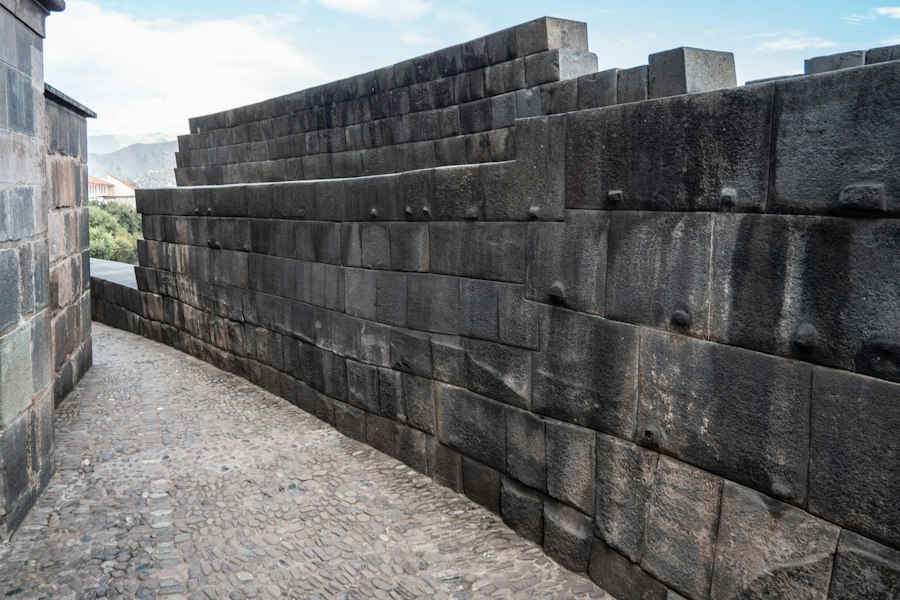
As you double back toward the main square, walk through Calle Loreto. This narrow alleyway features some of the best-preserved Inca walls in the city, which support the colonial walls of the Convento de Santa Catalina. The contrast between the dark, tightly fit imperial stones and the whitewashed colonial plaster above is a visual feast.
Mastering Narrow Alleyway Angles
Narrow alleys present a unique challenge for light and framing. The high walls block out most direct sunlight, creating high-contrast scenes with bright skies and deep shadows. To manage this, wait until midday when the sun is directly overhead to illuminate the alley, or shoot during the blue hour when the ambient light is perfectly balanced.
Capturing Texture and Detail
Switch to a prime lens with a wide aperture, such as a 50mm f/1.8, to capture the incredible textures of the stone. Get close to the wall and shoot along its length to create a shallow depth of field, making the repeating patterns of the hand-carved stones fade beautifully into a soft, blurred background.
4. The Bohemian Charm of San Blas
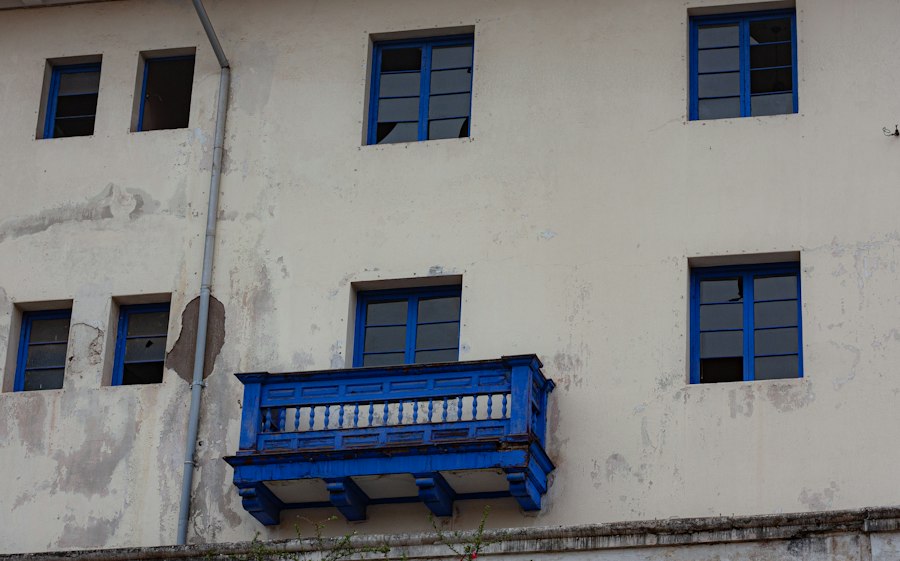
From Calle Loreto, make your way uphill toward the artistic neighborhood of San Blas. This steep climb is worth every step. The neighborhood is famous for its narrow, cobblestone streets, whitewashed houses with bright blue doors, and charming artisan workshops. The overall vibe here is relaxed, creative, and distinctly bohemian.
Pro Photography Tips: San Blas is all about the details. Look for colorful flower pots hanging from blue wooden balconies, sleeping street dogs bathed in shafts of sunlight, and local weavers working near open doorways. Keep your camera strap secure and stay alert for sudden changes in mountain weather.
Finding the Best Viewpoints in San Blas
Head up to the Plaza de San Blas, a quiet square featuring a simple colonial church with a stunning carved wooden pulpit. This area offers a fantastic vantage point to look back down over the terracotta rooftops of the historic center. For more inspiration on photogenic spots in this neighborhood, check out user recommendations on TripAdvisor.
5. The Majestic Arch of Santa Clara
After exploring the heights of San Blas, walk back down and head west past the Plaza de Armas toward the bustling San Pedro Market area. Along the way, you will pass under the Arch of Santa Clara. This beautiful, single-span triumphal arch was built in the 19th century but perfectly complements the surrounding Spanish colonial style.
- Framing the Street: Use the central archway to frame the busy street life and the Santa Clara Church in the background.
- Action Shots: Capture the movement of local vendors carrying colorful textiles and fresh produce under the historic arch.
- Symmetry: Stand directly in the center of the pedestrian path to capture a perfectly symmetrical shot of this neoclassical monument.
6. Golden Hour at San Cristobal Viewpoint
To conclude your Cusco Colonial Architecture Photo Walk, make the steep climb up to the Plaza de San Cristobal. This church sits high above the city, offering a panoramic view that is unmatched. It is the absolute best spot in Cusco to capture the transition from the golden hour to the blue hour.
As the sun sets behind the surrounding mountains, the city lights begin to twinkle, illuminating the grand towers of the cathedral and the Compañia de Jesus church in the main plaza below. Use a tripod to shoot long exposures, allowing the headlights of the city traffic to create beautiful light trails through the ancient streets. The warm light of the street lamps against the deep blue sky creates a magical, romantic vibe that perfectly captures the timeless essence of Cusco.
Frequently Asked Questions
What is the best time of day for photographing Cusco's colonial architecture?
Early morning and late afternoon offer soft, warm light that highlights the stone textures and reduces harsh shadows. Midday sun can be strong, so plan indoor or shaded spots then.
Which streets in Cusco are best for a colonial architecture photo walk?
Calle Hatun Rumiyoc, Loreto, and the Plaza de Armas area feature the most iconic colonial facades and stone walls. San Blas neighborhood also offers charming narrow streets with great photo ops.
Do I need a tripod for shooting Cusco's colonial architecture?
A tripod is helpful for low-light shots, especially inside churches or at twilight. However, many streets are crowded and uneven, so a lightweight or compact tripod works best.
How can I respectfully photograph locals and religious sites in Cusco?
Always ask permission before photographing people, and avoid using flash inside churches or during services. Respect any signs prohibiting photography and keep a low profile.
What camera gear is recommended for a colonial architecture photo walk in Cusco?
A wide-angle lens captures grand facades, while a standard zoom is versatile for details. Bring extra batteries and memory cards, as high altitude can drain batteries faster.

Oliver Janssen scouts the best photography spots in every destination, from sunrise viewpoints to overlooked angles on famous landmarks. He shares exactly where to stand and when to be there for the shot.
💬 Comments (0)
No comments yet. Be the first!